Sen. Manchin’s “No” on Build Back Better is Bad News for Sea Level Rise Real Estate

Just as a group of scientists is reporting that global warming threatens to cause the collapse of the so-called “doomsday glacier” in Antarctica — which could add a catastrophic two to 10 feet of sea level rise — the last thing owners of coastal property under threat of sea level rise flooding need to hear is that Senator Joe Manchin intends to vote no on President Joe Biden’s Build Back Better bill.

Sen. Manchin, a Democrat, stated his intention over the weekend, which brought passage of the bill to a screeching halt. Without Sen. Manchin’s support, there’s little chance the bill, which faces overwhelming Republican opposition, will pass in the evenly divided Senate.

It’s no surprise that Sen. Manchin, sent to Washington, DC, by the coal state of West Virginia, is opposed the bill. It includes billions of dollars to develop clean energy resources. Unfortunately his short-sighted position will have long-term negative implications for the U.S.’s ability to reach President Biden’s goal of cutting greenhouse gas emissions by up to 52% by 2030.

The U.S. is Earth’s second worst emitter of greenhouse gases. Without a substantial reduction the burning of fossil fuels for electricity, transportation and industry, the world will continue to warm at an ever-accelerating pace and sea level rise will continue to follow the trend.

A foot of human-caused sea level rise is already forcing coastal communities to invest hundreds of millions of dollars to protect real estate, critical infrastructure and their local economies — an investment that’s sure to rise into the trillions of dollars nationally in the coming decades. The failure to also aggressively address the root cause of global warming and sea level rise through the Build Back Better bill is placing us firmly on the path to the worst case scenario of sea level rise flooding and other climate change catastrophes, such as droughts, raging wildfires and stronger, more damaging storms.

The bottom line here is owners of coastal real estate need to start voting for candidates dedicated to fighting climate change to protect their investment and their way of life.
Uncertainty Surrounds A Rapidly Melting Antarctic Glacier That Threatens to Inundate Coastal Real Estate

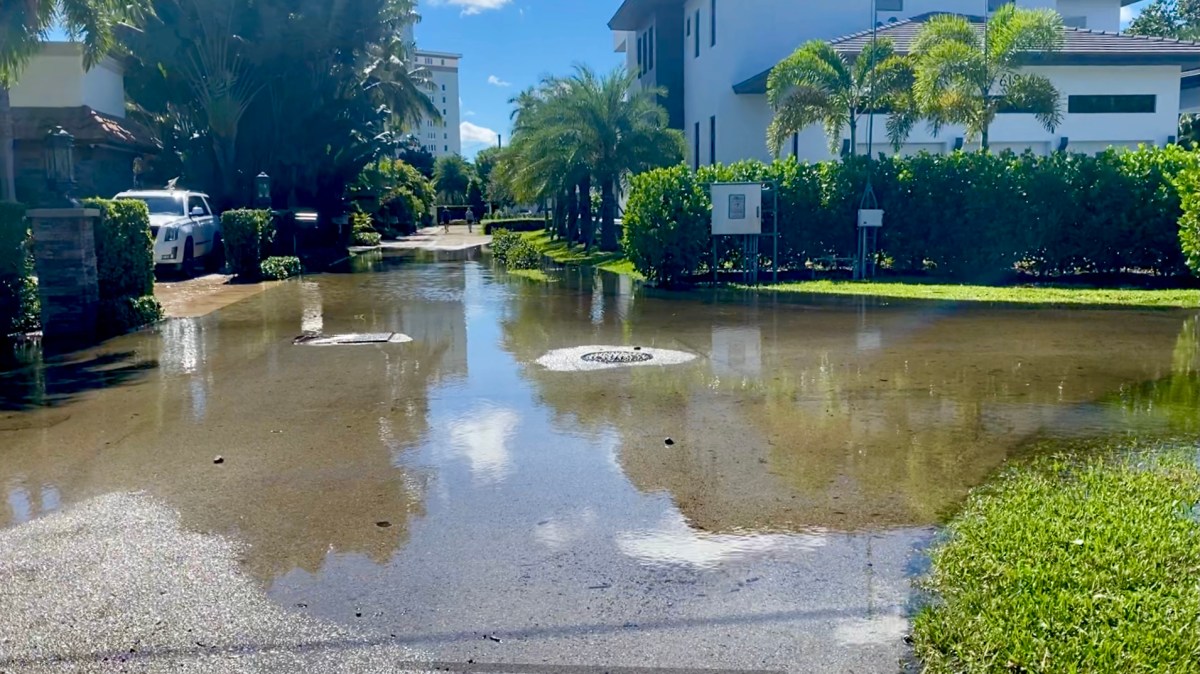
As the planet continues to warm — the last seven years have been the hottest in recorded history — ever-quickening glacial melt and the expansion of ocean water as it heats up is causing sea level rise to accelerate. The foot of sea level rise that has occurred in the last hundred years or so that’s already driving damaging coastal flooding, however, will seem minuscule if researchers are right and the Thwaites glacier, Earth’s widest, slides off Antarctica and into the sea.

Scientists warned at a news conference in New Orleans this week that global warming has caused the Thwaites glacier to double its rate of melting over the last 30 years. But they say the glacier poses an even greater threat of causing rapid sea level rise if warm ocean water causes it to rapidly deteriorate.

According to researchers, warm ocean currents are causing the glacier’s seaborne section to melt from the bottom, where it comes in contact with a rock shelf that essentially allows it to act as a cork that prevents the land-based section of the glacier from rapidly flow into the sea. Just as disturbing, they’re seeing cracks on the top of the glacier growing so fast they predict it could disintegrate in as little as five years.

If this were to happen, it would set off a chain reaction that could cause sea level to rise several feet. “The glacier is the size of Florida or Britain and currently contributes four percent of annual global sea level rise,” the researchers said in a report. “If it does collapse, global sea levels would rise by several feet–putting millions of people living in coastal cities in danger zones for extreme flooding.”

The dire report was released by the International Thwaites Glacier Collaboration, a team of nearly 100 scientists funded by the U.S. National Science Foundation and U.K. Natural Environment Research Council. Lead researcher Ted Scambos, a senior research scientist at the Cooperative Institute for Research in Environmental Sciences, said, “If Thwaites were to collapse, it would drag most of West Antarctica’s ice with it. So it’s critical to get a clearer picture of how the glacier will behave over the next 100 years.” Scambos said Thwaites alone holds enough water to raise sea level by over two feet, but, if it takes surrounding glaciers to sea with it, sea-level could rise by up to 10 feet.

To protect their financial future, buyers and current owners of coastal real estate need to stay informed about the threat posed by the Thwaites Glacier and other drivers of sea level rise and sea level rise flooding.

Moon Wobble will Increase Sea Level Rise Flooding in the 2030s

Sea level rise and sea level rise flooding have been gradually increasing for decades, but scientists are predicting a noticeable jump in the next decade. Why? A predictable wobble in the moon’s orbit will place Earth’s tide-driving companion closer to the planet from 2030 to 2040. A closer moon means higher high tides and lower low tides.

When you combine the moon’s stronger gravitational pull on the oceans with climate change-driven sea level rise, we can expect to see even more sea level rise flooding than we’re now witnessing in coastal communities. In fact, experts are predicting the moon wobble will result in sea level rise flooding conditions that were not expected until the end of this century. For example, scientists estimate San Francisco will experience five times more high-tide flood days in the next decade than it does now.

To arrive at their disturbing conclusion, NASA researchers reviewed data from tide gauges located in coastal communities in every state and territory but Alaska, which, due to its position on the globe, is not expected to face higher tides due to the moon wobble. The research was published in the journal Nature Climate Change.

Buyers and owners of real estate currently experiencing sea level rise flooding or located in communities that flood need to add the wobble into their long-term property ownership decisions. Flooding is already forcing the government and property owners to spend billions of dollars to fend off floodwaters and protect critical infrastructure. A sudden leap will only worsen property damage and result in higher outlays for maintenance, taxes and insurance.

Take the Sea Level Rise Real Estate Quiz

Flooding is the most frequent and costly natural disaster in the U.S. Unfortunately, it’s also among the hardest to detect for real estate buyers. That’s due to the fact that between bouts of flooding — including sea level rise flooding — properties, roads and neighborhoods can appear high and dry.

The sea level rise real estate quiz video is meant to show buyers how hard it is to tell where flooding has occurred. The videos clips with dry properties were recorded during the dry season in South Florida. The clips with flooding taken at the same locations were recorded during fall king tide season, when the Earth, Sun, and Moon were in a certain proximity that promotes higher than normal tides.

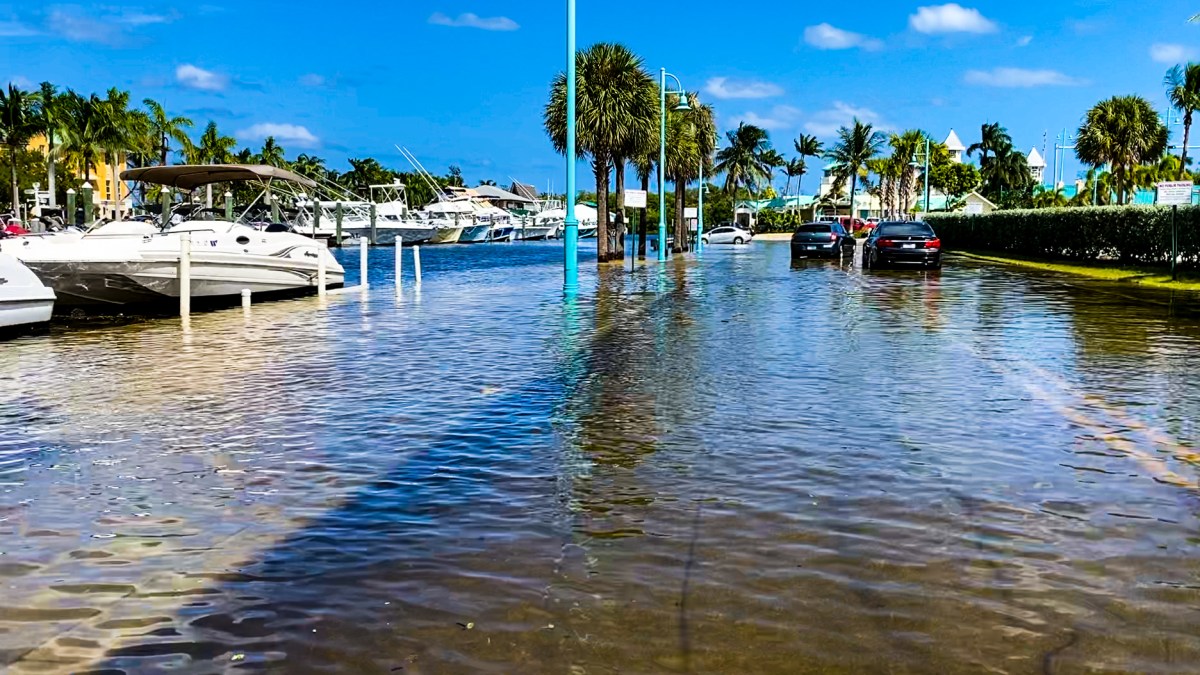
A small but growing percentage of properties located right along the beach and Intracoastal Waterway flood several times a month from August through December. This type of sea level rise flooding is occurring in many communities along the Atlantic, Gulf, and Pacific coastlines. The situation is getting worse every year as the ocean continues to rise.

Clearly, buyers purchasing coastal properties need to ask sellers, real estate agents, neighbors, public officials, and flood insurance providers if the property of interest experiences sea level rise flooding. The laws governing the disclosure of flooding vary widely from state to state, so buyers need to consult multiple sources to get a complete picture before submitting a real estate contract.

Get Ready for FEMA’s New National Flood Insurance Program Rate Structure: Risk Rating 2.0

The National Flood Insurance Program, which is administered by the Federal Emergency Management Agency (FEMA), is about to undergo a major rate structure overhaul. Real estate owners and buyers will soon find out if rates for a given property are going to decrease, stay the same, or maybe even increase substantially.

FEMA is making the flood insurance rate adjustments to bring fairness into the program. The agency says under the current rate structure, property owners in low risk flood zones are often paying higher insurance premiums than property owners in higher risk area, and property owners with less expensive properties are paying more than owners of properties with higher replacement costs. The agency is encouraging owners to call their flood insurance agents in August to find out what to expect when their flood insurance bills are released in October.

According to FEMA’s website, 23% of policyholders will see an average of $86 a month premium reduction, 66% will see a $0-$10 a month increase, 7% will see a $10-$20 a month increase, and 4% will see their premiums increase over $20 a month.

Real estate buyers should find out how a property of interest will be impacted by Risk Rating 2.0 when they’re considering submitting a contract. They should also consider asking the seller for information about the existing policy to find out from the insurance provider if assuming the policy at closing will result in savings.

Buyers, sellers, owners and real estate agents can find out more about Risk Rating 2.0 and the National Flood Insurance Program on FEMA’s website. The website also features valuable information on the steps owners can take to reduce their premiums.

With sea level rise continuing to cause ever-more flooding in coastal communities, everyone living near the water needs to stay on top of the latest developments regarding flood insurance.

Can Real Estate Agents Be Sued Over Sea Level Rise Flooding?

With sea level rising, real estate agents face a growing risk of lawsuits from buyers and sellers regarding the disclosure of flood-related facts about a property of interest.

The National Association of Realtors ™ (NAR) commissioned a study of flood-related lawsuits filed between 2000-2020. According to an article in the association’s magazine, researcher found 4,500 flood-related lawsuits (not all sea level rise related, of course) were filed. Of those, 61 lawsuits “specifically involved a real estate professional or brokerage.” Furthermore, six resulted in “significant verdicts and awards against the real estate licensee and brokerage.”

NAR said most of the cases “were brought by buyers against seller’s agents or brokerages and alleged fraud, breach of fiduciary duty, negligence, and intentional misrepresentation or omission.”

As coastal flooding becomes more frequent, more damaging, and impacts more and more properties and neighborhoods, real estate agents are going to have to become more aware flooding is in their communities. They’re also going to have to consult their brokers and real estate attorneys for a clear understanding of what they’re required to disclose according to their state’s disclosure laws and what sellers themselves have to tell buyers. Failure to meet the requirements puts their clients and their own financial futures and careers in jeopardy.

Please read “7 Sea Level Rise Real Estate Questions for Buyers, Sellers, Owners & Real Estate Agents” for more information about this issue and many more.

Sea Level Rise Added Billions of Dollars to Hurricane Sandy’s Storm Surge Damage

When it comes to sea level rise, buyers, sellers, owners, and real estate agents need to be aware of both the increased occurrence of nuisance flooding — tidal floodwaters that inundate neighborhoods on sunny days — and storm surges that can strike quickly and inflict billions of dollars in damages in a very short time.

A study recently released by researchers at Climate Central, an independent organization of scientists and journalists dedicated to informing the public about climate change, demonstrated the threat sea-level-rise-fueled storm surges pose to coastal communities. The researchers gathered information about Hurricane Sandy and concluded that a few additional inches of sea level rise contributed over $8 billion dollars worth of damage to the $62.7 billion the super storm inflicted on New York, New Jersey and Connecticut.

To arrive at that astonishing figure, the researchers analyzed water levels during Hurricane Sandy and compared it with an estimate of how high the water would have risen without human-caused sea level rise. Based on a conservative estimate of just over four inches of sea level rise added between 1900 and 2012, the year Hurricane Sandy struck, they estimated that sea level rise added $8.1 billion to the total tab the states had to spend repairing storm damage, including power grids and transportation networks.

The researchers noted in their analysis that economic damages may have been much higher than stated in their report. “Our estimates do not account for potential long-term economic effects, such as losses and gains in broad economic activity associated with employment and production changes across industries in the aftermath of a damaging cyclone event,” they wrote.

Climate Central’s chief scientist and CEO Benjamin Strauss, Ph.D., put the report in perspective: “Just a hands-width of sea level rise from climate change caused more than 10 percent of the damage from Sandy’s towering floodwaters. The implications are enormous. For any lesser ocean flood, the percentage must be higher.”

Clearly buyers, sellers, owners, and real estate agents can’t afford to ignore the influence ever-rising seas have on damaging storm surges when they’re evaluating coastal properties.

Florida’s State Government Does a 180 on Sea Level Rise Flooding

Just a few short years ago, the state of Florida’s official position on sea level rise was not only “no problem” but “don’t mention it”. Then Republican Gov. Rick Scott made national headlines by banning mention of climate change and its many impacts from official state discourse.

This month, Republican Gov. Ron DeSantis turned the tide — so to speak — on sea level rise by signing into law a bill that created the Resilient Florida Grant Program in the Department of Environmental Protection. The program will use millions of dollars in state funding to aid local communities in their efforts to combat sea level rise flooding, which has been damaging coastal real estate and infrastructure for years. Some of the funding will be spent on new seawalls in Miami and West Palm Beach, drainage improvements in Key West, and reconstructed roadways at many locations.

In addition to the grant program, Gov. DeSantis signed a bill that requires the Department of Environmental Protection to conduct a statewide risk assessment and draft a three-year sea level rise resilience plan.

Environmentalists are generally encouraged by the state’s willingness to acknowledge and take on the challenges posed by sea level rise flooding. They would, however, like to see officials take the next step and actually tackle the root cause of sea level rise: the burning of fossil fuels that’s driving global warming.

Sea Level Rise & Real Estate: What happens when whispered truths are spoken out loud?

Sea level rise flooding is rapidly transforming from an issue that was whispered about in many coastal communities — for fear mere mention would tank the local real estate market — to one that’s appearing on the front pages of major newspapers. This week alone the Miami Herald featured articles titled “‘Now, It’s About Elevation’: Buying a South Florida home in the era of sea level rise” and “Miami Beach residents want sea level rise fixes. But finding the right spot is a battle”.

The first article features interviews with a real estate broker and other experts who commented on how higher elevation properties in the flat, flood-prone South Florida landscape are becoming the most valued by middle-class buyers as sea level rises. (Apparently, wealthy buyers can afford to absorb the loss if their properties are flooded.) The second article examines the growing NIMBY (Not In My Back Yard) movement among residents in Miami Beach as the city struggles to find a location for a much-needed pump station that threatens to sully residents’ views.

Both articles are well-reported and matter-of-fact about the many complications sea level rise flooding poses to people involved in South Florida real estate. Reading the pieces made me think about how far we’ve come toward acknowledge the problem and what this tide change (pardon the pun) in awareness means to buyers, sellers, owners and real estate agents.

One thing’s clear: As buyers become more educated about the risk of sea level rise flooding, they are becoming more sophisticated about where they purchase property in coastal communities. An article published last December in the Charleston, SC, Post & Courier put it bluntly: “Downtown Charleston house hunters ask about home’s flooding history first”. With flooding an ever-worsening problem, “Does this property flood?” is sure to become the first question buyers ask in coastal communities all along the Atlantic, Pacific and Gulf of Mexico.

This reality is going to force owners to pay more attention to sea level rise to make sure that they get out before their property begins to lose value due to the direct flooding of their property or their neighborhood. Sellers are going to have to be very careful that they fill out seller’s disclosure forms in accordance with their state’s laws. (At this point, state seller’s disclosure laws range from full flood disclosure to none at all.) And real estate agents are going to have to make sure that they’re aware of which neighborhoods and properties in their farm area experience sea level rise flooding, that they fulfill their obligation to disclose the flooding to buyers in accordance with their state’s disclosure law and, if they’re a Realtor ™, their association’s Code of Ethics, and that they advise their sellers to comply with their state’s disclosure requirements. Conferring with real estate attorneys is always a good idea as there have been cases where real estate brokers and agents have had to pay out large sums of money for mishandling flooding-related issues.

Most Americans’ greatest investment is their homes. As buyers become savvier about sea level rise flooding and the many ways it can impact their home and their financial futures, it’s going to become harder to sell them a property that’s experiencing flooding now, soon to experience flooding, or difficult to access due to flooded roads. With this in mind, everyone involved in coastal real estate has to keep up to speed on this creeping catastrophe to make smart real estate decisions.

Buyers, Sellers, Owners & Real Estate Agents Need to Know Their Community’s Plan to Fight Sea Level Rise Flooding

How a community plans to deal with sea level rise flooding can have a big impact on buyers, sellers, owners, and real estate agents.

As sea level continues to rise, coastal communities are having to make difficult decisions about how to prevent flooding. Often the plans involve building or improving seawalls, installing pump stations, and raising property and critical infrastructure, such as roads and underground pipes.

These types of projects can have a substantial impact on property owners. How? Many cities and towns are planning or actually implementing projects with hefty million and even billion dollar price tags that have the potential to cause a spike in taxes or utility fees. In addition, the projects themselves can include seawalls, pump stations and infrastructure improvements that can block views and/or involve many years of construction.

Many owners are waking up to the fact that they need to keep up-to-date on how their community plans to deal with sea level rise flooding to ensure that their property value and quality of life aren’t negatively impacted. Right now, Miami Beach, Florida, a city that’s aggressively combatting sea level rise flooding, is debating the placement of a large pump station. Many residents don’t want it in their neighborhoods for fear of how it will impact their view and ability to enjoy their community. Similar arguments are going on elsewhere, including in Miami and Charleston, SC, where residents are concerned about proposed tall seawalls blocking their views.

Current property owners aren’t the only ones who need to stay on top of a community’s sea level rise plans. Buyers, too, need to perform due diligence and find out what projects are being considered and how they will impact their property of interest. There have been cases where buyers have moved into a home only to find out that a tall seawall or pump station was about to be built nearby or that the roads out front were going to be dug up for years.

Owners who plan to sell their homes need to know not only what’s planned for their neighborhood but also whether or not their state requires them to disclose what they know to buyers. Real estate agents should keep informed not only because it’s part of their professional duty to know what’s going on in their farm area, but, because they may be held accountable by buyers if they unknowingly purchase a home that will be impacted by sea level rise infrastructure projects.

The bottom line here is that buyers, sellers, owners, and real estate agents can no longer afford to turn a blind eye to sea level rise flooding or the approaches their communities plan to implement to combat it. The stakes — property value and quality of life — are too high.

Read more about this important topic in “7 Sea Level Rise Real Estate Questions for Buyers, Sellers, Owners & Real Estate Agents”.