Video: King Tide Season: The Sea Level Rise Stress-Test

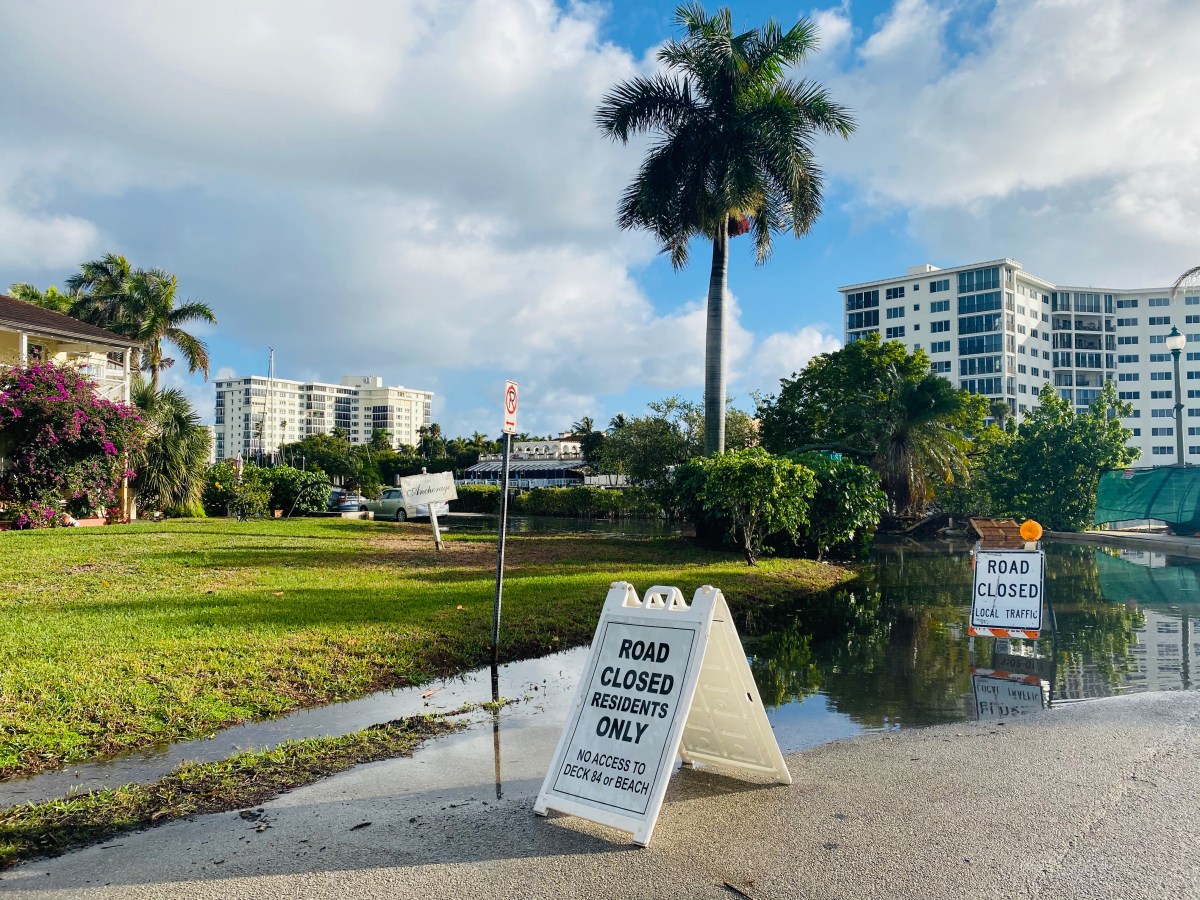
King tide season returned to coastal communities this week, and with it came the king tide/sea level rise flooding that periodically inundates roads, real estate and whole neighborhoods. This video, produced for SeaLevelRiseRealEstate.com, features a discussion of the many ways the king tide months — roughly from September-January — provide the perfect stress-test to give real estate buyers, sellers, owners and agents a sense of how well their communities are battling against sea level rise flooding. It also gives them a read on the level of risk sea level rise flooding poses to their property of interest.

As ice sheets in Greenland and Antarctica continue to melt and the ocean heats and expands due to global warming, sea levels are gradually rising. Add the many inches of sea level rise accumulated over the last hundred years or so to the ancient king tides — higher than normal tides due to the unique alignment of the sun and moon in the fall — and you have a recipe for disaster.

Coastal communities all over the world face a greater threat of flooding during this period In the U.S. this can lead to an enormous amount of property damage as well as damage to roads, water pipes, sewer pipes and other critical infrastructure. The end result is that property owners in affected areas can face higher carrying costs, including expensive repairs, insurance premiums, and taxes as communities implement plans to stave off the flood waters.

During the king tide period, buyers, sellers, owners and real estate agents need to take the time to see what’s actually happening in their communities, find out how much worse it could get, study what their local government intends to do to mitigate the flooding, and reach a dry-eyed understanding of how this will impact their carrying costs and property value. This information will help them to make informed decisions regarding real estate transaction.

Properties Miles Inland Can Still Be Subject to Sea Level Rise-Driven Flooding

When we think of properties at risk of sea level rise flooding, we usually picture properties near beaches. Due to Florida’s unique coastal geology, some areas of the state bust that myth. They’re home to real estate that experiences sea level rise-related flooding miles inland.

How is this possible? Many communities on the Florida peninsula are built on porous limestone instead of granite bedrock. As the seas rise, the salt water is able to migrate inland through the limestone. When it meets fresh groundwater trying to flow to the sea, water pressure pushes the fresh groundwater up. As a result, when it rains, the land is too saturated to absorb the runoff, so it pools (floods) on the lowest land.

Miami-Dade County’s sea level rise task force noted in a 2016 report that this dynamic will make it more difficult for the existing network of drainage canals to protect inland properties from flooding.

Government officials in some locations are struggling with the problem. In some cases they’re able to improve the drainage system. In others, they’re not.

A solution they’re increasingly turning to is using federal funds to buyout properties that flood repeatedly. After the properties are purchased, they’ll turn the land into parks and fields that can store excess runoff. This approach, they say, is less expensive than repeatedly repairing properties that flood.

Miami-Dade County and Brevard County together are in the process of purchasing about two dozen inland properties that experience chronic flooding. Overall, Florida state officials have earmarked more than $44 million for buyouts across the state. As sea level continues to rise, this is likely just the beginning of the buyouts.

Not all homeowners are pleased with the buyout program. WLRN, a local public radio station that serves South Florida, canvassed at-risk inland neighborhoods and found homeowners had several concerns. In an article posted on the station’s website, the owners said they didn’t want their property values to decline because buyers were worried about the threat of flooding. They also said they worried that empty lots left after the houses were razed would give the wrong impression that every nearby property was at risk of flooding and further erode the value of their homes.

The hidden threat of sea level rise-driven flooding miles inland from the coast is a powerful reminder to real estate buyers to perform due diligence before submitting an offer on a property. They need to determine whether a property or neighborhood currently floods or if it will flood any time soon. The answer will impact the carrying costs, value and live-ability of the property that caught their eye.

Challenges Facing Southeast Florida — Ground Zero for Sea Level Rise Flooding — Described in Exhaustive BBC Report

With its low elevation and proximity to lots of water on all sides and underfoot, Southeast Florida is clearly ground zero for sea level rise flooding. The BBC recently published an exhaustive report on the current status of sea level rise in the region — that includes the Florida Keys all the way north through Miami, Fort Lauderdale and West Palm Beach — and the challenges of controlling the inundation. The report makes fascinating required reading for anyone investing in residential and commercial real estate in coastal areas that are threatened by surging tides.

The BBC report, written by Amanda Ruggeri, is full of fascinating facts about sea level rise. Among them:

  1. Current predictions are that sea level could rise by up to 10 inches in the region by 2030 and 5 feet by 2100.
  2. Each additional inch of sea level rise can have a substantial affect on coastal real estate.
  3. The region has more people at risk from sea level rise than any other state, and Miami, specifically, has more financial assets at risk than any other major coastal city in the world.
  4. Cities in the region are already making changes to infrastructure to address sea level rise flooding, including raising roads and seawalls and installing hundreds of tidal valves and pump stations.
  5. Despite the efforts to hold back the sea, experts recognize that they will not be able to save every property and neighborhood from flooding.
  6. Every community faces different challenges. Governments, homeowners, business owners, taxpayers, insurers, developers, engineers and planners are going to have to work together to decide how to address sea level rise in their communities.
  7. Each community is an intricate puzzle where making a change to one piece of infrastructure, such as raising a segment of seawall or roadway, can lead to the unintended flooding of neighboring properties.
  8. Reaching consensus can lead to clashes over proposed solutions, costs, potential impacts and private property rights.
  9. Among the encouraging signs is that in the absence of federal and state leadership, county and local governments are forming regional partnerships to address sea level rise in a coordinated fashion.
  10. Among the discouraging signs is that finding funding sources for the hundreds of millions of dollars worth of projects needed to hold back the rising tides is difficult.

While the BBC report provides a broad, holistic view of how Southeast Florida is tackling sea level rise flooding, real estate buyers, owners and agents still need to invest time and effort evaluating how rising tides are impacting their properties and communities before making decisions. Sea level rise is already resulting in increased property maintenance costs, taxes, insurance and association fees in some areas. It’s also hurting the rate of property value appreciation and forcing extreme measures, such as road abandonment and property buy-outs.

As the polar ice caps continue to melt and the oceans expand due to global warming, these sea level rise is going to challenge more and more coastal residents.

Are Dredging and Beach Replenishment Effective Ways to Protect Real Estate Against Sea Level Rise?

In this video, a massive dredger scours sand and mud from the seafloor off Delray Beach, Florida, and pumps it onto the land where it’s used to replenish the eroded beach. The $8 million project is intended to rebuild the beach for tourism and to protect millions of dollars in real estate.

Every year, cities along the Atlantic, Pacific and Gulf of Mexico coastlines spend millions of dollars on beach nourishment projects. In my hometown, Delray Beach, Florida, a massive offshore dredger just started pumping slurry — sand and water — onto the seriously eroded beach to replenish it. The $8 million project is expected to last weeks. (You can see how it works by watching the video I created of the project.)

This type of dredging to replenish a beach has benefits and costs. In our case, the cost of beach replenishment is easily offset by the tourist dollars it attracts to the community. Without a beach, it’s unlikely people would come here and spend money to stay in hotels and dine and shop in the bustling downtown district. The beach also lures real estate buyers into purchasing single family homes, townhouses and condos.

Beyond the economic advantages, the replenished beach also acts as a barrier that protects valuable real estate from storm surges and erosion.

Despite the many positives, beach replenishment has some downsides. It can be harmful to marine animals and shore birds. If the causes of erosion aren’t (or can’t) be addressed, it will have to be repeated on a regular basis. And it can be expensive; and the costs are growing, especially in areas where sand is not in abundance and it has to be trucked in.

Sea level rise is sure to exacerbate the challenges faced by towns that rely on sand replenishment to maintain their beaches. Every inch of sea level rise increases the force of tides and wave action on beaches. The higher and more powerful storm surges that come with climate change and sea level rise will also be problematic.

For now, most cities and towns that rely on beach replenishment appear committed to the practice to protect their tourism trade and valuable real estate. Whether they will be able to foot the bill when the seas get higher and their beaches require more frequent nourishment projects is an X factor that all real estate buyers and owners in coastal areas prone to erosion need to consider.

FEMA’s Updated Flood Maps Will Impact Flood Insurance Premiums in South Florida

The Federal Emergency Management Agency (FEMA), which administers the National Flood Insurance Program, has been touring South Florida to inform real estate owners about how proposed flood maps based on the latest data will impact their flood insurance premiums.

Owners whose property is included in flood zones will pay higher premiums under the new maps that will take effect in 18 months to two years. Experts recommend that they purchase flood insurance now, before insurance premiums spike under the new designation. If they act now, they will not have to pay the substantially higher rates new policy buyers will have to pay as their existing policies will be grandfathered in when the zones change.

The new maps aren’t all bad news. With the new data removing some properties from flood zones, some lucky owners may actually see a reduction in flood insurance premiums.

People involved in real estate in coastal areas need to keep in mind that FEMA maps don’t consider future sea level rise or king tide flooding. Buyers especially need to perform due diligence to find out if a property experiences sea level rise flooding or may experience flooding in the period they expect to own it. Not knowing a property’s flooding status could result in a loss of property value and higher carrying costs, including maintenance, flood insurance, taxes and condo and homeowners association fees.

Local governments have officials who can help property owners who missed the FEMA meetings to decide what to do next.

Real Estate Buyers Need to Be Aware of Sea Level Rise’s Impact on Infrastructure

Buyers of real estate in coastal areas don’t just need to know if the property of interest experiences sea level rise flooding. They also need to know how salty floodwaters are impacting critical infrastructure.

Case in point: Fort Lauderdale, Florida. For decades, officials there have raided the city’s sewer and water budget to fund other projects. Without critical maintenance, the system is collapsing. Last month alone, breaks in a pipe caused 126 million gallons of sewage to course down a neighborhood street and into a river.

In 2017, an engineering firm gave the city an 800 page report that said $1.4 billion worth of work that needed to be completed on the leaky wastewater treatment system to stop the sewage spills. Experts said part of the problem is that the system has aged beyond its useful life. Another problem is that sea level rise is immersing metal pipes in salty water which is causing them to corrode and fail.

Fort Lauderdale isn’t alone in confronting this costly challenge. Miami, too, has a failing wastewater treatment system that has led to spills and huge fines. Many other cities all along the Atlantic, Pacific and Gulf coastlines are bound to get hit with similar problems as their infrastructure is invaded by rising seas.

One thing Fort Lauderdale and Miami have in common is the struggle to find money to make the needed repairs. The only options are higher taxes or bond issues. Either way, property owners are bound to get soaked.

The timing of these costs couldn’t be worse. In addition to the need to upgrade their wastewater treatment systems, both cities need to spend hundreds of millions of dollars to raise roads and pipes and build barriers and pumps to hold back the ocean.

In the end, buyers need to take future tax hikes into account when they’re considering whether or not to purchase real estate in areas impacted by sea level rise flooding. This issue is discussed in detail in “7 sea Level Rise Real Estate Questions.”

Influential South Florida Newspaper Calls for Federal and State Leadership on Sea Level Rise

As South Florida and the Keys recover from a difficult season of king tide sea/ level rise flooding, the Sun Sentinel published an editorial earlier this month that listed the many challenges the region is already facing from flooding and the many ways federal and state leaders are failing to adequately address the problem.

Among the concerns are neighborhoods that were flooded for months during the fall because higher seas gave the floodwaters nowhere to drain, commercial flood insurance premiums jumping 18 percent a year in parts of the Keys that may put them completely out of business in five years, and threats to corals, birds and fish due to warmer ocean temperatures and acidification in a region that depends on the natural world for tourism.

The newspaper’s editors commended the Southeast Florida Regional Climate Change Compact, which is comprised of South Florida and Keys county governments and governing bodies overseeing over 100 cities and two Native American tribes in the region, for demanding action now to take on the challenges posed by sea level rise flooding. They also commended Gov. Ron DeSantis for sending his chief resilience officer, Julia Nesheiwat, to the 11th annual climate summit held this fall in Key West, even if he had to cancel his appearance at the last minute due to “extenuating circumstances.” But they’re critical of Florida Senators Rick Scott and Marco Rubio for making zero effort to attend or send representatives to help them address the problems. (Maybe they’ll overcome their climate change denialism when more of South Florida real estate is inundated.)

What’s clear from the editorial and out every-day experience in the region is that South Florida and the Keys need strong federal and state leadership and financial assistance to address sea level rise flooding NOW. Ignoring the threat rising flood waters pose to our way of life won’t make them go away. We’re at the front line of the battle against sea level rise, but other coastal communities in the U.S. are starting to wake up to the same siren.