Leaked JP Morgan Report Warns Climate Change Could Lead to Human Extinction

“Although precise predictions are not possible, it is clear that the Earth is on an unsustainable trajectory. Something will have to change at some point if the human race is going to survive.”

You might expect to find this doomsday prediction in an op-ed by a rabid environmentalist group. That’s why it’s doubly shocking when you find out it actually appears in a research document leaked from JP Morgan, the world’s largest investor in fossil fuels.

According to a Guardian article, JP Morgan economists David Mackie and Jessica Murray wrote the report, which draws on studies produced at universities and by the International Monetary Fund and UN Government Panel on Climate Change. Rupert Read, an Extinction Rebellion spokesperson obtained a copy, which Guardian journalists were allowed to view.

Mackie and Murray write that policy-makers and financial leaders have to change how climate change is being addressed or there’s a chance that the situation will deteriorate faster than now forecast. They also worry that concern about jobs and competitiveness might prevent humankind from taking the necessary steps to reduce the burning of fossil fuels, which creates the greenhouse gases behind global warming and sea level rise.

JP Morgan’s leaked report is only the latest example of an investment firm stating concern about climate change. Earlier this year the CEO of BlackRock, the world’s largest asset manager, said his firm was moving away from fossil fuels because they’re a poor investment when the world needs to shift to renewables to reduce the release of greenhouse gases.

Buyers, sellers, owners and real estate agents need to take these reports seriously. Their real estate investments are being impacted by climate change and, along the coast, sea level rise flooding. Using the same dry-eyed approach financial institutions are using to evaluate their investments in their real estate decisions is the only way to protect their financial future.
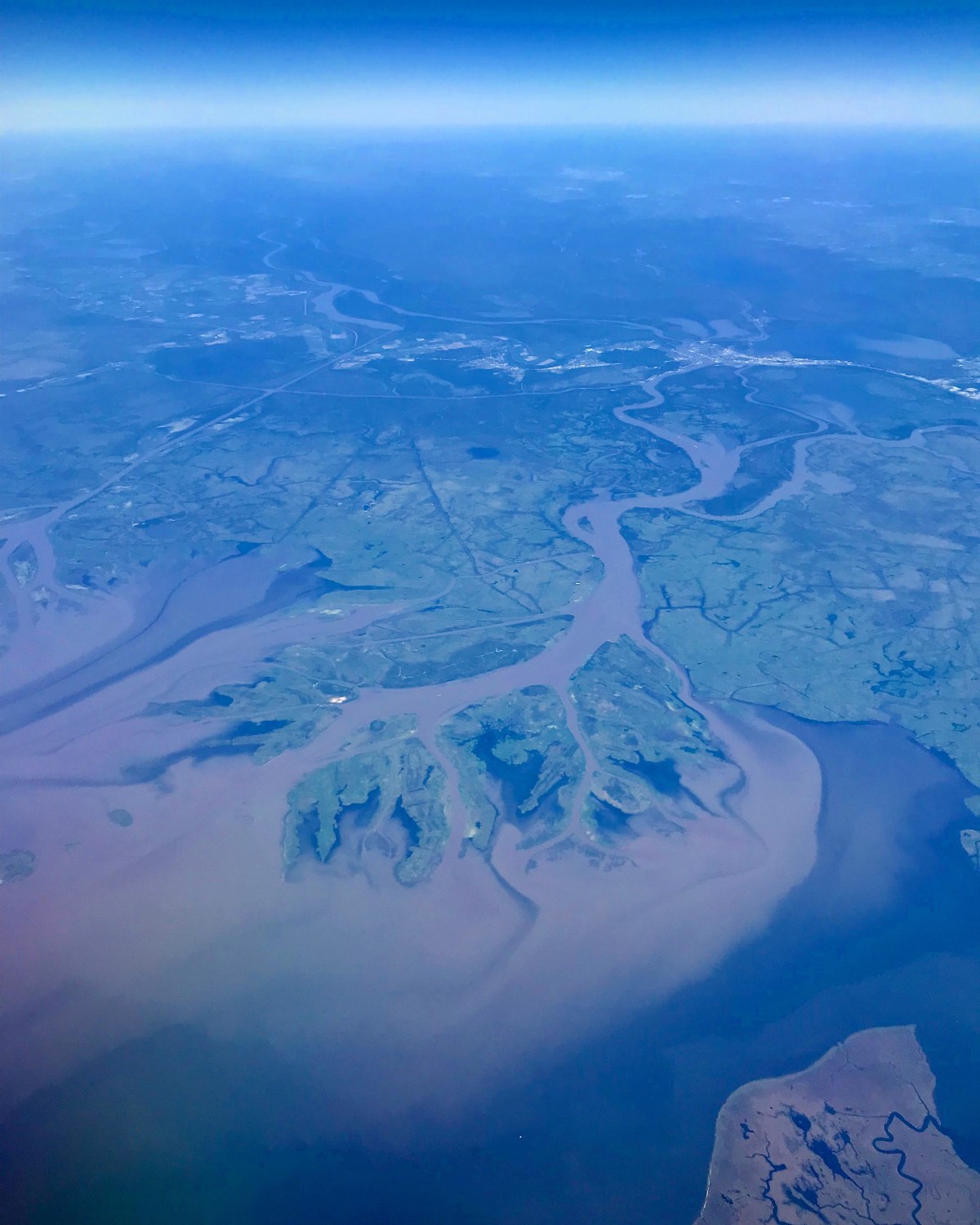
Louisiana, a Top Fossil Fuel Producer, Announces Plans to Combat Climate Change and Sea Level Rise

Louisiana Governor John Bel Edwards held a press conference this week to announce his administration’s plans to combat climate change and sea level rise. The announcement was especially notable because it was made in a state that’s a major producer of oil, gas and petrochemicals.

“Science tells us that rising sea level will become the biggest challenge we face, threatening to overwhelm our best efforts to protect and restore our coast,” said Gov. Edwards, who spoke at the Louisiana State University Center for River Studies in Baton Rouge. “Science also tells us that sea level rise is being driven by global greenhouse gas emissions.”

According to an article posted on NOLA.com, the governor announced the creation of a Climate Initiatives Task Force that will recommend concrete steps that the state can take to reduce greenhouse gas emissions and handle the increased flooding that’s sure to occur as seas continue to rise in the decades to come.

Louisiana is facing a difficult challenge. The Environmental Integrity Project reported in January that in 2018 alone three plants emitted 764 million tons of greenhouse gases, which are driving global warming. That’s an 8% increase over 2016. The group said industrywide plans to expand facilities in the state could increase release of the heat-trapping gases by almost a third by 2025.

Edwards said the state will work with energy and petrochemical companies to find solutions to climate change. He said he’s also appointing a chief resilience officer to make all state agencies aware of what’s being done to combat climate change and sea level rise.

Some environmental groups applauded the governor’s announcement. “To protect the future of our state, we must do everything we can to limit the rate of sea level rise,” Steve Cochran, an Environmental Defense Fund official, told NOLA.com. “We must adapt to changes that are already occurring along our coast, and we must think long term about our jobs. …. This is what progress looks like.”

Hawaii’s Trying to Decide Where to Allow New Real Estate Developments in Areas Threatened by Sea Level Rise

Lawmakers in Hawaii are taking on an issue few coastal states are ready to address: Where do you allow new real estate developments when scientists are predicting up to three-to-six feet of sea level rise by the end of this century?

The answer could have a huge impact on real estate developers, builders and people seeking affordable housing.

According to a report on Honolulu Civil Beat, some legislators in Hawaii are promoting a bill that would prevent new construction in areas below 6 1/2 feet of the current sea level. With land elevations varying greatly, that would still allow some construction right on the shore while developers wouldn’t be allowed within a half mile of beaches in other areas. Builders in Honolulu say that limit would prevent them from constructing many new developments, including projects that would be sold at a more affordable price point.

The stakes are high for Hawaii. Scientists predict that even 3.2 feet of sea level rise by 2100 would displace more than 13,000 people and lead to $12.9 billion in economic losses in Oahu alone.

As in other states, there are areas in Hawaii where coastal real estate is already experiencing flooding due to rising seas. Finding solutions that serve the needs of current generations while looking out for the future is a difficult political tightrope to walk. Further complicating the issue is the fact that the burning of fossil fuels, global warming, and rising sea levels are continuing at an accelerating pace, which makes it difficult to issue the accurate predictions coastal communities need for planning purposes.

That Hawaii is discussing this difficult issue is commendable. Other states need to step up to the plate to protect people and property.

Are Miami Area Real Estate Owners Ready for 13-Foot Tall Walls to Control Storm Surge?

How do you protect nearly 3 million residents and $311 billion worth of real estate in and around Miami from more intense storm surges driven by climate change and rising seas? That’s the challenge taken on by the U.S. Army Corps of Engineers, and the solution its proposing could have a massive impact on real estate owners.

According to a report in the Miami Herald, the Corps has drafted a proposal that includes 10-to-13-foot high walls, moveable storm surge barriers for canal and river openings, along with the elevation of 10,000 homes and floodproofing of 7,000 buildings. The proposal, due to be formally released this spring, carries an $8 billion price tag, 65% of which would be federally funded. Local governments would pick up the rest of the cost.

Included in the proposal is the purchase of 350 properties through eminent domain to make room for the walls. If the plan is approved, the Corps aims to start construction on the massive project by 2026.

The Corps’ plans could have a major impact on the real estate market in Miami and Miami-Dade County. Some property owners could face the prospect of losing their real estate to eminent domain. Those who remain could see a spike in their property taxes and a loss in property value due to the higher taxes and proximity to flood-control structures. For example, properties that lose their water views to concrete walls could witness a drop in value.

Clearly something has to be done to reduce the threat posed by storm surge driven by climate change and rising seas. To protect their real estate investment and financial futures, buyers, sellers, owners and real estate agents need to get involved when the final details are being hammered out over the next year.

One point to keep in mind is that the Corps’ plan only addresses storm surge, not sea level rise itself. Because South Florida is built on porous rock, seawater can seep under walls.

Another important point that needs to be considered is that Miami and Miami-Dade County aren’t the only coastal real estate markets facing upheaval due to climate change and sea level rise flooding. Cities and towns all along the Atlantic, Pacific and Gulf of Mexico coastlines are struggling to draft effective plans to combat rising waters. Coming up with the billions of dollars needed to fund their projects is a whole other problem.

Why Coastal Real Estate Buyers, Sellers, Owners & Realtors Should Be Concerned About an Iceberg that Just Broke Off Antarctica

It’s well established that climate change — global warming — is causing glaciers to melt at an ever-quickening pace in Antarctica and Greenland. As a result, sea levels too are rising at a faster rate every year.

The challenge for scientists gathering the data government officials, planners and buyers, sellers, owners and real estate agents in coastal cities need to make informed decisions in response to the rising waters is that there is more than glacial melting that can cause sea level to rise. The warming atmosphere and oceans are also eating away at ice shelves floating on the ocean that are the only barriers holding back inland glaciers that, if uncorked by the loss of the floating ice shelves, could raise sea levels not just by inches but by feet.

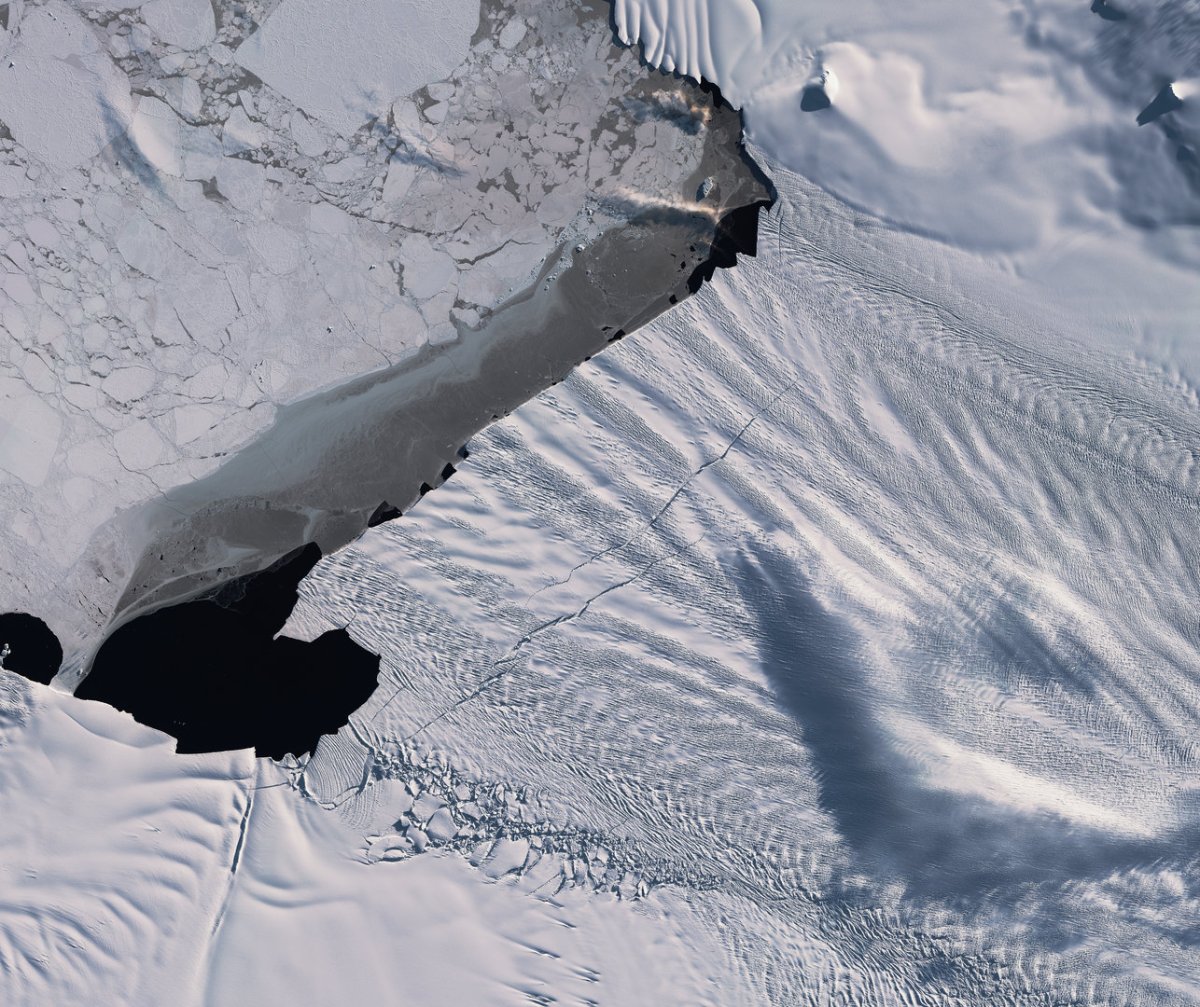
This point was illustrated today when satellite data showed sometime between February 8 and 9 an iceberg twice the size of Washington, DC, broke off the Pine Island Glacier in West Antarctica. The enormous iceberg itself won’t directly affect sea level rise. Floating ice already displaces a volume of water equal to the amount of water that runs off into the ocean as it melts.

The concern is that this calving event, the latest in increasingly frequent calving events, is another step in glacial retreat that could clear the way for an enormous amount of inland ice to flow into the sea, which would speed up sea level rise. In fact, if inland ice associated with the Pine Island Glacier and nearby Thwaites Glacier were free to flow into the sea, global sea levels could rise by as many as four feet.

Scientists don’t expect The Pine Island Glacier and Thwaites Glacier to slide into the sea tomorrow, but they’re still gathering the data they need to estimate when it could happen. With communities all along the Atlantic, Pacific and Gulf of Mexico coastlines already spending billions of dollars to combat sea level rise flooding, buyers, sellers, owners and real estate agents need to keep up on the latest developments in Antarctica and Greenland as if they were local stories. Ultimately, they are.

(The photo from the European Space Agency shows cracks forming on the ice shelf of the Pine Island Glacier in September 2019.)

Scientists Identify the Greatest Obstacle to Educating Real Estate Owners about the Threat of Sea Level Rise Flooding

Social scientists studying the effectiveness of climate change communications strategies wrote an opinion piece that concluded personal financial interest is the leading cause of real estate owners in coastal areas denying that sea level rise flooding poses a threat to their property.

Risa Palm, a professor of Urban Studies and Public Health at Georgia State University, and Toby W. Bolsen, an associate professor of American politics in the political science department at Georgia State, wrote the column for The Conversation. They said they showed property owners who lived in South Florida neighborhoods at-risk of sea level rise flooding and hurricane storm surge maps produced by First Street Foundation that indicated that their properties could be inundated or be impacted in other ways by floodwaters in the next 15 years. Their homes were also identified as being at risk of devaluation due to their proximity to the threat of sea level rise flooding.

“Surprisingly, we found that those who had viewed the maps were on average, less likely to say they believed that climate change was taking place than those who had not seen the maps,” Palm and Bolsen wrote. “Further, those who saw the maps were less likely than those survey respondents who had not seen the maps to believe that climate change was responsible for the increased intensity of storms.”

The researchers said Republicans surveyed “had the strongest negative response to the maps.” In fact, they found “party identification was the strongest predictor of general perceptions of climate change and sea level rise.” Ultimately, however, they said, “the majority of homeowners denied that there was a risk to their property values, regardless of political affiliation.”

In the end, Palm and Bolsen recommended that governments and organizations trying to educate the public about the threat of sea level rise flooding not only use easy to understand facts but a “nuanced approach” to change the way the information is perceived. Or, as they said, “As advertisers well know, it takes more than facts to sell any product.” To get people to stop and pay attention, the information also needs “an emotional hook.”

This study may explain why buyers continue to purchase property and owners continue to hold real estate that scientists have clearly identified as at-risk of sea level rise flooding within the next couple of decades. Unfortunately, turning a blind eye to this factual information won’t save them as the seas continue to rise at an ever-quickening pace.

New Report Names Miami the “Most Vulnerable” City in the World for Sea Level Rise Flooding

A new report by Resources for the Future (RFF), a nonpartisan think tank, concludes that Miami will soon become “the most vulnerable major coastal city in the world” for sea level rise flooding, storm surges and other impacts of climate change. The experts based their conclusion on the fact that Miami has billions of dollars worth of real estate and other assets that will be put increasingly at-risk as the seas continue to rise between now 2040.

The RFF published a graphic-rich report titled “Understanding Sea Level Rise in Florida, 2040” last week that illustrates the challenges faced by Miami and the entire state of Florida. The report was created using data collected by the Climate Impact Lab, a group of scientists, economists and other experts who are trying to quantify the impact climate change will have on the world economy in real numbers.

In a press release, the RFF listed the following potential impacts on Florida if the world doesn’t reduce the greenhouse gas emissions that are driving global warming and sea level rise flooding:

  • Severe “100-year floods” will potentially occur once every few years rather than once a century, endangering about 300,000 homes, 2,500 miles of roadways, 30 schools, and four hospitals statewide.
  • Rising seas also threaten the 490,000 Floridians who live on land less than 3 feet above the high-water mark, and coastal properties worth an estimated $145 billion in property value. The counties with the largest number of people facing these risks are Miami-Dade, Broward, Pinellas, Monroe, and Hillsborough.
  • In some areas—the Keys in particular—it is unlikely that communities will be able to meet the costs of raising all public roadways to accommodate higher sea levels by 2045, suggesting that some roads and neighborhoods will need to be abandoned.
  • Miami has over $400 billion in assets put at risk by coastal flooding and storms—the largest amount of any major coastal city in the world.
  • Extreme temperatures and other impacts will seriously affect public health. In a moderate emissions scenario, the rate of mortality is projected to increase by 3.8 deaths per 100,000 Florida residents per year—that’s roughly 1,000 additional deaths annually by 2035.
  • Federal carbon pricing policies, which would reduce these risks, are projected to cost less than $1,000 annually for Florida households earning under $99,000 per year, with costs for higher earners reaching as high as $5,000 annually.

The study’s co-authors said: “Addressing climate change has up-front costs. But failing to address climate change? Those costs are likely to be much greater and long lasting.”

The RFF research was funded by the VoLo Foundation, a private family foundation established to educate the public to create a sustainable and secure planet for generations to come. 

This report further reinforces the fact that buyers, sellers, owners and real estate agents in coastal areas need to be aware of sea level rise and its impact on a property of interest, neighborhood and community to make informed decisions that will protect their financial futures.

Real Estate Buyers Beware: Sea Level Rise is Accelerating

To protect their investment, real estate buyers in coastal areas need to find out if a property of interest, neighborhood and community are currently experiencing sea level rise flooding. They also need to find out if and when sea level rise flooding will impact the property in the future.

The last point is difficult because sea level rise projections are constantly changing. Unfortunately, for most locations the change is usually for the worse. For example, a report released January 30 by William & Mary’s Virginia Institute of Marine Science (VIMS) concluded that the rate of sea level rise is accelerating at most locations along the U.S. coastline.

The scientists studied tide gauge data from 32 locations collected over the last 51 years to reach their conclusion. “Acceleration can be a game changer in terms of impacts and planning, so we really need to pay heed to these patterns,” said VIMS emeritus professor John Boon.

VIMS Marine Scientist Molly Mitchell said, “We have increasing evidence from the tide gauge records that these higher sea-level curves need to be seriously considered in resilience planning efforts.”

When evaluating a piece of property, buyers need to consider how likely it is that sea level rise flooding will impact the property and when it could occur. This is a complicated issue that requires an understanding not only of the flooding risk but what the individual property owner and community can potentially do to prevent the flooding. Another consideration for buyers is how the flooding will impact their property value, maintenance costs, flood insurance premiums and taxes. These issues are discussed in detail in “7 Sea Level Rise Real Estate Questions for Buyers, Sellers, Owners, & Real Estate Agents.”

Texas, Louisiana and South Carolina Prepare for Climate Change and Sea Level Rise without Using the Terms

The more you study climate change and sea level rise, the more you realize that they’re political issues as well as practical, environmental threats. This point was hit home yet again in a New York Times report that found several conservative states at great risk from rising seas applied for federal funding to increase their defenses against flooding without actually using the terms “climate change” or “sea level rise.”

Texas produced a 306 page application for a share of $16 billion Congress set aside in 2018 to help states deal with climate change impacts without a single mention of climate change or sea level rise. South Carolina didn’t use the terms in its application, while Louisiana didn’t mention “climate change” until the last page of its proposal.

While it’s commendable that the states are actually taking steps to prepare for more intense heat and flooding due to global warming (another divisive term, I know), their reluctance to be frank about the issue and use the terms “climate change” and “sea level rise flooding”, are a tad cowardly. The public in their states deserve the truth, even if they’ve been conditioned to deny it. Real leaders would give them the education about climate change that they clearly need to make informed decisions that just might help them to participate in the process of finding solutions and protect their own financial futures.

Ultimately, the absence of the terms “climate change” and “sea level rise” from the funding proposals is a moot point. The atmosphere will continue heating up and the seas will continue to rise and flood valuable real estate regardless of climate change denialists’ inability to utter them.

North Carolina Assessing Its Vulnerabilities to Climate Change and Sea Level Rise

Climate change experts in North Carolina are making final edits to a report that will give state government agencies an idea of how global warming and sea level rise flooding are going to impact the state this century.

Academics from the state university system teamed up with the National Oceanic and Atmospheric Administration’s climate scientists to produce the report. Among their findings is that even with lower greenhouse gas emissions, seas will continue to rise throughout this century. The ocean could be up to 3.9 feet higher by 2100, which could cause high tides to flood coastal areas every day.

The scientists also worry that North Carolina, which is extremely vulnerable to hurricanes, will face even stronger storms due to climate change. This development will also increase the risk of storm-surge flooding.

The N.C. Institute for Climate Studies is producing the report under Governor Roy Cooper’s Executive Order 80 climate change initiative. State agencies will use the final report, which is to be delivered in March, as a guide for efforts to reduce the impact of climate change and sea level rise flooding.