New Miami-Dade County Law Makes it Easier for Buyers to Evaluate Condo Building Maintenance and Reserves

The tragic collapse of a the condo building in Surfside, Florida, that claimed 98 lives continues to force changes in the way real estate is bought and sold all across the country. This month, Freddie Mac and Fannie May, the quasi-government organizations that back many of the nations mortgages, began requiring condo associations to answer detailed questionnaires about a building’s maintenance, repairs, and reserves to determine overall safety and financial soundness as part of the process lenders use to evaluate mortgage applications.

On Tuesday, the Miami Dade County Commission took transparency a step further and unanimously passed a new law requiring condo and homeowner’s associations to file detailed financial and maintenance records for inclusion in an online library. Currently, Florida real estate law requires sellers to provide buyers with these documents only upon request AFTER a sales contract is executed. The buyer is then given three days from receipt of the information to cancel the contract if they don’t like what they see.

Some real estate agents told the Miami Herald they’re relieved that the new database is being created. They complained that condo associations and homeowners associations often made it difficult for sellers and buyers to access the relevant documents and too often they were delivered incomplete.

One potential shortcoming of the law is that the associations are only required to file the documents on an annual basis, which leaves the possibility that the information will be outdated by the time a buyer receives it. This could lead to a buyer not being aware of such critical information as a costly special assessment that is under review or approved since the last annual filing. Note to Buyers: Still request the latest condo docs and financials when conducting a review.

Overall, the move toward greater transparency regarding real estate is a huge plus for buyers and owners, especially when sea level rise is already causing maintenance and funding challenges for condo developments located on or near the coast. Regardless of a coastal state’s laws, buyers everywhere need to take a look at condo association and homeowner’s association documents and financials before they commit to close a deal.

UN Report Warns Climate Change Threatens Not Only Sea Level Rise Real Estate but Human Survival Itself

“The scientific evidence is unequivocal, climate change is a threat to human wellbeing and the health of the planet. Any further delay in concerted global action will miss a brief and rapidly closing window to secure a liveable future.” — Hans-Otto Portner, Co-Chair of the United Nation’s Intergovernmental Panel on Climate Change

The Intergovernmental Panel on Climate Change (IPCC), a United Nations’ group that assesses the science related to climate change, issued a dire warning for humanity regarding climate change today. “To avoid mounting loss of life, biodiversity and infrastructure, accelerated action is required to adapt to climate change, at the same time as making rapid, deep cuts in greenhouse gas emissions,” the IPCC said in a media release. “So far progress on adaptation is uneven and there are increasing gaps between action taken and what is needed to deal with the increasing risks.”

The IPCC report is attractive massive media coverage not only for its strong wording but because of the urgency of its prediction that humans don’t have much longer to reduce the amount of fossil fuels — such as coal, oil and natural gas — it burns before it reaches a tipping point.

Businesses are taking notice. A Reuters article published today says governments and regulators are just starting to issue rules that require companies to alert investors to the impact climate change is having on their operations today and the threats they’ll face in the future.

Coastal real estate buyers, owners and investors, too, need to start gathering facts about the risk sea level rise poses to a property of interest and the neighborhood and community its located in. To make educated decisions, they need to know information such as if a property is currently experiencing sea level rise flooding, if it will in the near future, if roads and other critical infrastructure that serve the property are being impacted by flooding, and what the local government intends to do about it. They also need to know if the homeowner’s association or condo board, if there is one, plans to do to address sea level rise.

These types of questions will help them to gauge the impact sea level rise will have on maintenance and insurance costs, tax rates, association dues and special assessments, and, ultimately, property value. It will also give them an idea if there’s a threat that insurers and/or mortgage providers will stop providing policies and loans in a given area.

This might sound far-fetched to some people. But, just this month, Fannie Mae and Freddie Mac announced a policy that they would not back mortgages in condo developments that weren’t properly maintained and that didn’t have the reserves to pay for routine and emergency maintenance. As sea level rises and damages more coastal real estate, it’s a good bet lenders will get tougher in approving loans in areas experiencing property-damaging sea level rise. This will impact the ability buyers to buy properties and of owners and investors to sell them.

While sounding negative, the IPCC report will actually have a positive effect if it spurs governments, businesses and individuals to get involved in the fight against climate change and global warming before the window of opportunity closes for good.

What Does a Foot or More of Predicted Sea Level Rise Mean in Real Real Estate Terms?

The foot or more of sea level rise government scientists recently predicted coastal cities and towns will see by 2050 doesn’t sound like much, especially if you live in a community that isn’t being impacted by the first foot of sea level rise that’s accumulated in the last hundred years. To people who own real estate located in areas that are now experiencing sea level rise flooding and those in the red zone targeted by the next foot, it’s a huge deal. I live in South Florida, and I’m witnessing firsthand what sea level rise flooding can do to a coastal community.

The Union of Concerned scientists predicted that an additional foot of sea level rise will put 140,000 homes at risk of flooding every other week. This means coastal cities and towns are going to have to step up their efforts to fend off floodwaters by, among other things, building higher seawalls, installing pump systems, elevating roads and other critical infrastructure, expanding flood-water absorbing wetlands, and replenishing eroded beaches.

Private real estate owners, too, are going to have to be more diligent in taking steps to protect their properties. More and more of them are going to have to install, reinforce or heighten seawalls and elevate docks, structures and entire homes. In condo communities, owners face the specter of higher association fees and special assessments to cover the cost of protecting common areas and buildings from flooding.

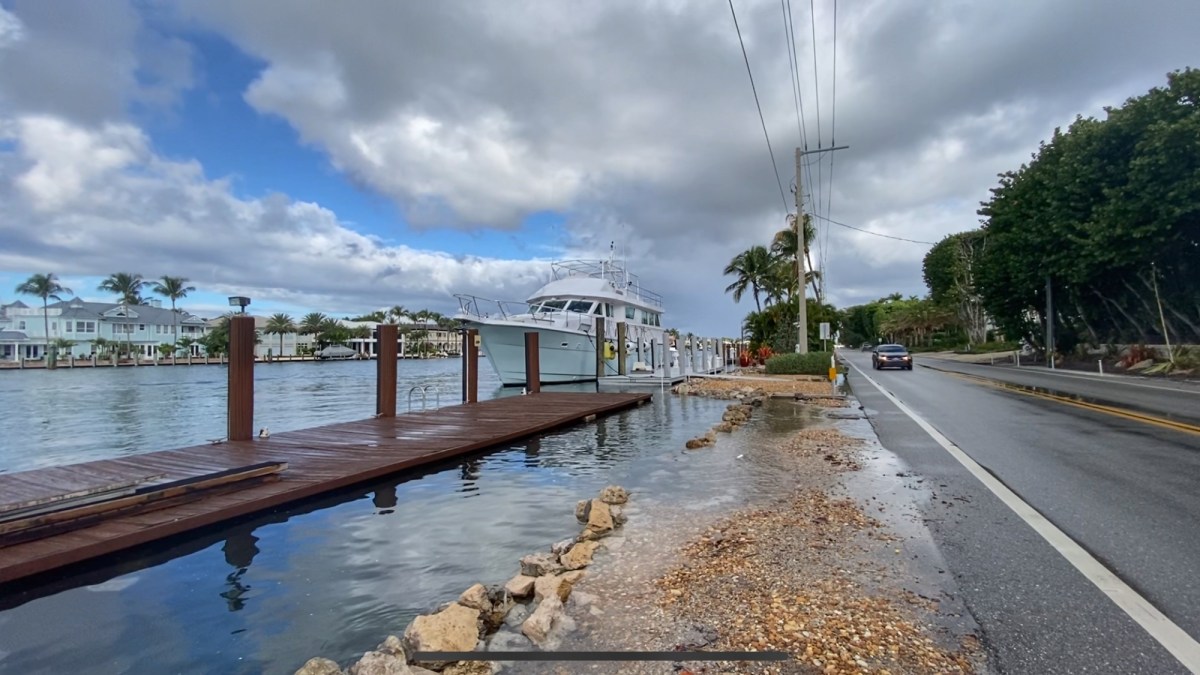
In cases where sea level rise floodwaters cannot be held back, private property owners are going to face a host of problems. As owners of real estate located in neighborhoods that flood now can attest, typically the first sign of sea level rise is seawater collecting on roadways or rising up out of storm drains that would normally drain into the ocean, a harbor or other waterway. Sounds like a minor problem, until you have to park blocks away from your home and wade through the water to reach your front door. Driving through seawater is out of the question. The salt is extremely corrosive to vehicles.

The next step in the typical sea level rise flooding progression is floodwater collecting on a property, where it can rend septic systems inoperable, pollute freshwater wells, and damage landscaping and exterior structures. In cases where the seawater enters a home, the costs can be devastating. FEMA’s National Flood Insurance Program website has a flood damage calculator that estimates an inch of water alone can cause nearly $27,000 damage to a 2,500 home. A foot of floodwater can cost over $72,000 to repair.

In extreme cases, local governments are determining that it’s no longer cost-effective to maintain and rebuild roads and critical infrastructure to serve properties that are repeatedly inundated. Officials are insisting on buyouts, where they pay an owner fair market value to abandon their homes. It’s important to note that buyouts are expensive and only possible where federal and state funding is available. It’s uncertain how long the government will be able to afford buyouts. If the funding dries up, real estate owners could be left with properties that regularly flood, aren’t insurable, and are impossible to sell.

The immediate coastline isn’t the only place at risk from sea level rise. In areas like South Florida that are built on porous limestone or Honolulu that are built on porous volcanic rock, higher seas can push seawater inland underground. The dense seawater, in turn, can force the fresh water table upward toward the surface where it saturates soils. This can create three problems: 1) Unable to absorb rainwater, the saturated soils can cause surface flooding; 2) Septic systems that rely on dry soil to filter impurities can become inoperable when saturated soils can’t handle any more water; and 3) Fresh water well systems can become polluted by saltwater making them unusable.

Beyond the physical problems floodwater presents to coastal communities, private property owners also have to keep an eye on trends in the property tax, insurance and mortgage sectors. Coastal communities are fighting for federal and state funding to pay for sea level rise control projects. When the money runs short, local taxpayers will have to cover the bill for flood prevention projects.

The National Flood Insurance Program is already in the process of making sure that owners of properties most at-risk of flooding pay higher premiums. And, after the tragic condo building collapse last summer in Surfside, Florida, mortgage backers Fannie May and Freddie Mac are now forcing condo associations to answer detailed questions about building maintenance and the level of reserve funds available to cover routine maintenance and repairs. In instances where buildings are deemed to be poorly maintained, short on cash, or unsafe, lenders will be barred from issuing mortgages. This new policy is already wreaking havoc in the South Florida condo market, where closings are being delayed due to the stringent requirements. The threat is compounded by the fact that even cash buyers can be forced to show that they will be able to get a mortgage if they don’t have enough resources to cover the cost of a condo.

With all of these factors in play, it’s clear that the prospect of another foot of sea level rise is something that real estate owners and buyers can no longer afford to shrug off and ignore. Every additional inch of water that accumulates between now and 2050 is going to compound the challenges faced by coastal communities. Due diligence — staying up to date on the latest developments and responding appropriately — is the only way to protect real estate investments.
Changing Our Eating Habits Is One Way to Fight Sea Level Rise Flooding — Yes, Really

One way coastal real estate owners can fight sea level rise flooding is by eating a more plant-based meat diet that produces less greenhouse gases than animal-based meat meals. StepByStepChef.com has a series of free plant based meat recipes and videos that will show them how to get started.

Sea level rise flooding is as surely a symptom of global warming as raging wildfires, mega-droughts and more powerful hurricanes. The disease that’s driving the growth in such disasters is humans burning fossil fuels — such as coal, oil and natural gas — that release the greenhouse gases that are heating up the planet.

Fighting sea level rise requires a concerted effort by real estate owners and governments to take steps necessary to hold back the floodwaters, but it also demands that we all change our habits to reduce the amount of greenhouse gases — primarily carbon dioxide and methane — that we release into the atmosphere. Among our options are buying the most fuel efficient vehicles we can afford; consolidating trips so we don’t drive as much; weatherizing our homes and offices and equipping them with efficient heating and cooling systems; and eating a more plant-based diet.

The last point is one that I’ve been focusing my energies on lately. For years, I’ve own and operate a website called StepByStepChef.com where I post free recipes and videos that show people how to cook hundreds of dishes in a detailed step-by-step manner. I’m pleased to report that my videos have been viewed over 14 million times.

To help myself and others to reduce our carbon footprints, I spent the last several months sampling plant-based beef, chicken, pork and even fish — many of them are quite delicious — and building dishes around them. Why? Because it takes far less fossil fuels to create plant-based meats than it does animal based meats. In addition, plant-based meats are produced without the release of methane — a powerful greenhouse gas — that animals give off as part of normal biological processes.

Last week, I started to post videos showing people how to make delicious meals — such as plant based meatballs and spaghetti, plant based beef tacos, plant-based chicken stir fry, and plant-based sausage omelets. All of the recipes were tested for taste and texture before I produced the videos.

If you’re interested in helping to fight global warming and sea level rise flooding by reducing your carbon footprint, I invite you to take a look at the plant-based cooking videos on StepByStepChef.com. There are already 17 free recipes and videos on the site with much more to come. In addition to the plant-based cooking instruction, you’ll find over 225 other free recipes and videos that are fully vegetarian or use animal-based ingredients.

If we work together to fight climate change and sea level rise at the source by reducing our carbon footprints, we just might be able to escape the dire predictions scientists have drawn if we continue to release greenhouse gases into the atmosphere at the current rate.

Coastal Condo Boards have a Powerful New Ally in Building Maintenance Battles with Owners: Mortgage Providers

In many coastal condo buildings and developments, one of the hardest challenges for condo boards is convincing owners to cover the cost of routine and even emergency building maintenance. The days of such battles are likely over as condo boards gain a new ally: mortgage providers.

According to an article published today in The Wall Street Journal (“Surfside Tower Collapse Makes Buying Condos More Complicated”), in light of the tragic collapse of the oceanfront building in South Florida last summer — possibly due to owner reluctance to fund maintenance projects — mortgage backers Fannie Mae and Freddie Mac will no longer buy loans involving condos located in buildings that need significant maintenance or that have safety issues. Fannie Mae and Freddie Mac spokespeople told the newspaper the new requirement will ensure buildings are safe and maintained responsibly. (It’s clear that it will also increase the odds that a typical 30-year mortgage will be payed off instead of abandoned in the event of a building condemnation or collapse.)

Fannie Mae and Freddie Mac have already given lenders detailed questionnaires that condo boards have to complete regarding a building’s condition. Their answers are being used in the loan approval process. The Journal report says that the new requirement is already slowing down the loan approval process as building managers and board members don’t always have the facts they need to answer the questions accurately or completely.

Fannie Mae and Freddie Mac’s new policy regarding building maintenance will have several consequences for condo owners and buyers. Condo owners are going to have to get used to the new reality that in order to sell their condos to buyers using loans and, ultimately, to protect their property value, they will have to become more amenable to paying higher condo fees and special assessments to cover the cost of routine inspections and routine and emergency maintenance projects. Buyers, on the other hand, are going to have to become more aggressive in gathering information on condo building maintenance at a property of interest BEFORE they submit an offer and mortgage application to avoid submitting offers on condos that will likely fall through due to building maintenance deficiencies and/or safety issues.

Sea level rise is another factor that’s sure to complicate the building maintenance issue. Condo buildings located near the coast typically require more maintenance than buildings located inland. Salty ocean air and seawater can be very corrosive when they come into contact with structures. Exposure to them often results in the need replace stucco, concrete and rebar, especially in buildings with balconies. As sea level continues to rise, buildings will become increasingly vulnerable to these destructive forces of nature.

The question for owners and buyers to ponder at this point is will owners have the resources to fund costly repairs necessary to ensure buyers can still purchase condos using loans. If not, some coastal condos could actually lose value due to a locked-up market.

NOTE: The Miami Herald also published a detailed article (“Prompted by Surfside Tower Collapse, New Condo Lending Rules Target Buildings in Need of Critical Repairs”) about this issue that’s protected behind its paywall.

Coastal States and Cities Ponder What a Foot or So of Sea Level Rise Over the Next 30 Years Means to Them

A day after the National Oceanic and Atmospheric Administration (NOAA) released a report that predicted an average of 14 inches of additional sea level rise by 2050, US coastal states and cities are pondering what it means to them.

The NOAA report said the additional sea level rise, on top of the foot that’s already accumulated over the last century, will not be evenly distributed. The Pacific Coast will see up to 8 inches of sea level rise, the Atlantic Coast up to 14 inches, and the Gulf of Mexico up to 18 inches. This is due to the unique interaction of the ocean and land at these locations, along with land subsidence and other issues.

News reports posted online since the report was released gives a general impression about how states and cities are responding to the report.

  • “In California, the impacts could be acute: Daily overland flooding from one foot of sea level rise equates to about $15 billion worth of properties at risk and would affect about 38,000 people, according to Patrick Barnard, a USGS research geologist who also worked on the report. The daily emergence of groundwater pushed up by the rising seas could expose an additional 350,000 people and $100 billion worth of properties, he said.” — “Rising Sea Levels Pose Perilous Threat to California Coast as Study Raises New Alarms” Los Angeles Times Feb. 16, 2022
  • “Rising seas will become an increasing problem over the next three decades in the Carolinas and along the East Coast as the planet heats up and the swelling ocean hits coastal properties. … The report is particularly relevant in the Carolinas and Georgia, where billions of dollars in developed property fronts salt marshes, tidal rivers and oceanfront beaches. Nuisance flooding is occurring more often in some spots across the South Atlantic, including tide-driven floods on sunny days.” — “High Seas Threaten the Carolinas by 2050. New Study Reveals How Bad That Will Be” The News & Observer Feb. 16, 2022
  • “Florida’s near-future of higher sea levels and more flooding is coming into sharper focus, according to a new government report, even as scientists say worst-case conditions appear to be further off than initially thought — giving people more time to prepare.” — “Here’s What Tampa Bay Can Expect from New Sea Level Rise Projections” Tampa Bay Times Feb.16 2022
  • “‘This report builds upon a body of science that we’ve incorporated into the planning, design, and implementation of every Master Plan project,’ said Chip Kline, chairman of the state Coastal Protection and Restoration Authority, which oversees the state’s coastal restoration and hurricane risk reduction master plan. ‘In fiscal year 2023 alone, CPRA is allocating over $1.3 billion toward the mitigation of climate change and the projected damages we anticipate from sea level rise in the coming decades.'” — “Seas Could Rise 2 Feet on Louisiana Coast by 2050, 4 Feet by 21” — Federal Officials Say NOLA.com Feb. 16, 2022

It’s clear reading the responses to the NOAA report from sea level rise flooding experts at the state and local levels that the NOAA study’s greatest value is as a reminder that 12-18 inches of sea level rise over the next thirty years might not sound like much but it actually poses a serious threat to public infrastructure — such as roads, bridges and wastewater systems — and private real estate. Another fact to keep in mind is that NOAA’s prediction — based on the best information available today — is subject to change as more accurate information becomes available or if there’s an unexpected change in glacial ice melt in Greenland or Antarctica.

The time to act to drastically reduce the consumption of fossil fuels that are releasing greenhouse gases into the atmosphere and driving global warming and reinforcing coastal defenses against sea level rise flooding has arrived.

140,000 US Homes At-Risk as Scientists Predict Another Foot of Sea Level Rise Over the Next 30 Years

Scientists at the US National Oceanic and Atmospheric Administration (NOAA) released a report today that predicted up to a foot of sea level rise by 2050. That’s equal to all the sea level rise that has occurred over the last century.

Researchers at NOAA and a half dozen other federal agencies relied on a combination of data from tide gauges, satellite observations, and climate modeling to reach their conclusion. “The new data on sea rise is the latest reconfirmation that our climate crisis — as the President has said — is blinking code red,” Gina McCarthy, National Climate Advisor, said in a news release posted on the NOAA website. “We must redouble our efforts to cut the greenhouse gases that cause climate change while, at the same time, help our coastal communities become more resilient in the face of rising seas.”

The NOAA report says at least two feet of sea level rise is likely by the end of this century. Other studies say we could see as much as eight feet if not enough is done to curtail the burning of greenhouse-gas-producing coal, oil and natural gas.

“By 2050, moderate flooding — which is typically disruptive and damaging by today’s weather, sea level and infrastructure standards — is expected to occur more than 10 times as often as it does today,” said Nicole LeBoeuf, NOAA National Ocean Service Director, in the news release. “These numbers mean a change from a single event every 2-5 years to multiple events each year, in some places.”

Kristina Dahl, a climate scientists with the Union of Concerned Scientists, told the Washington Post that 140,000 homes would be put at risk of flooding every other week on average if the NOAA prediction comes true.

Considering that many coastal communities are already spending millions of dollars to combat regular bouts of sea level rise flooding — even in the absence of coastal storms — the NOAA report should act as a call to arms for cities and towns not yet engaged in fighting rising waters. Among the risks for coastal real estate owners is higher taxes — as governments seek ways to fund projects to prevent sea level rise flooding — higher flood insurance premiums, and higher maintenance costs if their properties are inundated by sea water. Condo owners could also face costly special assessments to flood-proof their properties.

Another threat to real estate owners is the possibility that insurers will stop writing policies in flood-stricken areas. Mortgage providers, too might stop providing loans for properties that can’t be insured and that might not be functional for the full term of a 30-year mortgage.

As Sea Level Rises, Owners and Buyers Need to Read and Understand Condo Documents, Condo Board Meeting Minutes, and Financials

As sea level continues to rise, condo buildings along the coast are confronting greater challenges. The cost of insurance is ever-increasing as is the cost of maintaining buildings that are coming into greater contact with corrosive sea water.

As a result, the days of coastal condo owners being able to buy a condo and ignore how the building its located in is being managed are over. One powerful lesson from the tragic condo collapse in Surfside, Florida, last summer — which some engineers suspect may have been in part brought about because condo owners didn’t buy in on required maintenance — is that owners can’t afford to stay out of the management loop.

Buyers, too, need to invest some time in studying how well a condo building is being managed. They need to know if owners are committed to building up the reserves necessary to pay for routine maintenance, covering the cost of unanticipated repairs, and taking the steps necessary to adapt the building and common area to prevent sea level rise flooding. They also need to know how quickly insurance costs are increasing and if there are any repairs under consideration that may lead to costly special assessments.

Condo financial statements, condo documents, the minutes from condo board meetings, and copies of correspondence between the condo board and owners are a great way to find out how committed a condo board and owners are to maintaining a building and its common area.

Owners should have easy access to all documents. Buyers, on the other hand, need to know the rights they have in the state the building is located in to acquire copies of the financials and documents, how long they have to review them, and whether or not they can withdraw an offer based on what they discover during the review period.

In states where buyers have no legal rights to review the financials and documents, they may want to request them in writing with a defined time limit for review from the seller before they submit an offer or submit an offer with a written contingency that they can withdraw the offer if they don’t like what they see.

Buyers should consult a real estate attorney regarding how to initiate this review process. They might also want the attorney to review the condo financials and documents to identify any red flags.

The seas aren’t going to stop rising any time soon. To protect their financial futures, owners and buyers need to set aside time to find out what’s really going on in a building of interest located along the coast.

Powerful New Tool Gives Real Estate Owners, Developers, Planners & Government Officials a Detailed View of the Threats Posed by Sea Level Rise

One of the greatest challenges for coastal real estate owners, developers, planners and government officials is acquiring a detailed understanding of the complicated challenges sea level rise flooding poses to their communities.

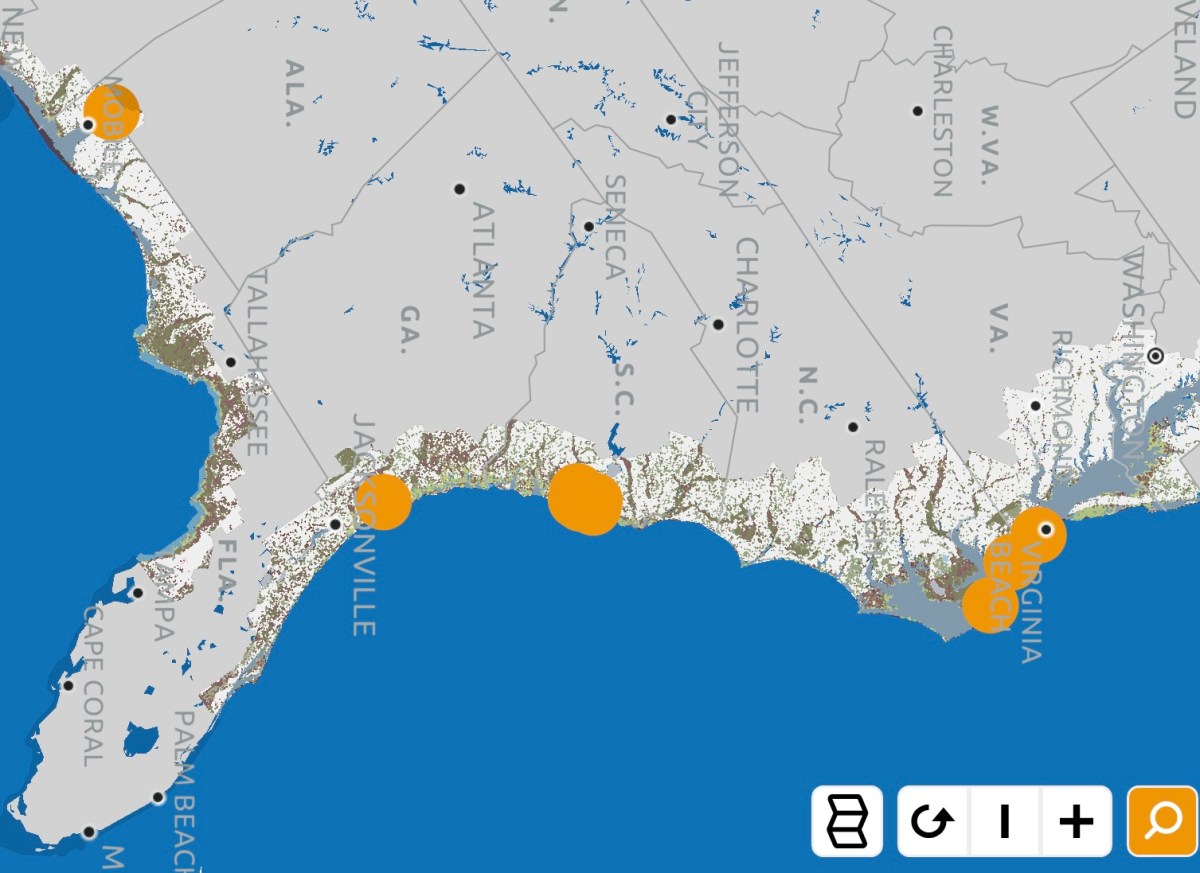
A new tool introduced today by the Southern Environmental Law Center (SELC), a non-profit and non-partisan organization dedicated to defending the environment, aims to deliver a clear view of the threats sea level rise poses to coastal communities in the Southeast through the use of an interactive mapping tool. “The project’s goal is to show citizens and decision-makers how the coast is changing,” the SELC said in a news release, “and how proposed infrastructure projects like highways, neighborhoods, and government or industrial facilities will fare as the water keeps rising and floods get worse.”

Visitors to The Changing Coast website will find an interactive map with overlays that enable them to visualize: 1. The flooding that will occur in their community as sea level rises; 2. Development projects that will be impacted by higher seas; 3. The locations of toxic Superfund sites that could contaminate neighborhoods and water supplies if they’re flooded by ocean water; 4. The locations of socially vulnerable populations who are most at-risk from sea level rise flooding and storm surges; 5. Wetland areas and floodplains that need to be protected from development to act as sea level rise floodwater buffer zones; and 6. Areas that are most at-risk from more powerful storm surges resulting global-warming-fueled stronger hurricanes and tropical storms.

Among the real-world examples of areas where the interactive mapping tool could assist real estate owners, government officials, planners and developers in coastal communities, the SELC offered the following:

  • “A proposed 9,000-acre housing development in Charleston could flood now with just a Category 1 hurricane. And rising seas could put parts of the development under water before the mortgages are paid off.”
  • “The roads leading to the proposed Mid-Currituck Bridge in North Carolina could be flooded on sunny days in the future if sea level climbs just two feet, rendering the span useless.”
  • “A 21-million-ton pile of toxic coal ash on the banks of the Mobile River in Alabama could likewise be threatened by a Category 2 hurricane, and that threat only increases as sea levels continue to rise. A breach could spread toxic ash into the river, through the Tensaw Delta, and into Mobile Bay.”

“The goal is to help guide decisions for the future, and to plan smart strategies to protect what exists now,” said Chris DeScherer, and SELC senior attorney.

The SELC’s interactive map is a valuable source of information that real estate owners, buyers and agents in the Southeast should use when considering property in coastal communities currently experiencing sea level rise flooding or at-risk of experiencing it in the near future. It would be wonderful if this powerful tool became available in other parts of the country.

Want to Fend Off Sea Level Rise Flooding? Start with Your Natural Gas Stove

A study released last week that concluded natural gas cooking stoves in the U.S. alone are leaking the equivalent of 500,000 cars-worth of greenhouse gases every year is a powerful reminder that real estate owners must play a role in combatting global warming and sea level rise flooding.

Researchers at Stanford University said in the study, published in the journal Environmental Science & Technology, that natural gas cooking stoves in over “40 million U.S. residences release methane — a potent greenhouse gas — through post-meter leaks and incomplete combustion.” They noted that three-quarters of the methane was released when the stoves were off. Around 80 percent of the methane leaked from loose couplings and fittings that connect gas pipes to stoves.

For years, the natural gas industry worked to convince the public that natural gas was a clean energy alternative. Using natural gas to produce energy does in fact release half as much carbon dioxide as burning coal to generate the same amount of energy. But scientists are increasingly concerned that the production and transportation of natural gas is leading to the release of dangerous amounts of methane — a more potent but shorter lived greenhouse gas than carbon dioxide — into the atmosphere.

A report published by Global Energy Monitor, a non-profit that monitors the fossil fuel industry, concluded that projects the oil and gas industry plan to fund to increase the use of natural gas globally would lead to the release of greenhouse gases in excess of all the coal fired plant put together. Ultimately, natural gas could keep us on track toward climate change catastrophe.

So what’s a homeowner to do? Climate groups are encouraging them to replace their natural gas powered stoves, hot water heaters and other appliances with electric appliances. For those who can’t afford to replace them, Rob Jackson, a professor of earth sciences at Stanford who was one of the stove study authors, told National Public Radio said they should use a wrench to tighten the connectors between pipes and stoves. The American Gas Association told NPR this work should only be performed by licensed professionals.

The point of this story is that people who own real estate in coastal communities that’s threatened by sea level rise flooding should certainly do everything they can to, such as raising seawalls and structures, to protect their property from rising waters, which is a symptom of climate change and global warming. But they also need to do everything they can to reduce the root cause of the problem, which is clearly any human activity that leads to the burning of fossil fuels and the release of greenhouse gases into the atmosphere.

If they have a gas stove, they need to replace it or make sure it’s properly maintained. Other steps they can take to help include ensuring that their property is weather-proofed and equipped with the most efficient appliances available today. Even switching off lights and electronics that aren’t being used can make a difference.