“Above-Normal” Hurricane Season Forecast Means Coastal Real Estate Owners and Buyers Need to Consider Insurance Options NOW

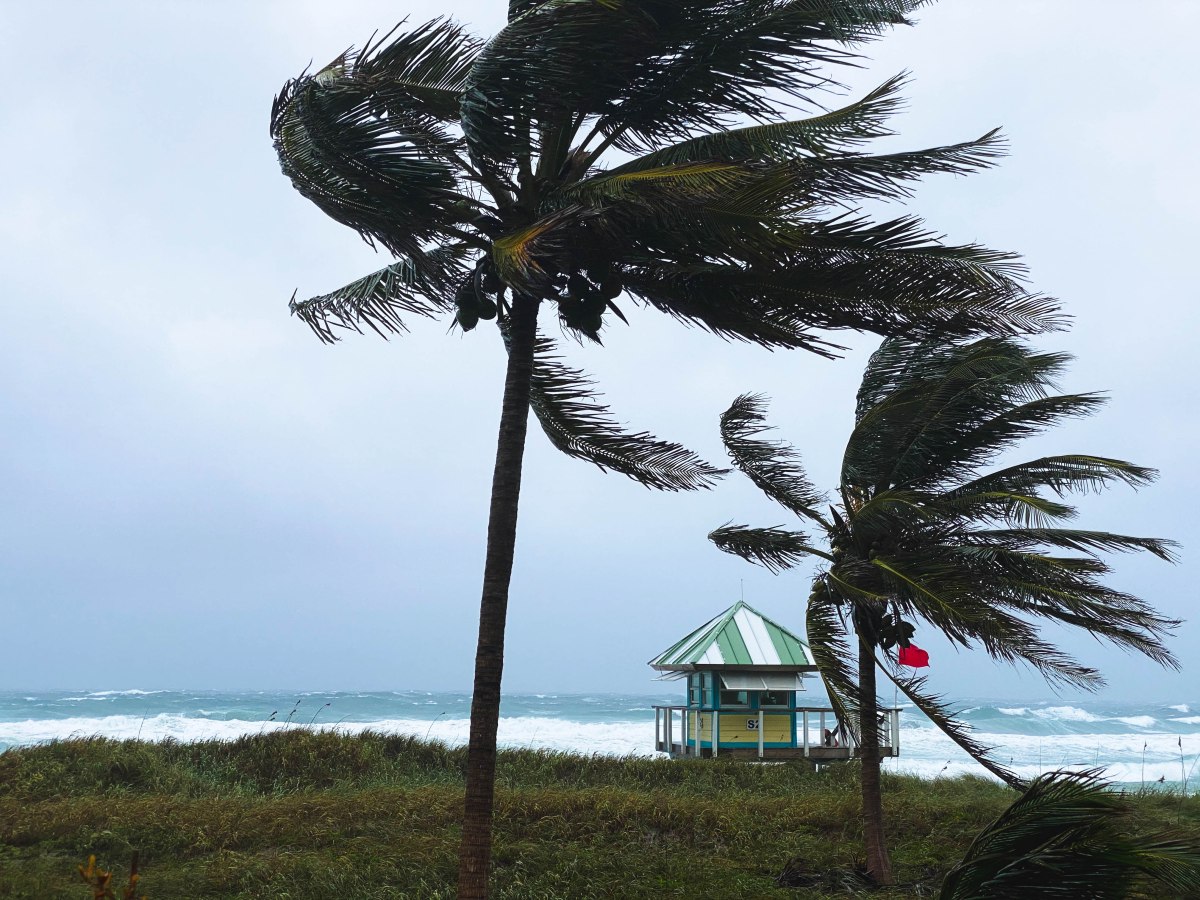
An ongoing La Nina and above-average Atlantic Ocean water temperatures are leading the National Oceanic and Atmospheric Administration (NOAA) to forecast an above-normal hurricane season. “NOAA is forecasting a likely range of 14 to 21 named storms (winds of 39 mph or higher), of which 6 to 10 could become hurricanes (winds of 74 mph or higher), including 3 to 6 major hurricanes (category 3, 4 or 5; with winds of 111 mph or higher), according to an agency news release.

With this extreme threat level, owners of coastal real estate and even those well inland in the Eastern U.S. and Hawaii who could be impacted by flood and wind damage from a degrading storm, need to review their insurance coverage. Considering scientists are reporting that global warming and sea level rise are super-charging hurricanes and tropical storms, people who own real estate in at-risk regions should put this on the top of their to-do lists.

Lenders require homeowners with mortgages to purchase basic dwelling coverage that covers the cost of repairs to a damaged home. In areas vulnerable to hurricanes and flooding, lenders may require special windstorm and flood insurance.

Considering that FEMA’s flood maps are notoriously outdated and homes well outside the designated flood zones have been damaged by flood waters in past storms, it’s important for homeowners in areas with even a seemingly remote chance of getting hit by floods to consider purchasing coverage through the National Flood Insurance Program. For example, in August 2017, thousands of homes outside the FEMA-designated primary flood zone flooded when Hurricane Harvey rolled over the Houston area.

With insurance costs skyrocketing in many coastal areas due to increased claims from past hurricanes and storms, fraud and other reasons, some homeowners are going without insurance. They tend to fall in two camps those who are gambling that their properties will not get hit by a hurricane or tropical storm and those who believe they have enough reserve funds to cover the cost of repairs if they do.

These homeowners need to be aware that waiting until a storm is likely headed their way to purchase insurance won’t work. Flood insurance purchased under the National Flood Insurance Program won’t actually kick in until 30 days after a policy is purchased. In addition, if a tropical storm or hurricane watch or warning is issued in a 16,000 square mile box around Florida, the state’s Citizens Property Insurance Corporation and most private insurance companies will not accept applications for new coverage. Insurers in other states may have their own last-minute purchase limitations. There’s also a risk that providers may not be able to process applications made before a storm in a timely manner.

When property owners are reviewing their insurance policies, they should also revisit their coverage amounts. With inflation, even $250,000 in coverage won’t provide as much repair and rebuilding purchasing power as it used to. They should also double-check their deductibles to make sure they’re still in line with their financial resources.

Evaluating homeowners, flood and wind insurance can be drudge work under the best of circumstances. However, with the high risk of storms and recent years of climate change super-charged storms wreaking record destruction on coastal real estate and points far inland, not doing your homework can lead to serious negative consequences should a storm hit your property.
Sea Level Rise Flooding Threatens More Than Your Real Estate

When people who own real estate in coastal communities consider the threat posed by sea level rise flooding, they often focus only on their own structures and land. That can be a costly mistake.

The fact is sea level rise flooding outside their property lines can impact their property value, financial future and quality of life. How? For example, nearby roads that flood can keep owners from reaching their property. Wastewater systems that are infiltrated by seawater can become ineffective or even inoperable, which can result in sinks and showers that don’t drain and toilets that don’t flush. And taxes can go up when cities and towns are forced to raise seawalls and other critical infrastructure.

A Civil Grand Jury in Humboldt County in Northern California is busy drafting an assessment that lists the many ways sea level rise will impact coastal communities there. In a report titled “The Sea Also Rises”, the Grand Jury warns that the county, which includes Arcata and Eureka, is at risk from flooding due to the double-whammy of sea level rise and natural land subsidence.

The list of problems the Grand Jury says will be created as seawater inundates more and more land includes the following:

  1. Communities around Humboldt Bay will experience more frequent flooding.
  2. Highway 101 and the only access road to King Salmon could be cut off by floodwater.
  3. The local energy system could be disrupted as flooding impacts a PG&E generating station, municipal water transmission lines, electrical transmission towers, and transmission poles.
  4. An interim spent nuclear fuel site could be damaged.
  5. Commercial properties, including three cargo and commercial docks, could be flooded.
  6. Environmentally contaminated sites in the Arcata and Fairhaven could be compromised.

The Grand Jury isn’t only forecasting future problems, it’s taking stock of problems that exist today. For example, the report says property values in the Fairhaven/Finntown area are already suffering because very high tides are causing septic systems and leaching fields to fail — which is a problem in many coastal areas experiencing sea level rise flooding.

In its draft summary, the Grand Jury is calling on all elected officials to make sea level rise flooding a priority. “The County of Humboldt; the cities of Arcata and Eureka; and the Humboldt Bay Harbor, Recreation, and Conservation District should formally state their immediate and continuous support for, and commitment to, SLR (sea level rise) mitigation and adaptation efforts,” it wrote.

Cities and towns all along the US coastline are taking stock of the threats posed to residential and commercial real estate, public lands, and critical infrastructure. A few years ago, an environmental consultant estimated that the mid-sized South Florida city I live in needs to spend $378 million to defend itself against sea level rise. With inflation, it’s likely the actual cost is higher now.

Owners and buyers of real estate in coastal communities need to know what’s at-risk from sea level rise flooding in their community, how much it will cost to eliminate and mitigate the flood waters, how much local taxpayers will be expected to contribute to the effort, and the soundness and life-expectancy of the projects being implemented and those under consideration. Not knowing this critical information could lead to an unexpected loss of property value and spike in taxes and other expenses.

2021 Was a Record Year for Sea Level Rise, That’s Bad News for Coastal Real Estate

This week, the the World Meteorological Organization (WMO) reported that four key climate change indicators reached record highs in 2021. The amount of greenhouse gases in the atmosphere, ocean heat, ocean acidification, and sea level rise all broke records. The WMO also reported that the years 2015-2021 were the warmest since the industrial revolution–with 2016 being the hottest on record.

Professor Petteri Taalas, WMO Secretary-General, commented, “Our climate is changing before our eyes.”

In 2021, humans burned more fossil fuels — coal, oil and natural gas — which released more greenhouse gases into the atmosphere. The global warming we’re creating is what’s driving the sea level rise that’s already flooding coastal real estate.

The most disturbing findings for those who own or are interested in purchasing real estate vulnerable to sea level rise flooding: Ocean heating hit a record high in 2021, with the last two decades showing the greatest rate of temperature gains. (Ocean heating and expansion are a major driver of sea level rise.) In addition the rate of sea level rise is accelerating. It increased at nearly .18 of an inch per year from 2013-2021, a rate more than double the increase measured each year between 1993 and 2002.

There’s no sign in 2022 that humans are going to break their addiction to fossil fuels. According to basic science, that means the globe is going to continue to warm and sea level is going to continue to rise at an ever-accelerating rate. Flooding will, too.

Coastal real estate owners who are betting that they’ll be able to sell before the problem impacts their property value need to factor the rapid changes taking place on air, land and sea into their calculations.

Does the 1.5 Degrees Celsius Global Warming Goal Even Matter Anymore?

Headlines abound this week that the world has a 50% chance of surpassing the dreaded 1.5 degrees Celsius (2.7 degrees Fahrenheit) increase in global temperature since pre-industrial levels. The media is reporting on a World Meteorological Organization (WMO) prediction released Monday that the globe could hit that mark briefly in 2026, which, the experts say, could give us a sampling of what living with catastrophic climate change would be like.

Reading the reports, I had to wonder, do the scientists, journalists, and public officials who worship in the church of 1.5 degrees Celsius, you know, ever actually go outdoors or read the headlines about what’s already happening in the world due to climate change? When the WMO was crunching its numbers and issuing its report, wildfires were ripping through New Mexico at an intensity usually experienced later in fire season, the Western US was pondering life without water and electricity from Lake Powell and Lake Mead, Southern California was dreading the possibility that it could run out of water in August, Northern California was concerned that saltwater could back up into the Sacramento-San Joaquin River Delta, which would pollute a freshwater source millions of residents and farmers depend on, houses were falling into the ocean in the Outer Banks of North Carolina, hundreds of millions of people in India and Pakistan were enduring a two-month-old deadly heatwave, and France was preparing for a record drought. We’re even starting to see climate migration as Californians move out of their state to escape the heat, wildfires and water restrictions. This is just a partial list of the catastrophes we’re already experiencing, and, according to scientists, we’re only 1.1 degrees Celsius over the pre-industrial temperature benchmark.

The WMO report was released a week after Science magazine published a curious report with the headline: “Use of ‘too hot’ climate models exaggerates impacts of global warming”. The article, the U.N., which for years has been sounding the alarm about climate change, was subtitled “U.N. report authors say researchers should avoid suspect models”. Their concern? That studies that predict the world will get hot faster than expected “threatens to undermine the credibility of climate science, some researchers fear.” Let me get this straight: The world is getting torched now and their biggest worry is “the credibility of climate science?”

I think UN Secretary General Antonio Guterres hit the mark in March when he said: “Despite growing pledges of climate action, global emissions are at an all-time high. They continue to rise. The latest science shows that climate disruption is causing havoc in every region – right now. We are in a race against time to limit global heating to 1.5 degrees. And we are losing.”

As someone who lives in South Florida, where sea level rise is already flooding many coastal communities and lurking just under the manicured lawns and streets in others, and who spent last summer camping his way across America to see firsthand how climate change is already impacting other parts of the country, I can tell you with great certainty that aggressive science isn’t the world’s biggest problem, current climate catastrophe is. During my adventure, I choked on smoke from wildfires ripping through the Rockies, saw Lake Powell shockingly depleted of water, houses teetering on cliff’s edge in Pacifica, Lake Shasta’s water way below its blaze orange banks, a gray dome where Mount Shasta would normally be covered in snow and even worse the northeast side of the mountain ablaze, a fire burning at a distance in Lassen National Peak that consumed half the surrounding forest after I left, the mushroom cloud signature of the Boot Fire in Oregon, and Mount Rainier low on snow after a record heatwave. Running from fire and smoke was an essential part of my summer vacation.

To me, the science I’m reading is out of whack with the reality I’m witnessing with my own eyes. I’m beyond worrying about 1.5 degrees Celsius and temperatures above that mark because we’ve already reached the point of global catastrophe.

There’s a lot of talk about how people are feeling frightened and helpless about climate change. Maybe the solution is to stop arguing over the science and tell them what they can do right now to make a difference through a series of public service announcements. For example, they need to know that they can make a difference today by: 1. Voting only for candidates who believe in climate change and are committed to fighting it; 2. Purchasing the most energy efficient vehicle they can afford; 3. Only driving when necessary, consolidating trips and sharing the ride; 4. Buying only what they truly need; 5. Weatherizing their homes and offices; 6. Purchasing energy efficient appliances; 7. Turning off appliances and electronics that are not in use; 8. Investing in renewable energy, such as solar panels and windmills for their homes and businesses; and 9. Eating a more plant-based diet. In short, they need to understand that we cannot, in fact, continue to live as we are, and continue to live on a habitable planet. The choice is stark, but real. And saving the planet will come at great sacrifice — including higher costs for energy, food and other goods.

Evidence abounds that we’re not running out of time to counter the catastrophic effects of climate change, we’re out of time. We need to act now or suffer even greater consequences.

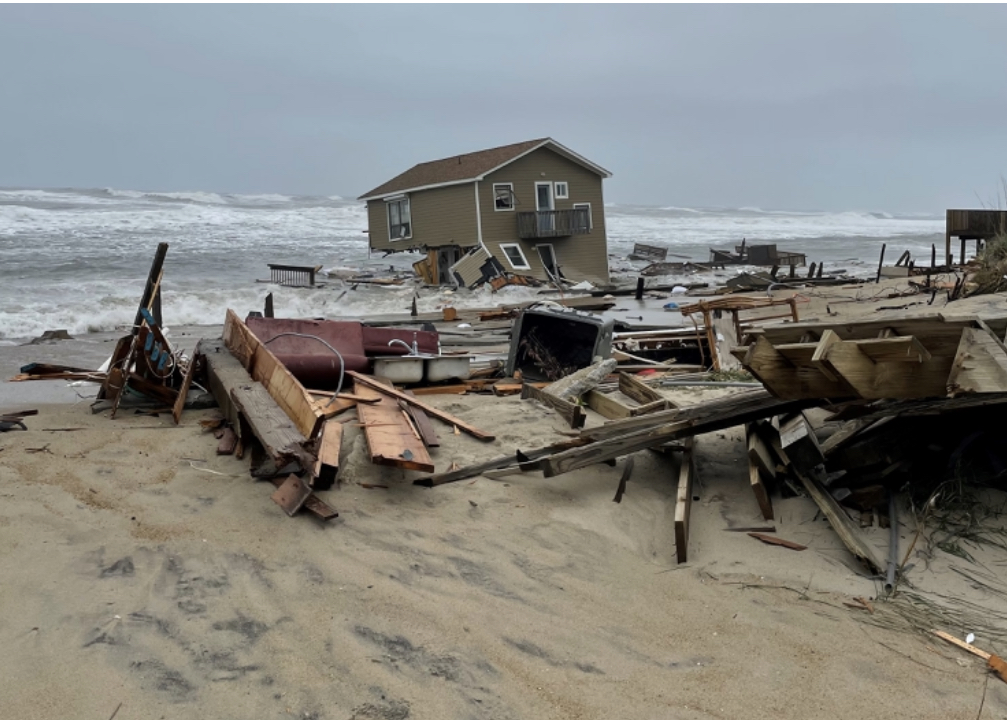
Cape Hatteras Houses Collapse into Ocean: Is this the future of sea level rise?

When it comes to sea level rise damaging beachfront real estate, Cape Hatteras National Seashore in the Outer Banks of North Carolina is the canary in the coal mine. The thin, sandy barrier island is infamous for losing houses to the sea whenever there’s a hurricane or strong tropical storm.

Now, before hurricane season even begins, houses in Rodanthe, south of Nag’s Head, are being swept out to sea. The National Park Service says three houses have been lost to the waves since February and another nine are currently at-risk of the same fate.

There are several factors contributing to the string of house collapses. A low pressure system swirling off the Outer Banks is sending powerful waves crashing onto shore. In addition, the barrier island has long experienced erosion due to regular wave action that gets worse whenever a hurricane or tropical storm hits or even passes close to the area.

Experts, however, have predicted that higher seas due to sea level rise would serve to intensify and speed up the erosion and house destruction, which only makes sense. Higher seas scour away sand more quickly and effectively. They also mean storm surges will travel further inland with more punch. In addition, the warming of the oceans and atmosphere due to climate change is super-charging hurricanes and tropical storms, which means they pack a stronger wallop.

Home loss on the Outer Banks is also due to the unique geology of barrier islands. In their natural state, the narrow sandy strands are meant to migrate inland as sea level rises. The Park Service is allowed to protect critical infrastructure, such as roads, but not houses. Even if the Park Service could take steps to shield the houses, such as building seawalls, nature would eventually break through the armor and sweep them out to sea.

It’s important to note here that scientists blame the loss of houses not only on natural forces but also the fact that humans never should have built the homes on shifting barrier island sand to begin with. Real estate owners and buyers need to carefully consider the consequences of owning real estate on barrier islands and beaches all along the US coast, especially now that sea level rise is in play. One thing’s for sure, houses toppling into the sea are going to become more common as the sea level rises and storms intensify in the decades to come.

(Photo Credit: National Park Service)

Freddie Mac Warns Sea Level Rise is Not Priced into Coastal Florida Real Estate Values

If you want to see where the real estate market is headed in light of climate change and sea level rise, watch lenders and insurers. Why? They have to be forward looking to protect their investment.

With that in mind, a research brief published this month by Freddie Mac, a governmental-sponsored company that backs mortgages, should sound a wake-up alarm to real estate buyers and owners in Coastal Florida (and across the country). In the piece, titled “Homebuyers in Coastal Florida are Not Factoring Sea Level Rise Risk into Home Prices”, Freddie Mac reported that prices are not being discounted for properties that are in sea level rise (SLR) exposed areas not within FEMA-designated floodplains. In fact, researchers found buyers of a primary residence, individual investors, and institutional investors were paying a 3.5% price premium for these homes.

Freddie Mac also reported that homes located in areas vulnerable to sea level rise experienced price discounts after hurricane flooding likely because buyers perceived a heightened flood risk rather than due to the risk of sea level rise itself.

“We conclude that homebuyers either lack awareness of SLR risk or consider it a long-term risk that will not be a concern during the time they own a home,” the researchers said.

Freddie Mac is concerned that the failure to consider the threat sea level rise poses to a property now could eventually lead to sea level rise-driven price drops later when (and if FEMA) updates its flood maps to reflect sea level rise flooding. The researchers say Florida’s housing market, with its large share of vulnerable properties built at very low elevation, could be significantly impacted.

This is yet another example of why owners and buyers of coastal property need to assess the risk posed by sea level rise flooding to make informed decisions and protect their financial futures.

Florida’s New Statewide Office of Resilience Gets Sea Level Rise Half Right

This week, Florida Gov. Ron DeSantis signed legislation to create a new Statewide Office of Resilience. The office is charged with creating an action plan to protect the state highway system from sea level rise flooding. It’s also responsible for creating a prioritize list of sites, such as medical centers, airports, utilities and emergency operation centers, that need to be hardened against rising seas.

The new law strengthens a 2021 law that required the state Department of Environmental Protection to develop a sea level rise resilience plan and a grant program to help cities and counties pay for infrastructure improvements.

While Florida officials should be applauded for taking the initiative and combatting the sea level rise that threatens coastal cities and towns, there’s a glaring omission. The law does nothing to reduce the burning of coal, oil and natural gas as well as agricultural sources of greenhouse gases that are driving global warming and sea level rise. This is kind of like working to put out a house fire without addressing the arsonist who’s flipping matches at it. This oversight will ultimately prove costly and disastrous for a low elevation state with coastal communities that are already flooding due to sea level rise and ever-stronger storm surges.

Florida’s half-way there on climate change and sea level rise. With billions of dollars worth of real estate under threat of inundation, let’s hope the state takes the next step and addresses what’s driving the problem.

With Hurricane Season Approaching, Now’s the Time to Purchase Flood Insurance

Hurricane season 2022 officially begins on June 1, and it’s expected to be a busy one.

With climate change and sea level rise intensifying tropical storm and hurricane rains and storm surge, now is the time for real estate owners in coastal communities and well inland to consider purchasing flood insurance — if they haven’t already. This is especially important because standard homeowner’s insurance policies do not cover flooding.

Property owners who plan to wait until a storm is aimed at their region to purchase flood insurance are making a big mistake. New policies under FEMA’s National Flood Insurance Program take 30 days to take effect.

Property owners who purchase properties using government-backed mortgages are required to purchase flood insurance policies. Many owners who purchased their homes using cash self-insure their properties. Some owners who are self-insured are under the mis-impression that because they’re located outside of designated flood zones that they shouldn’t be concerned about flooding. This can be a costly mistake. Estimates are that 25% of flood damage occurs in low-risk flood zones. An extreme example of this hazard is the fact that more than half of the homes that flooded in Houston, TX, during Hurricane Harvey were located outside designated flood zones.

Flood insurance policies cost on-average $700 a year, though FEMA has started to place a heavier premium burden on properties built in higher risk areas. The policies cover up to a quarter million dollars in damage. Buyers should also be aware that a seller’s flood insurance policy can be transferred to them at closing often at a significant savings.

Flood insurance is clearly worth purchasing. According to FEMA’s Flood Damage Cost Estimator, one inch of floodwater can cause up to $25,000 in damage and one-foot up to $72,000. As building materials and labor have become much more expensive in most regions of the country, these estimates are most likely on the conservative side.

Owners and buyers of real estate at risk of flooding can get more information about National Flood Insurance Program policies from the National Flood Insurance Program website.

New Hawaii Law Requires Sea Level Rise Threat Disclosure in Coastal Real Estate Transactions

Beginning this week, property owners selling coastal real estate in Hawaii are required by law to disclose the threat sea level rise flooding poses to a property. According to a State Department of Land and Natural Resources news release, real estate transactions involving properties located on or near the ocean must include the new disclosure. The new disclosure law is in addition to the National Flood Insurance Program’s requirement that sellers notify buyers that a property of interest is located near a flood-prone stream or area that may flood during heavy rainfall events.

According to an article posted on the Hawaii Life Real Estate Brokers website, the new disclosure law is based on modeling performed by researchers at the University of Hawaii. They studied coastal areas at risk from flooding or other damage due to sea level rises, annual high wave flooding, or coastal erosion.

Properties built between current sea level and 3.2 feet of elevation — the potential sea level-driven high water mark at the end of this century — are subject to the new disclosure law. Buyers, sellers and real estate agents can use the state’s interactive map to determine if they’re inside the disclosure zone.

Due to the hodge-podge of state-level sellers disclosure laws, buyers and sellers should always check to see what’s mandated in their area to avoid costly lawsuits and/or purchasing property that’s prone to flooding.

Sea Level Rise-driven Saltwater Intrusion Could Impact Coastal Real Estate Values

As sea level rises, coastal cities and towns are growing increasingly concerned that fresh water sources used for drinking water, wastewater treatment, agricultural irrigation, and industry could be fouled by saltwater intrusion. Saltwater intrusion occurs when higher sea level forces saltwater inland at the surface or underground through porous rock and sand. When the salt water reaches fresh water intakes on rivers or underground wells, the fresh water become unfit for human consumption and most other uses.

According to a study published in the Journal Nature, millions of Americans live in coastal communities at risk of losing access to fresh water due to saltwater intrusion. KCRA in San Francisco aired a report last week that examined the threat saltwater intrusion poses to the state’s Central Delta waterways.

As sea level rises, it threatens to push salty ocean water up into delta rivers and estuaries that provide drinking water to 27 million California residents as far away as Southern California. The water is also used to irrigate the Central Valley’s farmland.

Sea level rise isn’t the only contributor to the saltwater intrusion problem. The West’s ongoing mega-drought is also drawing down river levels, which could potentially hasten the inland movement of saltwater from the sea. The only way to prevent this is by releasing more water from reservoirs or the construction of a barrier to block the saltwater, which California is trying on the West False River.

The threat to real estate owners and buyers in all of this is that any community that loses access to fresh water is a community in distress. This could cause real estate values to plummet. Clearly everyone involved in coastal real estate needs to be aware of where their fresh water comes from and how safe it is from saltwater intrusion.