FEMA’S Climate Change Denialism Endangers Coastal Real Estate Owners

The Federal Emergency Management Agency (FEMA), which is responsible for responding to natural disasters and administering the Federal Flood Insurance Program, has become a major threat to coastal area real estate owners.

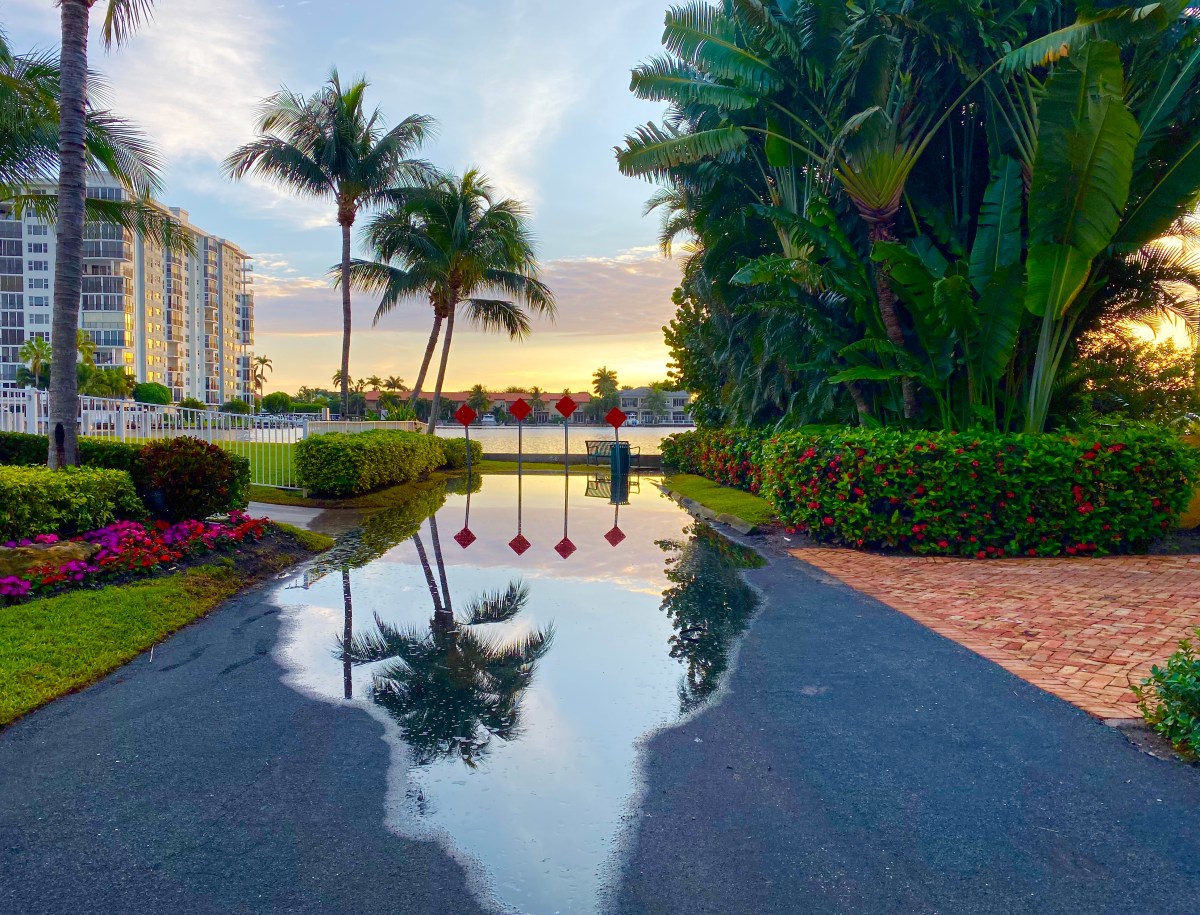
FEMA is notorious for using maps based on out of date data to set the flood zones that are used to determine both the level of risk faced by property owners and their flood insurance premiums. The maps are so bad the Department of Homeland Security said only 4-in-10 maps “adequately identified the level of flood risk” in 2017, according to this Bloomberg report. Despite more and more coastal properties being flooded by sea level rise, the agency doesn’t consider sea level rise or the king tides that make the flooding even more intense in the fall when it designates the flood zones.

FEMA’s climate change and sea level rise denialism was exposed yet again by its failure to include both terms in the agency’s National Preparedness Report released in December. Environmentalists say the agency’s inaction on climate change and sea level rise put the nation at risk.

“We can’t prepare the country — we can’t prepare communities — if we take this deliberately politicized route of excluding any mention of climate change,” Rachel Cleetus, a Union of Concerned Scientists’ climate expert told E&E News.

FEMA’s climate change and sea level rise denialism is in stark contrast to the position being taken by science-driven agencies. For example, NASA has webpages that warn about climate change fueling extreme weather events. And, in 2018, the National Climate Assessment, prepared by 300 experts guided by a 60 member federal advisory committee, concluded that climate change will continue to cause extreme weather that damages infrastructure, ecosystems and social systems.

FEMA’s inability to take climate change and sea level rise flooding seriously is further proof that buyers, sellers, owners, and real estate agents in coastal areas need to perform due diligence to protect their financial interests. They all need to go where the federal government — and many state and local governments won’t — and gather information on where flooding is occurring, what other areas it threatens, and how local governments plan to deal with it. They also need to know how sea level rise flooding will affect their tax rates and flood insurance premiums. “7 Sea Level Rise Real Estate Questions” can help them to gather the information they need to make informed decisions.

Does Your State Require Real Estate Sellers to Disclose Sea Level Rise Flooding?

Each state has different requirements regarding a seller’s obligation to disclose sea level rise flooding issues to buyers in a real estate transaction. Not being aware of a state’s seller’s disclosure law can put buyers, sellers and even real estate agents at great risk.

Some states, like Louisiana, are very stringent. Sellers have to tell a buyer if a property floods, the source of the flooding, the type of damage the flooding causes, and whether any flood insurance claims have been filed. The last point is important because there have been cases where buyers have purchased a property and not been aware of a flooding issue. When the property floods and they file a claim, the past claims can be used against them and their insurance rates can skyrocket.

Other states, like Virginia, are pretty much the wild west when it comes to seller’s disclosures. Basically, sellers don’t have to disclose anything, and it’s up to buyers to find out what’s going on.

Florida lies somewhere in the middle. The state requires sellers to disclose defects that they’re aware of that materially affect the value of a property. This could be construed as meaning they’re required to inform buyers if a property experiences flooding. But in all actuality, the language is so non-specific that the state’s insurers are expected to lobby for legislation this year that’s more in line with Louisiana’s detailed level of disclosure.

Strong seller’s disclosure laws protect buyers, sellers, and real estate agents. Buyers, of course, are protected because they’re informed about sea level rise flooding issue BEFORE they make a purchase. Sellers are protected because they will know exactly what’s they’re required to tell the buyer. This can help them to avoid lawsuits for failure to disclose flooding. And real estate agents are protected because they, too, will know what’s expected of them, and they’ll be able to provide better advice to their clients.

A note of caution: Even in states that have strong seller’s disclosure laws, buyers should find out from more than one source if a property or neighborhood floods. Buyers should ask the seller to order a Comprehensive Loss Underwriting Exchange report from their insurer. The report will tell the buyer if any claims have been filed with most insurers in the last 5-7 years. Strolling the neighborhood and asking residents if the property or neighborhood floods can also yield valuable information.

The Natural Resources Defense Council has an excellent online map that features information about each state’s seller’s disclosure law. There’s also more information about this important issue in “7 Sea Level Rise Real Estate Questions.”

Accurately Predicting Sea Level Rise a Top Priority for Scientists in the 2020s

With millions of lives and hundreds of billions of dollars worth of real estate on the line, one of scientists’ top priorities in the coming decade is accurately predicting how fast seas will rise due to climate change.

The challenge for scientists is measuring ice loss due to melting in Greenland and Antarctica. Every year, both landmasses are pouring billions of gallons of water and billions of tons of ice into the oceans, which is contributing to sea level rise. Beyond determining what’s happening right now, scientists must use the data collected on global warming due to the burning of fossil fuels to predict how fast the melting will accelerate.

Satellites have shown that ice loss in Greenland is occurring seven times faster than it was in past decades, and ice loss in Antarctica is about three times faster than it was two decades ago. The run-off from the melting ice combined with expansion of the oceans as they heat up is currently causing seas on-average to rise just over a tenth of an inch a year. Some areas are experiencing much higher rates of sea level rise due to local conditions, such as land subsidence and proximity to the Gulf Stream.

This Scientific American article summarizes the challenges facing scientists trying to predict sea level rise and other consequences of a warming planet.

Sea Level Rise Flooding Victims in Norfolk, Virginia, Develop a King Tide App

Tired of sitting idle while sea level rise flooding inundated their neighborhood, an enterprising group of citizens in Norfolk, Virginia, decided to band together and develop a King Tide app. Dave Mayfield, a former environmental reporter, told CBS he was depressed from all the bad climate change news so he came up with the idea for the “Catch the King” app. Now hundreds of residents are measuring the timing and extent of king tide and sea level rise-driven flooding that emerges out of Callie Bay. Their data will help mappers to improve the accuracy of their tide and flooding forecasts.

The CBS report by Brooke Silva-Braga includes a quote from a new resident who didn’t know about the regular flooding of his yard until after he bought the property. He said it cost him $90,000 to raise his property. That, my friends, is why I wrote “7 Sea Level Rise Real Estate Questions.” The book tells folks buying in coastal areas — as well as sellers, owners, and real estate agents — what they need to know about sea level rise flooding BEFORE they decide how to proceed in a real estate transaction. Virginia, incidentally, is one of the states with the laxest seller disclosure requirement laws, which is also discussed at length in the book.

Sea Level Rise Forces Florida to Consider Another Foot in Elevation for New Coastal Real Estate Projects

In 2019, a Florida Building Commission subcommittee agreed with the findings of a Florida International University study that recommended that builders elevate new construction in coastal regions another foot to accommodate sea level rise. Craig Fugate, who served as the state’s director of emergency management and FEMA administrator during the Obama presidency, told the Miami Herald that in the face of climate change and hurricanes, “We cannot keep building the way we always have an expect a different outcome in future disasters.”

Every foot a structure is built over the base flood elevation can result in substantial savings in flood insurance premiums. Some developers, however, oppose the move because it can be costly. The next time the Florida Building Commission could change the code to require higher elevation for new building projects is 2023. Read more here.

Santa Barbara, CA, Officials Prepare to Release Sea Level Rise Battle Plan

Sea level rise is a threat along the Atlantic, Pacific and Gulf of Mexico coastlines. Officials in coastal communities are increasingly waking up to the threat of sea level rise-driven flooding and creating plans to combat it to protect real estate and their way of life.

Officials in Santa Barbara, CA, are putting finishing touches on a report due to be released next month that will include recommendations on how the city can mitigate sea level rise flooding damage. According to an article in The Log, a publication for California boating and fishing enthusiasts, the report will call for changes to the harbor breakwater, a program to more closely monitor the shoreline, and raising the city pier and marina facilities.

Without the modifications, experts predict sea level rise will claim the city’s sandy beaches by 2060 and the harbor will become unusable by 2100. Read more here.

Sea Level Rise Picks Up Pace in South Florida and the Keys

The Southeast Florida Regional Climate Change Compact is warning member governments from Palm Beach County to the Keys to start planning for 17 inches to 31 inches of sea level rise in the next four decades. The group released data at its annual meeting in Key West last month that increased sea level rise projections an additional 3 to 5 inches over previous forecasts.

Chronic sea level rise flooding already has Keys officials considering instituting a managed retreat, where the government buys out real estate and abandons roads. Many coastal governments are considering retreat as an option, especially in areas where maintaining infrastructure is considered too expensive for the number of residents served. The challenge if finding the money to purchase the distressed real estate and convincing owners who don’t want to sell. Read more in this Bloomberg Environment article.

NOAA Official Says It’s Time To Call It “Sea Level Rise Flooding”

An official with the National Oceanic and Atmospheric Administration told a Boston-area newspaper that it’s time to stop calling the chronic tidal flooding that’s plaguing coastal communities “king tides.” William Sweet, an oceanographer with the agency, told the Patriot Ledger that king tides — higher than normal tides that occur due to an alignment of the earth, sun and moon — have always been around, but they’ve only started to flood many locations in recent years. “We might as well call it what it is,” he told a reporter. “It’s sea level rise flooding.” The Patriot Ledger article by Jessica Trufant does an excellent job of explaining the sea level rise flooding problem and the threat it poses to coastal real estate.