Sea Level Rise Added Billions of Dollars to Hurricane Sandy’s Storm Surge Damage

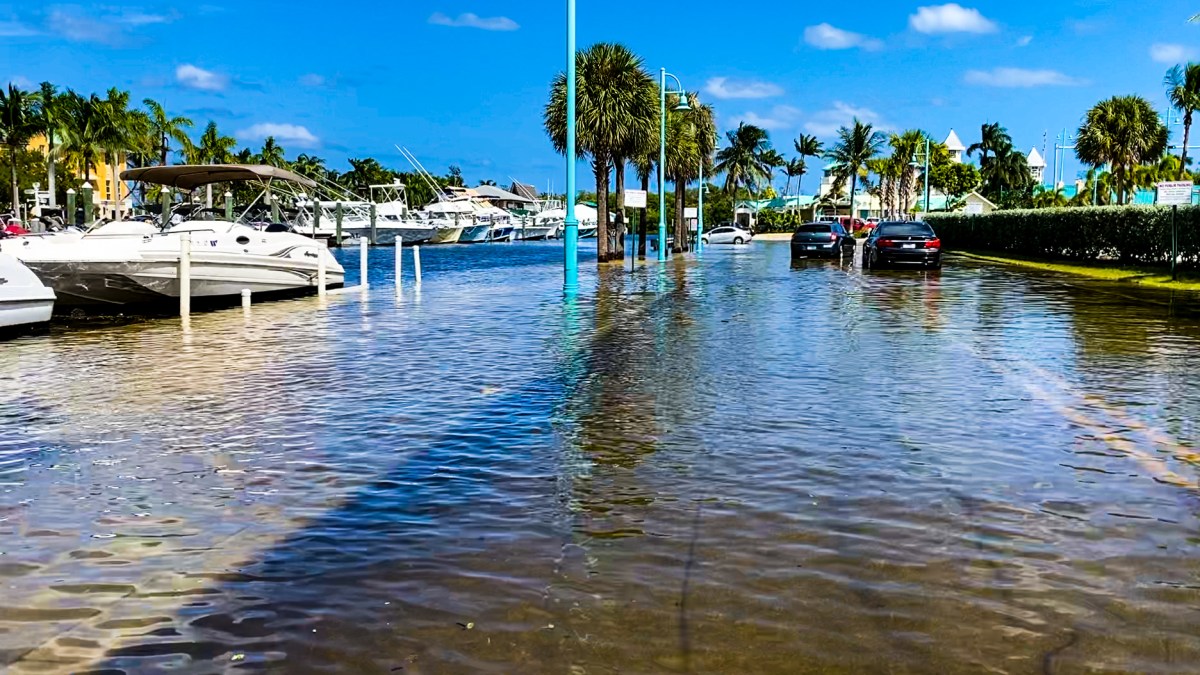
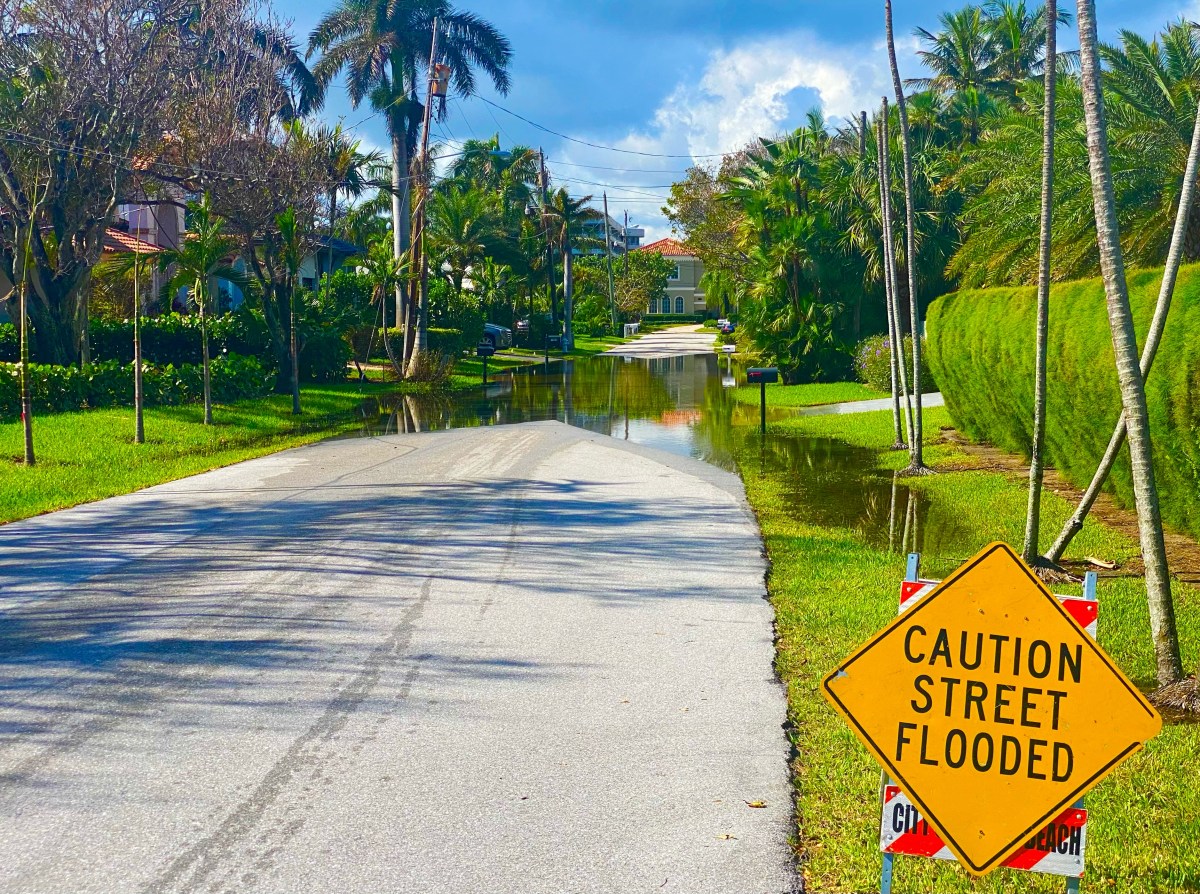
When it comes to sea level rise, buyers, sellers, owners, and real estate agents need to be aware of both the increased occurrence of nuisance flooding — tidal floodwaters that inundate neighborhoods on sunny days — and storm surges that can strike quickly and inflict billions of dollars in damages in a very short time.

A study recently released by researchers at Climate Central, an independent organization of scientists and journalists dedicated to informing the public about climate change, demonstrated the threat sea-level-rise-fueled storm surges pose to coastal communities. The researchers gathered information about Hurricane Sandy and concluded that a few additional inches of sea level rise contributed over $8 billion dollars worth of damage to the $62.7 billion the super storm inflicted on New York, New Jersey and Connecticut.

To arrive at that astonishing figure, the researchers analyzed water levels during Hurricane Sandy and compared it with an estimate of how high the water would have risen without human-caused sea level rise. Based on a conservative estimate of just over four inches of sea level rise added between 1900 and 2012, the year Hurricane Sandy struck, they estimated that sea level rise added $8.1 billion to the total tab the states had to spend repairing storm damage, including power grids and transportation networks.

The researchers noted in their analysis that economic damages may have been much higher than stated in their report. “Our estimates do not account for potential long-term economic effects, such as losses and gains in broad economic activity associated with employment and production changes across industries in the aftermath of a damaging cyclone event,” they wrote.

Climate Central’s chief scientist and CEO Benjamin Strauss, Ph.D., put the report in perspective: “Just a hands-width of sea level rise from climate change caused more than 10 percent of the damage from Sandy’s towering floodwaters. The implications are enormous. For any lesser ocean flood, the percentage must be higher.”

Clearly buyers, sellers, owners, and real estate agents can’t afford to ignore the influence ever-rising seas have on damaging storm surges when they’re evaluating coastal properties.

Florida’s State Government Does a 180 on Sea Level Rise Flooding

Just a few short years ago, the state of Florida’s official position on sea level rise was not only “no problem” but “don’t mention it”. Then Republican Gov. Rick Scott made national headlines by banning mention of climate change and its many impacts from official state discourse.

This month, Republican Gov. Ron DeSantis turned the tide — so to speak — on sea level rise by signing into law a bill that created the Resilient Florida Grant Program in the Department of Environmental Protection. The program will use millions of dollars in state funding to aid local communities in their efforts to combat sea level rise flooding, which has been damaging coastal real estate and infrastructure for years. Some of the funding will be spent on new seawalls in Miami and West Palm Beach, drainage improvements in Key West, and reconstructed roadways at many locations.

In addition to the grant program, Gov. DeSantis signed a bill that requires the Department of Environmental Protection to conduct a statewide risk assessment and draft a three-year sea level rise resilience plan.

Environmentalists are generally encouraged by the state’s willingness to acknowledge and take on the challenges posed by sea level rise flooding. They would, however, like to see officials take the next step and actually tackle the root cause of sea level rise: the burning of fossil fuels that’s driving global warming.

Sea Level Rise & Real Estate: What happens when whispered truths are spoken out loud?

Sea level rise flooding is rapidly transforming from an issue that was whispered about in many coastal communities — for fear mere mention would tank the local real estate market — to one that’s appearing on the front pages of major newspapers. This week alone the Miami Herald featured articles titled “‘Now, It’s About Elevation’: Buying a South Florida home in the era of sea level rise” and “Miami Beach residents want sea level rise fixes. But finding the right spot is a battle”.

The first article features interviews with a real estate broker and other experts who commented on how higher elevation properties in the flat, flood-prone South Florida landscape are becoming the most valued by middle-class buyers as sea level rises. (Apparently, wealthy buyers can afford to absorb the loss if their properties are flooded.) The second article examines the growing NIMBY (Not In My Back Yard) movement among residents in Miami Beach as the city struggles to find a location for a much-needed pump station that threatens to sully residents’ views.

Both articles are well-reported and matter-of-fact about the many complications sea level rise flooding poses to people involved in South Florida real estate. Reading the pieces made me think about how far we’ve come toward acknowledge the problem and what this tide change (pardon the pun) in awareness means to buyers, sellers, owners and real estate agents.

One thing’s clear: As buyers become more educated about the risk of sea level rise flooding, they are becoming more sophisticated about where they purchase property in coastal communities. An article published last December in the Charleston, SC, Post & Courier put it bluntly: “Downtown Charleston house hunters ask about home’s flooding history first”. With flooding an ever-worsening problem, “Does this property flood?” is sure to become the first question buyers ask in coastal communities all along the Atlantic, Pacific and Gulf of Mexico.

This reality is going to force owners to pay more attention to sea level rise to make sure that they get out before their property begins to lose value due to the direct flooding of their property or their neighborhood. Sellers are going to have to be very careful that they fill out seller’s disclosure forms in accordance with their state’s laws. (At this point, state seller’s disclosure laws range from full flood disclosure to none at all.) And real estate agents are going to have to make sure that they’re aware of which neighborhoods and properties in their farm area experience sea level rise flooding, that they fulfill their obligation to disclose the flooding to buyers in accordance with their state’s disclosure law and, if they’re a Realtor ™, their association’s Code of Ethics, and that they advise their sellers to comply with their state’s disclosure requirements. Conferring with real estate attorneys is always a good idea as there have been cases where real estate brokers and agents have had to pay out large sums of money for mishandling flooding-related issues.

Most Americans’ greatest investment is their homes. As buyers become savvier about sea level rise flooding and the many ways it can impact their home and their financial futures, it’s going to become harder to sell them a property that’s experiencing flooding now, soon to experience flooding, or difficult to access due to flooded roads. With this in mind, everyone involved in coastal real estate has to keep up to speed on this creeping catastrophe to make smart real estate decisions.

Buyers, Sellers, Owners & Real Estate Agents Need to Know Their Community’s Plan to Fight Sea Level Rise Flooding

How a community plans to deal with sea level rise flooding can have a big impact on buyers, sellers, owners, and real estate agents.

As sea level continues to rise, coastal communities are having to make difficult decisions about how to prevent flooding. Often the plans involve building or improving seawalls, installing pump stations, and raising property and critical infrastructure, such as roads and underground pipes.

These types of projects can have a substantial impact on property owners. How? Many cities and towns are planning or actually implementing projects with hefty million and even billion dollar price tags that have the potential to cause a spike in taxes or utility fees. In addition, the projects themselves can include seawalls, pump stations and infrastructure improvements that can block views and/or involve many years of construction.

Many owners are waking up to the fact that they need to keep up-to-date on how their community plans to deal with sea level rise flooding to ensure that their property value and quality of life aren’t negatively impacted. Right now, Miami Beach, Florida, a city that’s aggressively combatting sea level rise flooding, is debating the placement of a large pump station. Many residents don’t want it in their neighborhoods for fear of how it will impact their view and ability to enjoy their community. Similar arguments are going on elsewhere, including in Miami and Charleston, SC, where residents are concerned about proposed tall seawalls blocking their views.

Current property owners aren’t the only ones who need to stay on top of a community’s sea level rise plans. Buyers, too, need to perform due diligence and find out what projects are being considered and how they will impact their property of interest. There have been cases where buyers have moved into a home only to find out that a tall seawall or pump station was about to be built nearby or that the roads out front were going to be dug up for years.

Owners who plan to sell their homes need to know not only what’s planned for their neighborhood but also whether or not their state requires them to disclose what they know to buyers. Real estate agents should keep informed not only because it’s part of their professional duty to know what’s going on in their farm area, but, because they may be held accountable by buyers if they unknowingly purchase a home that will be impacted by sea level rise infrastructure projects.

The bottom line here is that buyers, sellers, owners, and real estate agents can no longer afford to turn a blind eye to sea level rise flooding or the approaches their communities plan to implement to combat it. The stakes — property value and quality of life — are too high.

Read more about this important topic in “7 Sea Level Rise Real Estate Questions for Buyers, Sellers, Owners & Real Estate Agents”.

Why is Due Diligence Critical When Considering Real Estate at Risk of Sea Level Rise Flooding?

In this video, I give a general overview of why due diligence — seeking answers from several information sources — is critical when buyers, sellers, owners and real estate agents are considering properties at risk of sea level rise flooding. For more detailed information, check out “7 Sea Level Rise Real Estate Questions for Buyers, Sellers, Owners & Real Estate Agents”.

There is no single source of reliable information buyers, sellers, owners and real estate agents can rely on when they’re pondering how to deal with a property in a coastal community now experiencing or soon to experience sea level rise flooding. That’s why they have to practice due diligence and turn to multiple sources for answers regarding the flooding status of a property to make informed decisions that protect their financial futures.

Due diligence is discussed in detail in my recently updated book “7 Sea Level Rise Real Estate Questions for Buyers, Sellers, Owners & Real Estate Agents”. If you watch this video, you’ll get a more general sense of why performing due diligence is critical and the strengths and weaknesses of several informational resources, including sellers, real estate agents, flood insurance providers, and neighbors.

As an example of why due diligence is necessary, let’s take a look at sellers and real estate agents as sources of information. Often buyers believe sellers are legally obligated to tell them if a property floods, but the fact is that every state has its own seller’s disclosure law. The state regulations range from very strict to so loose buyers are essentially on their own. Even real estate agents don’t always know flooding is impacting a specific property or neighborhood, and they might be pressured by a seller not to disclose what they do know to a buyer. (Note: This is a risky practice that may result in a costly lawsuit.)

With the limits of every informational resource, buyers who want to purchase property in coastal communities must perform due diligence and use several sources to determine if a property floods, how soon it might flood, and even whether the road out front floods, which can make it hard to access a property. Sellers should practice due diligence to determine their obligation to disclose flooding to a buyer. Owners should use it find out what they can do to address flooding or the threat of flooding and to decide whether it’s even worth the effort. Real estate agents should understand what due diligence is so they can tell their buyers and sellers how to gather more information to make informed decisions.

When you get down to it, you never can have too much information about a piece of real estate. In coastal communities experiencing or at risk of experiencing sea level rise flooding the more information the merrier.

Kindle E-Reader Version of “7 Sea Level Rise Real Estate Questions” Now Available!

Great news! The Kindle E-reader version of “7 Sea Level Rise Real Estate Questions for Buyers, Sellers, Owners & Real Estate Agents” is now available on Amazon.com. The Kindle version joins the paperback version which was published last week.

The point of “7 Sea Level Rise Real Estate Questions for Buyers, Sellers, Owners & Real Estate Agents” is to educate all parties about this creeping catastrophe and to show them how to perform due diligence — gather information from multiple sources — BEFORE they make real estate decisions. This is critically important to buyers in coastal communities because they are purchasing homes that actually experience sea level rise flooding and they don’t know it until the water shows up at their doors; sellers are selling properties without knowing their legal obligation to disclose flooding to buyers; owners think the flooding won’t affect them until they can’t drive on and off their property because the streets are flooded; and real estate agents are selling properties that flood — usually unaware of the problem — and they could face costly lawsuits.

I spent hundred of hours researching, writing, and editing the 2021 edition and ended up with 177 pages jam-packed with facts, charts and photos. The book is beefed up with chapters that cover: what happened over the last year; the relationship between the burning of fossil fuels, global warming, and sea level rise; what happens, in detail, when sea level rise flooding strikes a community, a neighborhood and an individual property; the pros and cons of the solutions communities and property owners are using to address sea level rise flooding; and how to research whether or not a property is currently experiencing sea level rise flooding or is soon to be inundated.

When readers finish “7 Sea Level Rise Real Estate Questions for Buyers, Sellers, Owners & Real Estate Agents” they will have a comprehensive understanding of how sea level rise flooding works and why everyone involved in real estate in coastal communities needs to pay attention to it before it threatens their financial futures. The truth is: sea level rise flooding is happening now and it will worsen in the future. Check out the book today!

PS: Now that the book is published, I’ll get back to posting the latest developments regarding global warming, sea level rise flooding, and real estate. Please check back often! Thank you!

The New, Improved “7 Sea Level Rise Real Estate Questions for Buyers, Sellers, Owners & Real Estate Agents” is Finally Here!

It took some doing, but the paperback version of the 2021 Edition of “7 Sea Level Rise Real Estate Questions for Buyers, Sellers, Owners & Real Estate Agents” is now available on Amazon.com! The Kindle e-reader version is in Amazon’s review process.

The hardest part of writing this year’s edition was forcing myself to stop as new information about global warming and sea level rise kept streaming in. The new book is much more comprehensive than the first edition. It has special chapters that cover developments in the field since the 2020 edition and a detailed description of what happens when sea level rise floodwater streams into a community, neighborhood, and individual property. It also has more information and instructions on how buyers, sellers, owners and real estate agents can protect their financial future by performing due diligence — gathering information from more than one source — before they make a critical real estate decision in a coastal city experiencing or soon to experience sea level rise flooding.

The challenge to anyone involved in real estate along the Atlantic, Pacific and Gulf of Mexico coastlines remains unchanged: There is no single source of reliable information that will give them the facts they need to know about past, present, and future sea level rise flooding. So they have to put on their detectives’ hats and find it themselves. “7 Sea Level Rise Real Estate Questions for Buyers, Sellers, Owners & Real Estate Agents” will give them the tools and insight they need to gather the information they need to make informed decisions.

Please check back often. I’ll have a lot more to say about the book, and, now that Covid-19 appears to be calming down, I’ll post a lot more updates with the latest developments regarding sea level rise and real estate.

2021 Edition of “7 Sea Level Rise Real Estate Questions for Buyers, Sellers, Owners & Real Estate Agents” Coming Soon!

Sorry I haven’t updated the site lately, but I’ve actually been busy writing the 2021 edition of “7 Sea Level Rise Real Estate Questions for Buyers, Sellers, Owners & Real Estate Agents.”

Managing the threat of Covid-19 threw me off my intended schedule, which was to release the book in November or December of 2020, but I’m back on track to bring you a comprehensive look at the risks involved in purchasing real estate in coastal communities that are currently experiencing sea level rise flooding or will have to confront the challenge in the years and decades to come. The new edition includes the latest developments regarding sea level rise science and the approach federal, state, and local governments are taking to address the flooding. It also has chapters that describe in detail how sea level rise flooding impacts communities, neighborhoods and specific properties, and what buyers, sellers, owners, and real estate agents need to do about it.

Those of you who purchased the 2020 edition of “7 Sea Level Rise Real Estate Questions” on Amazon.com will find a lot of new information presented clearly and concisely. The book will be of special value to buyers, sellers, owners, and real estate agents operating in coastal areas who want to make informed decisions regarding real estate transactions in areas confronting this creeping threat.

I will update the site when the book is available in paperback or Kindle versions, which should be in about two weeks. Thank you for your patience.

Once the book is released, I will get back on track to updating this site on a regular basis with the latest reports regarding sea level rise flooding and real estate.

Innovative Grant Program in Miami Beach, Florida, Helps Homeowners to Combat Sea Level Rise Flooding on Their Properties

Coastal cities and towns experiencing sea level rise flooding are on the lookout for innovative programs to help homeowners to combat sea level rise flooding on their properties. The city of Miami Beach, Florida, stepped up to the plate in December by creating a program that will provide matching funds of up to $20,000 to residents who are taking steps to prevent flood damage to their yards and homes.

The new Miami Beach Resilience Fund is allocating over $666,000 for the Private Property Flooding and Sea Level Rise Adaptation Grant. In announcing the new program, Mayor Dan Gelber said, “Private property adaptation is a vital component to Miami Beach’s overall climate resilience planning.” The city has invested hundreds of millions of dollars in flood control infrastructure projects, including elevating roads, installing pumps, and making improvements to stormwater and water treatment systems.

The city envisions private property owners using the grants to elevate air conditioning systems, improving the ability of yards to absorb rainwater and floodwaters, and elevating garage floor and yards. The funds are not enough to assist homeowners in elevating their houses or raising seawalls, which will likely be necessary as the ocean is predicted to rise by two feet between now and 2060. Additional public and private funds will have to be allocated for these flood mitigation steps that could cost many billions of dollars in Florida alone.

City Commissioner Mark Samuellan said the grant program will help the entire city’s economy. “Reducing the likelihood of flood damage will help to preserve and increase home values.”

You can read more about the grant program in this Miami Herald article.

The Threat of Flooding in Coastal Communities Rises as Sea Level Rise Lifts Water Tables

When Tropical Storm Eta soaked South Florida with torrential rains in November, many property owners far inland were shocked to see streets and homes flood in their neighborhoods. Experts say that the extreme flooding was due to the enormous amount of rain that fell on land already saturated by heavy rains that fell in October. They also said that the nearly 75-year-old canal system built to drain what had for been Everglades swamplands was unable to cope with the volume of water.

Sea level rise was part of the problem, too. The drainage canals rely on gravity to transport water from land to sea. As sea levels rise, the difference in height between water on and under the land and the ocean is becoming narrower. As a result, floodwaters don’t flow as quickly downslope to the sea, and, during extremely high tides, sea water actually tries to rush inland through the canals.

Another reality of the canal system is that if the region is experiencing higher than normal “king tides” during a storm, authorities who oversee the drainage system have to close gates to keep seawater from rushing up the canals. During heavy downpours, floodwaters can get caught behind the gates and, with no place to go, they accumulate and flood the land.

Sea level rise poses another less obvious threat that’s right under our feet. As the sea rises, water pressure causes it to migrate inland underground through porous rock and/or soil. The pressure from the salt water, which is heavier than fresh water, forces the fresh water upward, effectively raising the water table.

This can have several negative effects. When the water table rises, it saturates the land. When it rains, the water that falls cannot be absorbed by the soil and flooding results. Another negative effect is that the groundwater itself can rise up to the surface and create flooding.

An even nastier effect of rising water tables is that floodwaters can, as was experienced in South Florida, flow into the wastewater treatment system through manhole covers and broken pipes greatly increasing the flow to wastewater treatment facilities. This influx of water can cause the facilities to lose efficiency or fail all-together. The higher water tables can also cause on-site septic systems to fail. Both problems can result in the release of stinky, and potentially infectious sewage into floodwaters and onto the land.

The flooding Eta brought to South Florida isn’t unique to the region, and it illustrates a problem that many coastal communities and real estate owners are coping with now or will confront soon as seas continue to rise.

Many coastal communities from Florida to Oahu are racing to cope with the problem of sea level rise-induced rises in water tables. A superb article by Grace Mitchell Tada titled “The Rising Tide Underfoot” recently published in Hakai Magazine discusses in detail how rising seas are threatening Oahu, Hawaii. As Dolan Eversole, a management coordinator with the University of Hawaii Sea Grant College Program, told the reporter: “Sea level rise does not look like the ocean coming at us. It looks like the groundwater coming up.”

In South Florida, seawater is migrating inland through porous limestone. In Oahu, it moves through basalt rock. The end result is the same. According to the article, higher water tables are wreaking havoc, flooding residential neighborhoods and commercial and industrial areas. It’s also threatening critical infrastructure, such as roads, pipes that carry fresh water, wastewater, and gas, and underground wires that carry electricity and information.

As the groundwater rises, it also has the potential to release and spread toxic substances, such as oil and chemicals, deposited in the soil, which could lead to environmental catastrophe.

As sea levels continue to rise, groundwater issues will pose an even greater threat to at-risk communities.

Owners and buyers of residential and commercial real estate in coastal areas can’t ignore the threat posed by sea level rise-heightened water tables. The flooding can not only damage their property, it can make driving and communicating difficult, it can cause a spike in maintenance costs and in tax and insurance rates, it can discourage buyers from entering the market, which will drive down prices, it can discourage tourism and other business activity, and it could ultimately lead to lenders and insurers pulling out of the local market altogether, which would be the death knell for a healthy real estate economy.

Unfortunately, there is no easy way to combat rising water tables. For example, if you construct sea walls or natural berms, the seawater can easily migrate under and behind them through the porous rock and soil. With this in mind, owners and buyers of real estate in areas at-risk of rising water tables, need to perform due diligence and determine the level of the threat — has it happened in the past, is it happening in the present, and/or how far in the future will it happen. This information is critical when you decide if you can handle the risk and whether it’s worth taking on to begin with.