Virginia Beach Restricts Real Estate Development in Bold Sea Level Rise Plan

The city council in Virginia Beach, Virginia, voted this week in favor of a bold new plan to combat sea level rise and intense storm flooding. The city, which is in an area that already experiences climate change-driven flooding, requires developers to take more stringent steps to plan for flooding from sea level rise and strong storms.

Under the new plan, the city is calling on developers to design projects that handle 20 percent more rainfall than the National Oceanic and Atmospheric Administration predicts for the region. As the earth’s atmosphere continues to warm, climate experts predict more storms with downpours capable of flooding. The city is also requiring developers to replace the methods they’re now using to predict where stormwater runoff will go with more accurate Environmental Protection Agency software.

The city’s plan also includes provisions that require new construction projects to accommodate flooding due to sea level rise predicted between now and 2085. Hospitals and other critical infrastructure will have to be built to handle 3 feet of sea level rise. Non-critical structures will have to cope with 1.5 feet of higher seas.

Acting City Manager Tom Leahy told The Virginia-Pilot that replacing old regulations with the new plan now will save the city money tomorrow. “The more we develop under the old standards, the more we’re going to have to fix down the road,” he said.

Virginia Beach’s investment in these regulations and other steps to combat flooding from sea level rise, storm surges and rainstorms is expected to save millions of dollars each year. The city says some federal funding will be needed to cover the cost of the new projects.

Virginia Beach’s pro-active approach to climate change related flooding is commendable. Many major coastal cities are allowing expensive development with little thought to the impending threat and the cost to future generations.

This brings up an important point for real estate buyers: Just because a coastal community allows development doesn’t meant it is immune to flooding. Always perform due diligence to find out if a property of interest experiences flooding or is likely to experience flooding during the period you intend to own it. Also consider the fact that flooding can result in higher carrying costs for maintenance, taxes and insurance and it may cause the property value to decline.
Can We Rely on Mangroves to Provide a Line of Defense against Sea Level Rise Flooding?

One of the greatest challenges involved in combatting sea level rise flooding is finding solutions that will stand the test of time. Some coastal communities have been seeking natural solutions, such as sand dunes, wetlands and native vegetation, to hold back ever-higher tides and storm surges. Planners recognize the ability of natural ecosystems to self-regulate and adjust to sea water as it exerts pressure to march inland.

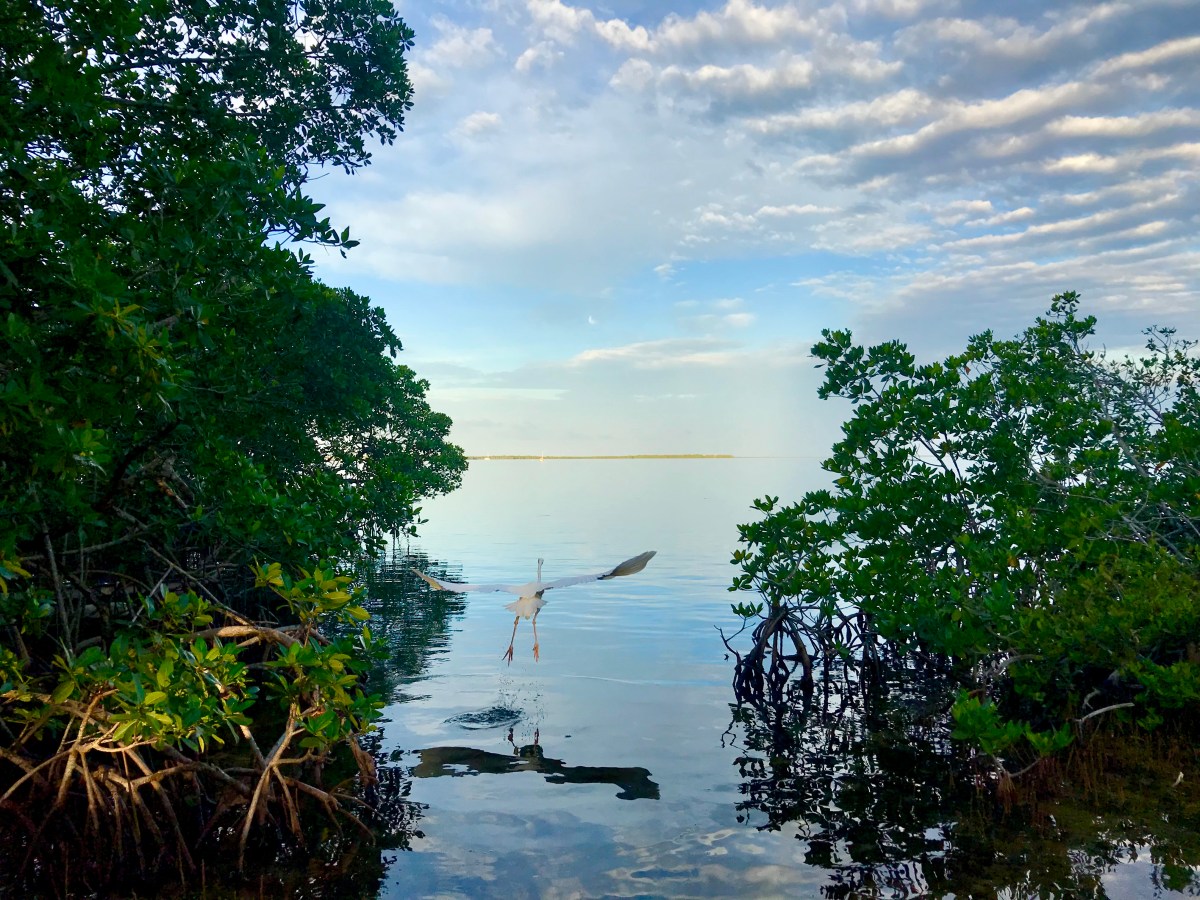
In the U.S., some southern Atlantic and Gulf Coast communities have been including mangroves in their action plans. They’re counting on the thick, leafy forests that thrive in shallow coastal waters to not only absorb and store some of the carbon released into the atmosphere by the burning of fossil fuels that’s driving global warming but to act as a buffer against storm surges and higher tides. They also hope to benefit from the mangroves ability to capture sediments and build land when the seas are trying to erode it away.

The idea sounded great until a recent study led by Macquarie University in Australia found that unless humans reduce the release of greenhouse gases, the seas will soon rise at a faster pace than the mangroves can accommodate. With sea level rise accelerating, due to ocean expansion and the ever-quickening pace of ice melt in Greenland and Antarctica, the mangroves could start to disappear within the next thirty years.

Unfortunately, real estate alone won’t pay the price when mangroves are gone. Mangroves provide a valuable nursery for birds, fish and other organisms. Their loss will endanger whole ecosystems.

The Loss of Louisiana Marshes to Sea Level Rise Puts New Orleans Real Estate at Risk

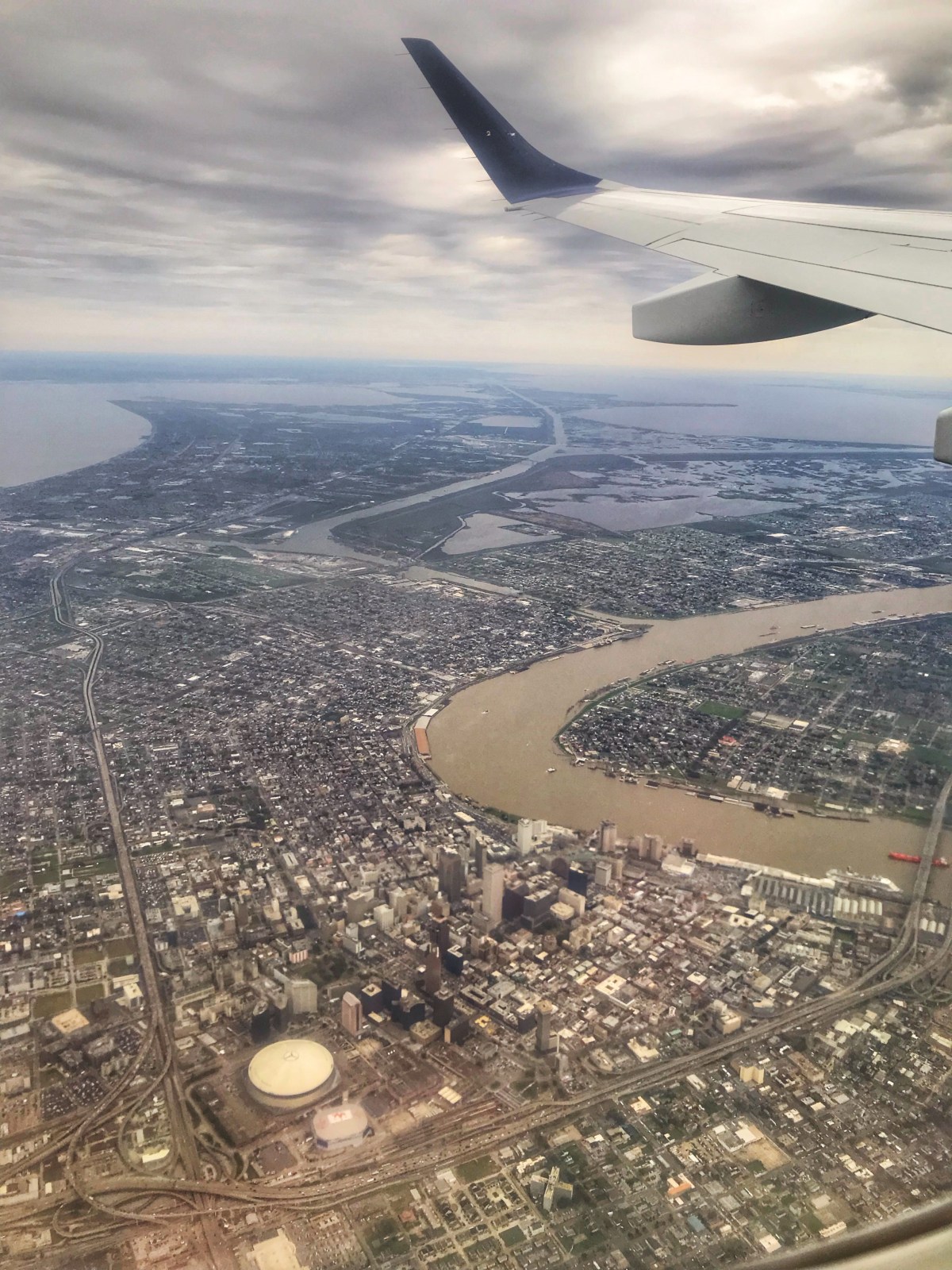
Over the course of the last several decades, people have come to recognize the value of coastal marshlands as both incubators of aquatic birds and marine life and as buffers to floods and storm surges that can quickly inundate valuable real estate. A recent study published on the American Academy for the Advancement of Science’s Science Advances website reached the troubling conclusion that sea level rise is occurring at such a fast pace that the marshes that protect New Orleans and surrounding communities could vanish beneath the waves in the next fifty years.

Scientists studied over 8,000 years of marsh history to determine that the marshes have reached a “tipping point” where they are being consumed by the ocean faster than they can adjust to higher sea levels. The study’s lead scientist, Torbjorn Tornqvist, a professor of geology at Tulane University, told the Washington Post that even with efforts to reduce the production of earth-warming greenhouse gases, the marshland’s fate could be sealed. “We know the rate of sea level rise, even with the best action you can imagine, it’s still going to ramp up further,” he said. “Given the slowness of the ocean responses, it’s going to last for a very long time.”

The ocean has been gnawing away at the protective marshlands for decades. Experts blame the loss on the penning in of the Mississippi River channel, which used to spread land-building sediment broadly across the river delta, and on channels cut through the marshes for petroleum company pipelines. Louisiana is trying to reverse some of the damage by diverting some of the river’s sediment-rich flow out of the manmade channel and onto adjacent lands.

Professor Tornqvist sees this as a way to buy time that ultimately won’t save the city from inundation. “I think a couple of decades is incredibly valuable,” he said, “because it could be the difference between a somewhat managed retreat verses complete chaos.”

The researchers believe their study could prove valuable to all coastal communities that rely on marshlands as a buffer against sea level rise flooding and storm surges. “Our findings highlight the need for consideration of longer time windows in determining the vulnerability of coastal marshes worldwide,” they wrote in their study abstract.

The takeaway for buyers and owners of real estate in coastal areas protected by marshlands is to recognize that they’re not wastelands but a critical part of the ecosystem that protect their property from flooding. With that in mind, it’s important for them to learn about the health of the local marshes as well as their predicted life-expectancy under pressure from sea level rise.

Challenges Facing Southeast Florida — Ground Zero for Sea Level Rise Flooding — Described in Exhaustive BBC Report

With its low elevation and proximity to lots of water on all sides and underfoot, Southeast Florida is clearly ground zero for sea level rise flooding. The BBC recently published an exhaustive report on the current status of sea level rise in the region — that includes the Florida Keys all the way north through Miami, Fort Lauderdale and West Palm Beach — and the challenges of controlling the inundation. The report makes fascinating required reading for anyone investing in residential and commercial real estate in coastal areas that are threatened by surging tides.

The BBC report, written by Amanda Ruggeri, is full of fascinating facts about sea level rise. Among them:

  1. Current predictions are that sea level could rise by up to 10 inches in the region by 2030 and 5 feet by 2100.
  2. Each additional inch of sea level rise can have a substantial affect on coastal real estate.
  3. The region has more people at risk from sea level rise than any other state, and Miami, specifically, has more financial assets at risk than any other major coastal city in the world.
  4. Cities in the region are already making changes to infrastructure to address sea level rise flooding, including raising roads and seawalls and installing hundreds of tidal valves and pump stations.
  5. Despite the efforts to hold back the sea, experts recognize that they will not be able to save every property and neighborhood from flooding.
  6. Every community faces different challenges. Governments, homeowners, business owners, taxpayers, insurers, developers, engineers and planners are going to have to work together to decide how to address sea level rise in their communities.
  7. Each community is an intricate puzzle where making a change to one piece of infrastructure, such as raising a segment of seawall or roadway, can lead to the unintended flooding of neighboring properties.
  8. Reaching consensus can lead to clashes over proposed solutions, costs, potential impacts and private property rights.
  9. Among the encouraging signs is that in the absence of federal and state leadership, county and local governments are forming regional partnerships to address sea level rise in a coordinated fashion.
  10. Among the discouraging signs is that finding funding sources for the hundreds of millions of dollars worth of projects needed to hold back the rising tides is difficult.

While the BBC report provides a broad, holistic view of how Southeast Florida is tackling sea level rise flooding, real estate buyers, owners and agents still need to invest time and effort evaluating how rising tides are impacting their properties and communities before making decisions. Sea level rise is already resulting in increased property maintenance costs, taxes, insurance and association fees in some areas. It’s also hurting the rate of property value appreciation and forcing extreme measures, such as road abandonment and property buy-outs.

As the polar ice caps continue to melt and the oceans expand due to global warming, these sea level rise is going to challenge more and more coastal residents.

The Coronavirus Pandemic Threatens to Worsen the Effects of Global Warming and Sea Level Rise

Two widely reported (and rare) positive impacts of the Covid-19 Coronavirus pandemic tragedy are cleaner air and a 17 percent reduction in the greenhouse gas emissions that drive global warming and sea level rise.

Residents in cities around the world have been astonished to see mountain ranges at a distance that have rarely been seen in generations due to curtains of smog. And the drop in greenhouse gas emissions has led many to believe that global warming and sea level rise have been derailed.

Unfortunately, the real picture isn’t so rosy. While there have been a few months with greenhouse gases on the decline — mainly due to the fact that people under lockdown aren’t driving to work — the the high concentration of carbon dioxide accumulated since the turn of the last century remains intact. This ultimately means global warming continues, as does sea level rise.

Some observers see even the temporary drop in the release of greenhouse gases as proof-positive that humanity can tame global warming, thereby preventing the predicted extreme weather — mega droughts, heat waves, floods and intense hurricanes — from impacting society and sea level rise from inundating major cities around the world. Their reasoning is that if people under threat of a pandemic can reduce consumption of fossil fuels, then people facing catastrophe from a warming planet can do the same.

If only it were that simple.

The fact is that most people reduced fossil fuel consumption not as a direct goal to save the environment but because under lockdown they didn’t have a choice. It’s doubtful that without the immediate crisis people would have willingly stopped driving. In addition, there are signs that as nations and states reopen commuters will avoid potential exposure to the virus on public transportation and start driving to work in increasing numbers. This, of course, will increase the rate at which carbon dioxide is pumped into the atmosphere.

Some observers have also opined that the recovery from the pandemic is an excellent opportunity for governments to invest in a new world powered by renewable energy. That’s a very noble goal, but the reality is governments have already spent so much saving their economies from pandemic-related collapse it’s unlikely they’ll have the funds necessary to pay for such an ambitious project.

Further complicating matters in the United States is the fact that the federal government is reluctant to provide emergency funding to state and local governments facing severe deficits due to the loss of tax revenue from economic inactivity during the lockdown and the unexpected expenses involved in dealing with the pandemic. This is especially worrisome because many of the state and local governments grappling with climate change and sea level rise-related expenses were already counting on the federal government to provide a portion of the millions and even billions of dollars they need to fund projects that would protect real estate and critical infrastructure. Without federal assistance, it will be difficult for them to pay for projects, such as seawalls and pump stations and raising roads and water pipes.

When we’re in the middle of the pandemic, it’s hard to predict how this will all play out. One thing’s for sure, however, global warming and sea level rise still pose a threat to coastal communities, and real estate buyers and owners ignore them at their own peril. Bottom Line: If many of the projects needed to protect homes and businesses from sea level rise flooding aren’t funded and begun now, more real estate and critical infrastructure will be inundated in the years to come.

Antarctica and Greenland Ice Melt Raised Sea Levels a Half Inch In the Last 16 Years — NASA Report

NASA scientists crunched data from satellite missions to determine that ice melt in Antarctica and Greenland over the last 16 years raised sea levels about half an inch. Put another way, the researchers said both locations contributed 5,000 gigatons of water to the oceans which is enough to fill Lake Michigan.

Ice melt and ocean expansion due to global warming are the primary contributors to sea level rise. Experts are concerned that the rate of melting is picking up pace. Helen Fricker, a glaciologist at the University of California-San Diego, told National Public Radio, “How much ice we are going to lose, and how quickly we are going to lose it, is a really key thing that needs to be understood, so that we can plan.”

There are two main forces driving the melting in Antarctica and Greenland. In Antarctica, warming oceans are melting floating ice shelves, which is allowing land based ice to flow into the ocean. In Greenland, warmer atmospheric temperatures are melting ice and creating run-off. At the same time, the warmer air is also causing glacial ice to calve off and fall into the ocean.

If all the ice melted in Greenland alone, scientists estimate global sea levels would rise 23 feet. Fricker told NPR, “There’s a lot of infrastructure and airports and people that live right on the ocean, and these people are going to feel the effects of sea level rise that’s resulted because the ice sheets have melted.”

Trump’s Busy Rolling Back Environmental Policies, Setting Up Another Global Catastrophe

While the nation focuses its attention on fighting the coronavirus pandemic, the Trump Administration has been working to rollback environmental policies. The result of its efforts will be to accelerate climate change and the sea level rise flooding that threatens millions of lives and billions, if not trillions, of dollar worth of real estate located along the vulnerable U.S. coastline.

In late March, the Environmental Protection Agency announced that it would would not fine companies that break the law by failing to monitor their emissions and discharges if they can prove the lack of monitoring was due to the coronavirus epidemic. In response, a coalition of environmental groups signed a petition to the EPA that warned: “EPA’s non-enforcement policy threatens environmental and health protections by inviting regulated entities to pollute and to hide crucial information from the public. It conveys a broad license to quit monitoring and reporting indefinitely, based only on the honor system.”

On another front, the Trump administration boasted that it performed “the largest deregulatory initiative of this administration” when it announced on March 31 that it was replacing Obama-era fuel standards with lower annual increases. According to a CNN report, the rule, which was created by the EPA and Department of Transportation, calls for fuel economy and emissions standards to increase by 1.5% each year instead of the 5% annual increase in the Obama rule.

President Obama criticized the change on Twitter writing: “We’ve seen all too terribly the consequences of those who denied the warnings of a pandemic. We can’t afford any more consequences of climate denial.”

A New York Times analysis estimated that the new rule would lead to nearly a billion more tons of carbon dioxide — a major greenhouse gas that causes global warming — being released into the atmosphere.

Using one global emergency to accelerate another is a dangerous game to play for us all. With the lack of responsible federal leadership, we are as unprepared for the coming crises sure to be posed by global warming and sea level rise as we have been for the coronavirus pandemic. If we don’t get a handle on greenhouse gas emissions, the results will be devastating.

The Destructive Relationship Between Sea Level Rise and New Coastal Real Estate Development

Living in a coastal community that’s experiencing sea level rise flooding, I’m amazed at the hundreds of millions of dollars of new commercial and residential real estate being built in neighborhoods that are flooding today or that will soon be subject to floodwaters as the seas continue to rise.

When I ask my real estate agent friends what they think about the situation, they are always quick to remind me that Florida’s economy is heavily reliant on new building projects and the jobs, investment and tax dollars they bring for its very survival.

Many cities and towns along he Atlantic, Pacific and Gulf of Mexico coastlines are equally addicted to new development to keep their economies rolling and their governments solvent. There is, however, clearly a downside to this relationship.

As sea levels continue to rise, those same coastal cities and towns are going to have to start to invest heavily in flood mitigation strategies, such as raising roads and water and sewer pipes, building or raising sea walls and installing pumps. In some cases, they may even have to buy-out homes and whole neighborhoods that flood repeatedly. When this day arrives — and it has already arrived in parts of the Florida Keys and other vulnerable locations — what seemed like a good idea today — allowing hundreds of millions of dollars in new development in areas vulnerable to sea level rise — will have enormous costs to taxpayers and property owners.

Taxpayers will have to pay the tab to protect the expensive new flood mitigation projects. And the higher taxes to pay for those projects, combined with the higher insurance premiums that go hand-in-hand with sea level rise flooding, could cause property values to plummet.

Linda Shi, an assistant professor in Cornell University’s department of city and regional planning, wrote an op-ed titled “The fiscal challenges of climate change” for the Boston Globe. In it, she explains the challenge posed by new coastal development in the age of rising seas. She studied the Massachusetts coastline in detail and discovered:”Statewide, 40 percent of local revenues come from property taxes; along the coast, 60 percent; and in some coastal suburbs, 70-80 percent. State expectations that local governments self-finance most of the services they provide inevitably incentivize continued development wherever possible, placing coastal sites and cities on a collision path with rising seas.”

Shi says the negative cycles could be reversed if cities and states included fiscal considerations into sea level rise flooding vulnerability assessments. She also said regional land-use planning agencies and non-governmental organizations could help by evaluating “how climate change affects local budgets, how fiscal vulnerability and adaptation choices impact the region and vice versa.” Their input would help communities to decide where to allow new real estate developments to minimize the eventual costs that arise due to sea level rise flooding.

The future costs of placing new developments in or near sea level rise flood zones is an important issue to consider today. Making informed decisions will protect subsequent generations from the high cost of protecting or decommissioning billions of dollars worth of real estate our generation knew was at-risk before ground-breaking shovels were turned.

Beachfront Real Estate Could Vanish in Some Areas Due to Sea Level Rise

Global warming and the sea level rise that’s coming with it could wash away over almost half of the world’s sandy beaches by 2100. That’s according to a study published this week on Nature Climate Change.

The loss of the beaches would have enormous economic implications. Beaches provide a barrier that protects real estate and whole cities from storm surge. They also create recreational opportunities that fuel tourism.

Scientists say stronger storms and manmade alterations, such as the construction of jetties and seawalls, are speeding up erosion. Add sea level rise to the mix and the situation becomes even more dire.

The outlook isn’t hopeless, however. The researchers say if humans cut down on greenhouse gas emissions, sea level rise could slow and shoreline retreat could be reduced by nearly 40 percent.

Buyers purchasing beachfront real estate need to consider beach erosion and how it could impact their property before they submit an offer.

California Coastal Commission and Malibu Developer Clash Over Sea Level Rise Height Predictions

The California Coastal Commission, the City of Malibu and coastal developer at clashing over a new beach development on the Pacific Coast Highway. One of the major points of contention is estimates of how much the sea will rise by 2100.

The city approved the developer’s plan based on an old sea level rise estimate of 1.5 feet by the turn of the century. The Coastal Commission takes issue with that prediction, which it says will put the property at a greater risk of flooding.

An engineer the city used to evaluate the project approved the 1.5 foot estimate because that was the number the Coastal Commission included in its 2015 guidance document. The Coastal Commission says the engineer should have used its region-specific estimate and updated 2018 guidance.

The gap between the Coastal Commission and the engineer is enormous. The sea level rise estimate was increased to over five feet in 2018. According to an article in the Malibu Times, a Coastal Commission staff report said, “The difference is more than 4.65 feet, which is significant in determining the required setback, finished floor elevation, and safety of the proposed structure from extreme events and sea level rise.” The report also mentions that scientists are now estimating that the seas could rise anywhere from 3.3 feet to 10 feet by the end of the century.

Scientists are having a tough time predicting sea level rise precisely because humans continue to burn the fossil fuels that create the greenhouse gases that are causing global warming at an accelerated rate. If society continues on this track, even the most liberal predictions could turn out to be conservative, especially if the Greenland and Antarctic ice sheets melt faster and are destabilized to the point where land-based glaciers flow more rapidly into the sea.

The Malibu case is just one example where real estate developers and cities are relying on the most optimistic sea level rise estimates for new construction projects. Buyers shouldn’t trust that a developer or city has done its homework when they purchase a coastal property. Independent due diligence is required to make sure they’re fully informed regarding the risk of sea level rise flooding in the years to come.