Southeast Florida County Governments Urge Real Estate Developers to Get Involved in Sea Level Rise Resilience Efforts

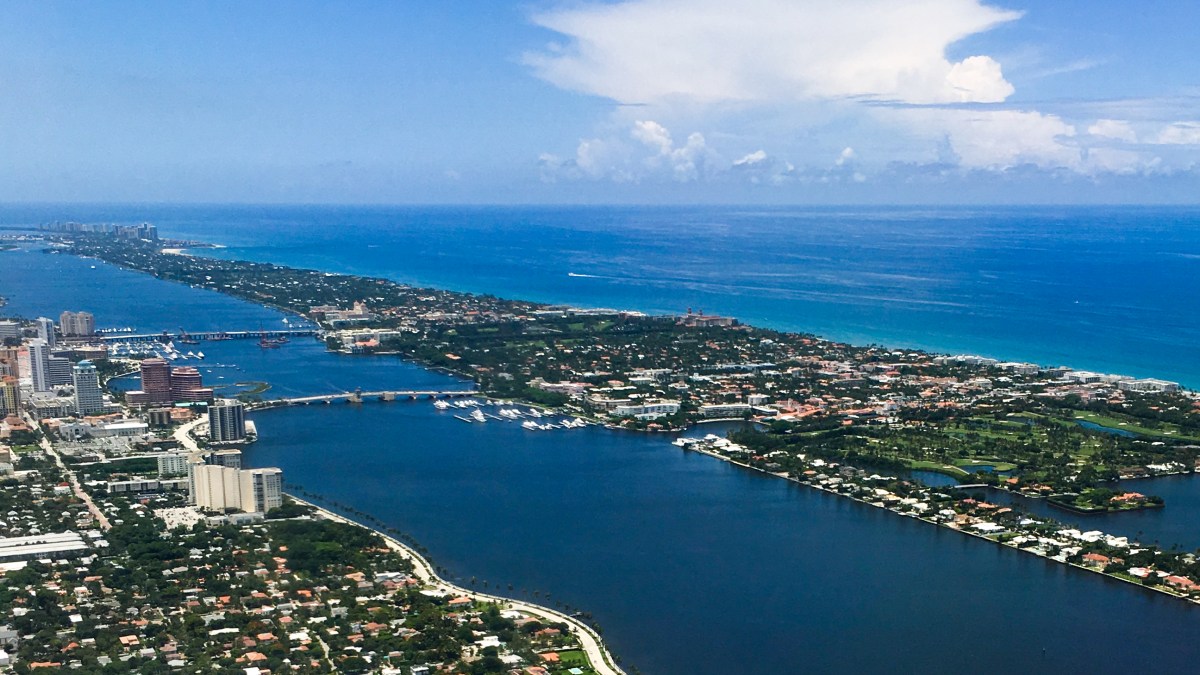
Real estate developers rarely take the long-view when they’re considering new projects. They see their role in the economy as simply planning, building, and selling projects at the greatest return on investment. As a result, in Southeast Florida, billions of dollars worth of real estate development has proceeded even in areas known to be at risk of — or currently experiencing — sea level rise flooding. The Southeast Florida Regional Climate Change Compact — a partnership between Miami-Dade County, Broward County, Palm Beach County, and Monroe County — believes it’s time for real estate developers to recognize the larger threat sea level poses to the region and their industry and to get involved in mitigation efforts for the good of everyone.

To make their case, the Compact used a state grant to pay the Urban Land Institute (ULI) — a group comprised of 45,000 real estate and urban development professionals interested in creating sustainable communities — to assess the costs and benefits in cold hard cash of implementing projects now to address sea level rise flooding, which is expected to worsen as up to 40 inches of sea level rise accumulates by 2070.

ULI recently released its findings in a report titled “The Business Case for Resilience in Southeast Florida.” In it, researchers concluded that tens of billions of dollars will be lost over the next 50 years if the region doesn’t invest in resiliency, such as elevating structures and roads and infrastructure and building higher seawalls and berms, now. The report specifically estimates that spending $22.6 billion on flood mitigation between now and 2070 could prevent $56 billion in losses over the same period.

ULI said its approach to drafting the report was to view sea level rise not as a net negative but as an opportunity to actually build the economy by investing in resiliency today, an effort that would create business opportunities and new jobs. In a report summary ULI said: “The findings … identify opportunities for the real estate industry to achieve a positive return on investment by futureproofing developments and investing in community wide resilience infrastructure over time to build incremental solutions that protect people and property and grow the economy of Southeast Florida in years to come.”

The report, which is meant to convince business interests to join the sea level rise resilience movement, isn’t perfect however. It overlooks one of the most seemingly insurmountable problems unique to South Florida: The region’s real estate is built on porous limestone, so even if you block the rising seas with higher seawalls and other structures at the coast, the seawater will still migrate beneath the surface and cause flooding along the coast and well inland.

Despite this flaw, the researchers said the investment in resilience is worth it. They estimate Miami-Dade County will benefit from a 9 to 1 return on investment, Broward County 2 to 1, and Palm Beach County 1.3 to 1. Unfortunately, they did not see any benefit for Monroe County, which covers the Florida Keys. The report said the Keys population is too small to benefit compared with its highly populated neighboring counties to the north. Rhonda Haas, resilience officer for Monroe County, told the Miami Herald: “We are probably going to have to spend more per resident for resilience and that’s okay. Just because we have a lower rate of return on that investment, that doesn’t mean the Keys should not make the investment. We should and we are.”

The preface to the report notes that there are no easy answers to climate adaptation but all interests need to get involved. It also warns developers that not participating in mitigating sea level rise flooding could lead to negative consequences beyond their control. “Developers have control over the confines of their own parcels,” it states, “but they could be faced with negative consequences from reduced investor interest and lack of financing and insurance –if this is the case, it may be too late to recover. Though financial assets are at risk, this is also the time for the real estate industry to coordinate with the public sector on resilience planning initiatives and co-create new models for partnerships, policy, and funding to help the region continue to thrive.”

The lesson from the report for everyone living and operating businesses in coastal communities in Southeast Florida and everywhere else is that we’re all in this together and saving our lifestyles and livelihoods will take a team effort.
Real Estate Owners & Buyers Beware: Sea Level Rise Can Cause The Costly Failure of Cast Iron Pipes

The last couple of years, Fort Lauderdale, Florida, has experienced numerous costly and environmentally disastrous cast iron sewer pipe collapses. There are many reasons cast iron pipes fail, but it’s mostly due to corrosion (rust) that degrades the pipes to the point that the effluent escapes through cracks, holes and breaks.

Recently, experts have identified sea level rise as a contributor to the pipe failures. Cast iron is notoriously vulnerable to rusting. Exposure to salty seawater as the water table rises or from repeated flooding can speed up the process.

Unfortunately, the problem of cast iron pipe failures isn’t limited to municipal water systems. Prior to the mid-1970s, cast iron pipes were the pipes of choice to hook up homes to on-site septic systems and municipal water/sewer providers. As sea levels rise and cast iron pipes are increasingly bathed in salty water, these private pipes are put at risk, too.

Buyers and owners of real estate in coastal areas need to pay attention to this threat. A friend of mine bought a home decades ago that was built along the Intracoastal Waterway in the 1940s. This summer, she noticed that her plumbing was backing up frequently. A plumber analyzed the system and found that the problem stemmed from heavily corroded cast iron pipes under her home and yard.

As she found out, repairing or replacing cast iron pipes on even the most basic system can cost into the tens of thousands of dollars. For most of us, that’s a lot of cash.

What should buyers and owners in coastal communities do about cast iron pipes? Owners of homes built before the mid-1970s that are experiencing frequent plumbing problems need to find out if their properties are serviced by cast iron pipes and what shape they’re in. A licensed plumber should be able to inspect the system and issue a report.

Knowing the status of cast iron pipes will help owners to decide whether to leave the pipes alone or to repair or replace them. Time is of the essence, especially since many insurers won’t cover flooding from sewer backups due to corroded pipes. Owners should discuss insurance claims with their insurance providers and also research the possibility of joining existing class action lawsuits against cast iron pipe manufacturers.

Buyers of older home in coastal communities should consider having a licensed home inspector or plumbing contractor inspect the pipes, first to determine if they’re cast iron and second to determine what shape they’re in. The inspector or plumber should be able to assign a rough life expectancy for the pipes. Buyers, however, must keep in mind that the pipes will be increasingly exposed to salt water as sea levels rise. If the pipes are in moderate to poor shape, the decision to proceed with a transaction will depend on the buyers’ ability to absorb the cost of repair or replacement should the pipes begin to fail.

A company called Total Care Restoration has an excellent fact sheet that’s in line with other resources I’ve read about the threat sea level rise poses to cast iron pipes. This link is not provided as an endorsement of their services, it’s only for informational purposes. https://totalcarerestoration.com/cast-iron-pipes/

Climate Change, Covid-19 & You: Lessons from Science

In this video, we discuss the disturbing similarities between how the US is coping with climate change and sea level rise and Covid-19.

There are many disturbing similarities between how the U.S. is dealing with the climate change and Covid-19 pandemic crises. In both cases, the science is well established. We know what’s driving climate change, global warming, and sea level rise and almost all there is to know about the coronavirus that has tragically killed over 200,000 Americans and sickened many millions more.

In this video, we discuss climate change and Covid-19 and the need to recognize the science behind them to create effective national policies to deal with them. If we don’t take an aggressive, comprehensive, science-backed approach, climate change and Covid-19 will continue to threaten America and the world. In the case of climate change, this will mean that the seas will continue to rise, flooding valuable real estate and threatening entire communities, wildfires will continue to burn out of control, and more animals will be put at risk of extinction.

Humans have through sheer numbers and technology assumed control over the world and its destiny. It’s time we take that responsibility seriously.

Video: A Failed Sea Wall, Sea Level Rise Flooding & You

Coastal cities and towns are taking different approaches to sea level rise flooding. Some communities are ignoring the problem and hoping it will just go away, which is irresponsible considering that the burning of fossil fuels continues to warm the Earth, ice sheets in Greenland and Antarctica continue to melt, the ocean continues to expand, and sea levels continue to rise at an accelerating pace. Some communities are acknowledging the problem but are waiting for it to hit a critical point before they respond — which might be too late. And still others are taking the responsible approach and planning and implementing projects to fend off the floodwaters, but even this approach, as you’ll see in the video, is not risk free.

To protect their property and jobs, buyers, sellers, owners and real estate agents need to know how their community of interest is tackling the challenges posed by sea level rise flooding. And, as this video about a well-intentioned but failed sea wall project in my South Florida community attests, if local government officials are up to the job.

My city clearly illustrates the available options and consequences of which approach a coastal community takes to dealing with sea level rise flooding. Within a half-mile stretch along the Intracoastal Waterway near our downtown core, we have: 1. A section of sea wall currently being raised to protect a roadway, critical infrastructure and million dollar townhouses; 2. A section without a raised sea wall that chronically floods for the four or five month king tide period between September and January with devastating consequences for several property owners; and 3. A section of sea wall that was raised a few years ago that has structural faults that are allowing floodwaters to inundate a park.

As you can see, the city’s approach to managing sea level rise-driven flooding runs the gamut of what’s possible in all coastal communities: Try to protect the property, let it flood, or make an attempt to stop the flooding that, unfortunately, fails. All have lessons for buyers, sellers, owners and real estate agents.

If the improved section of sea wall manages to hold back the floodwaters, then the the city may have found a viable solution — at least on a short-term basis. Sea level rise isn’t ending any time soon. (It’s also important to note here that South Florida is built on porous limestone which can allow sea water to flow under sea walls rendering them ineffective.) The section that’s being allowed to flood shows what can happen if a city doesn’t take on the sea level rise challenge, but the waters, as waters do, continue to rise. And the section with the failed sea wall shows the very real and expensive consequences of a well-intended approach that failed.

The failed section of seawall is falling short for two easily visible reasons: 1. Engineers left a yard-wide gap in the seawall so the cruise boats could easily be serviced — which, even with protective measures installed after the fact, allows floodwaters to course through into the park; and 2. Floodwater bubbles up in joints on the park side of the sea wall, indicating some kind of structural failure. Bottom Line: A failed sea wall is as good as no sea wall at all. Property behind it will still be inundated.

With seas continuing to rise, and mere inches of it posing a threat to property, structures, roads and critical infrastructure, it’s clear that buyers, sellers, owners and real estate agents can’t afford to ignore the problem. They need to know: 1. How their community of interest intends to take on the sea level rise challenge; 2. How the plan, if any, will impact their property; 3. Whether or not the plan makes sense; and 4. If local officials are up to implementing the plan and taking corrective measures if it fails.

Without this level of knowledge, buyers, sellers and owners could be floored when floodwaters show up on their street or at their doors and they’re hit with higher maintenance costs, higher insurance premiums, higher taxes and, if applicable, association fees. They could also have to park a block from their home, take off their shoes and socks, and wade through the floodwaters to reach their doors.

Florida Republican Leaders Pledge in a Column to Address Sea Level Rise Now

Climate change denial is apparently a thing of the past for Florida’s Republican political leadership. State Representative Chris Sprowls, the incoming Speaker of the Florida House, and State Senator Wilton Simpson, incoming President of the Florida Senate, co-authored a column recently published in the Tampa Bay Times titled “Republican leaders say Florida must prepare for sea level rise.”

“With 1,350 miles of coastline, relatively low elevations, and communities built on top of former swampland, Florida remains particularly vulnerable to the risk of flooding caused by sea level rise,” Sprowls and Simpson wrote. “Over the last several years, we have seen that risk grow exponentially.”

This observation is a far cry from a time not too long ago when Florida’s Republican Gov. Rick Scott gained national notoriety for discouraging any mention of climate change or sea level rise in government documents.

Sprowls and Simpson go on to note that high tide flooding events — commonly known as “sunny day” flooding — are becoming more common, and just a foot of projected sea level rise will put 65,000 homes and almost 122,000 Floridians at risk. Furthermore, they wrote, “Over 20 percent of homes, the largest single investment for families, have a greater than one-in-four chance of flooding over a 30-year mortgage.” The flooding, they said, “damages homes, disrupts businesses, and displaces families and employees, which leads to, among other significant impacts, increases in insurance premiums for all Floridians.”

To address the challenges posed by sea level rise, Sprowls and Simpson said the state legislature funded Resilient Coastlines Program has already awarded grants to 30 coastal communities to help them strengthen their resilience to floodwaters. They then went on to call for more flood mitigation projects, such as the enhancement of natural barriers, including dunes, mangroves and stormwater parks, and the construction of man-made barriers, including seawalls, berms, and improved stormwater systems.

Sprowls and Simpson also called for a stronger partnership with the federal government to develop long-range planning and funding for the effort to battle sea level rise. And they called on the federal government to give Florida a “greater proportion of existing funds allocated for flood prevention.”

Finally, they said they want to see the state “partner with cities and counties that are doing good work and incentivize those who are falling behind.”

Sprowls and Simpson closed their column by noting that Florida can’t afford to ignore climate change during the pandemic. “Although the COVID-19 pandemic can feel overwhelming and all consuming,” they wrote, “we cannot allow short-term anxieties to blind us to our long-term needs.”

In recent years, some Florida coastal governments have banded together to form regional compacts to tackle sea level rise flooding while the state dithered. Sprowls’ and Simpson’s column is a welcome signal that the state legislature intends to take a leadership role in helping local governments to better coordinate and fund their responses. To protect their investments, everyone who owns real estate in the Sunshine State needs to hold them to their word.

California Warns Against Shelving Plans to Address Sea Level Rise during Covid-19 Pandemic

California’s Legislative Analyst’s Office (LAO) warned this week that the state can’t afford to delay efforts to deal with sea level rise flooding because of the Covid-19 pandemic.

In a report titled “What Threat Does Sea-Level Rise Pose to California?”, the LAO said: “While the coronavirus disease 2019 (Covid-19) pandemic and resulting economic impacts have rightly drawn the focus of the Legislature’s and public’s attention since March 2020, other statewide challenges continue to approach on the horizon. Among these are the impending impacts of climate change, including the hazards that rising seas pose to California’s coast.”

Report authors quote scientific estimates that California could face a half-foot of sea level rise by 2030 and up to seven feet by 2100. The threat posed by sea level rise could be amplified by storm surges, exceptionally high king tides that occur in the fall, and El Nino events.

Many coastal communities are already experiencing the negative effects of sea level rise and the situation is only going to get worse. Cities and towns are dealing with nuisance flooding, beaches are eroding, cliffs are collapsing — often carrying homes with them — and public infrastructure is being wrecked or overwhelmed. Natural resources, water supplies and entire economies are also at risk.

The report predicts that California will see up to $10 billion worth of property underwater by 2050 and up to an additional $10 billion worth of property inundated during high tides. When sea level rises four feet, 28,000 socially vulnerable residents in the San Francisco region alone could experience daily flooding. Furthermore, by the end of this century, up to two-thirds of the state’s beaches could be completely eroded away.

LAO officials said in the report that they recognize the burden the pandemic is placing on government and the economy. “However, given the significant threats posed by sea level rise in the coming decades–and the additional public safety and economic disruptions that will result absent steps to mitigate potential impacts –the state and its coastal communities cannot afford to defer all preparation efforts until economic conditions have fully rebounded from the recent crisis,” they said. They recommend that the government undertake activities to address the threat posed by sea level rise that require little funding, such as continuing to draft plans, meet and share information.

In the U.S., federal, state and local governments are bending under the enormous administrative and economic burden posed by the Covid-19 pandemic. The California LAO’s insistence that efforts to address sea level rise continue even in these troubled times is on the mark. The fact that regardless of the pandemic, global warming continues to cause sea level rise, putting hundreds of billions of dollars worth of real estate and critical infrastructure at risk. Protecting property and infrastructure isn’t cheap and it can’t be accomplished overnight. Letting down our guard now, will have grave consequences in the future.

All coastal communities and real estate owners and buyers need to heed the California LAO’s warning.

Sea Level Rise Flooding at Superfund Sites Poses A Threat To Coastal Communities

Sea level rise flooding poses a multi-dimensional threat to coastal communities. Residential and commercial real estate, the economy, mortgage and insurance markets, tax bases and critical infrastructure are all at risk from rising waters. As if this list isn’t enough, the Union of Concerned Scientists — a non-profit organization that advocates the use of science to address pressing problems — recently released a report that points out that flooding at Superfund sites could spread dangerous chemicals in coastal communities threatening lives and property.

The researchers warn that there are about 2,000 Superfund sites contaminated by extremely hazardous chemicals located within 25 miles of the East or Gulf Coasts. They say in their report titled “A Toxic Relationship” that rising seas could flood many of the polluted sites which could lead to people in surrounding communities coming into contact with the health-threatening chemicals. The scientists note that the areas around the Superfund sites are “disproportionately populated by communities of color and low-income communities” and they are calling on the government to take steps to protect them.

“Decisionmakers must take action now to protect the health and safety of the communities located near these facilities,” the report says. Among their recommendations is that the government agencies work together to evaluate the risk climate change and sea level rise pose to Superfund sites. Officials should use the information gathered to draw up plans to prepare communities for the risk and improve the resiliency of Superfund sites faced with potential inundation by floodwaters.

Real estate buyers and owners in coastal communities should consider the proximity of their property of interest to Superfund sites and other facilities — such as ports, power plants and factories — when evaluating the risk of sea level rise flooding. If nothing is done to identify and address the threat, lives and property could be harmed.

Flood Factor, a Revolutionary New Service, Aims to Help Real Estate Buyers, Owners & Real Agents Evaluate a Specific Property’s Flood Risk

Wouldn’t it be cool if real estate buyers were able to tell if a property of interest was currently at risk of flooding — or, due to sea level rise, might flood in the years to come — with a few taps on their smartphone screen?

Of course! This type of app would level the playing field between buyers, who don’t know the current and future flooding risk, and sellers who do — or should. As we’ve discussed before in posts and videos, it isn’t always easy for a buyer to tell if a property floods or is at risk of flooding.

In some instances, sea level rise-related flooding occurs during the so-called “king tide” season in the fall, when the alignment and proximity of the sun and moon to earth create extra high tides. Buyers who visit a property during other times of year likely won’t see evidence of flooding.

Another challenge is that state seller disclosure laws range from Virginia’s wide-open “let the buyer beware” approach to Louisiana’s pretty stringent “tell them everything you know”-style law. Most states fall somewhere between the extremes, and buyers can easily fall through the cracks. The situation is so dire there are many documented cases where buyers didn’t know a property regularly flooded until the water showed up at their doors.

Further compounding the situation, is a privacy law passed in the 1970s that requires seller permission for the release of a property’s flood insurance claims history. Many buyers don’t bother to request the information.

So back to the app idea. I’ve sampled a few smartphone apps that are basically toys. They show you virtual reality-style what different levels of flooding would look like on a given property, but they don’t seem to rely much on actual data regarding a specific property’s elevation, flooding history, and other factors that would help buyers to weigh the real-world risk of flooding.

The best resource I’ve tried — not yet in app form but available on a webpage — is Flood Factor. The free service was developed by researchers at First Street Foundation, a non-profit research and technology group committed to defining America’s flood risk.

The Flood Factor interface is as easy as it gets. Users enter an address into a simple field and, if all goes well, they receive a detailed report regarding the flood risk for a given property. What really makes this a standout is the fact that the data is delivered in an easy-to-understand format. You get a clear understanding of the current flood risk on a 1-to-10 scale AND the risk for the next thirty years, which is the average lifespan of the most common mortgage. First Street’s researchers even figure sea level rise into their forecasts.

Coastal and inland buyers can benefit from Flood Factor, too. The researchers not only estimated coastal flooding risk, they also evaluated the risk of flooding due to strong storm surge, rivers overtopping their banks, and heavy rainfall events.

Flood Factor’s researchers combined many data sets to generate the detailed flood risk reports for specific properties. They say that their data is much more rigorous than that used by the Federal Emergency Management Agency, which administers the National Flood Insurance Program. FEMA’s flood maps are notoriously outdated and inaccurate, so relying on them alone for real estate decisions is, in itself, risky.

The only problem I had with Flood Factor was that when I entered certain addresses located in areas known to flood in my town, the program said there was no data available. When I clicked on a link that said it would give me more information, I ended up back at the address input screen.

Despite this shortcoming — and I have no idea why it happened or the extent of the problem — Flood Factor is definitely a service that real estate buyers should use. It’s also of value to sellers, who might not know the full extent of the flood risk to their properties, and real estate agents, who need to know their farm areas to deliver top-notch service.

One final important note, despite Flood Factor’s comprehensive approach to flood forecasting, buyers shouldn’t rely solely on the reports when making real estate decisions. For example, if a property is at risk of flooding, buyers should find out what, if anything, is being done to mitigate the risk. An effective mitigation project — such as a sea wall — might reduce the risk for the period the buyer intends to enjoy the property. Buyers should also consider how flooding on the property of interest or in the greater community might impact their maintenance costs and tax and insurance rates. In short, taking the time to understand the big picture might prevent costly mistakes.

While not technically an app, Flood Factor can easily be accessed and used on a smartphone. Give it a spin.

The Siberian Town that Broke 100 Degrees & You

On Saturday, June 20, the Siberian town of Verkhoyansk located above the Arctic Circle hit a scorching, all-time record high of 100.4 degrees. What’s that have to do with those of us who live thousands of miles away in the U.S.? As residents of the same planet, a lot.

First, the record is a sure sign that the simple science behind climate change, read global warming, is on the mark. It goes like this: We burn fossil fuels (think oil, gasoline, coal), greenhouse gases — most notably carbon dioxide — accumulate in the atmosphere, the greenhouse gases trap radiation from the sun in the atmosphere, and the atmosphere, ocean and land heat up.

Second, the heating of northern climes isn’t just a matter of extreme summer weather. Under the spell of the sun that never sets this time of year up there, the land surface heats up and permafrost begins to melt. As it melts, methane, a more potent but not as long-lasting greenhouse gas is released into the atmosphere, leading to even more warming. The feedback cycle generates more and more melt and more and more methane release.

We’re not done with second point yet. The heating of the northern climes also leads to the normally damp land drying out, which results in forest fires. The fires pose at least two threats: They release more carbon dioxide into the atmosphere — accelerating global warming — and the soot can settle on snow and ice fields. There, the dark soot absorbs solar radiation which result in faster melting. The water pours into the ocean contributing to sea level rise. Scientists witnessed this dynamic when wildfires in Canada coated Greenland’s ice sheet in soot and melting occurred at a faster rate.

Third, the global warming-driven record high temperatures in Siberia, Alaska, Greenland and other high latitude locations can alter weather patterns. Specifically, they can cause a buildup of high pressure areas that stall the jet stream, which normally keeps weather systems moving from west to east. When they stall, they, too, can heat up. This is contributing to the seemingly never-ending series of monthly high temperature records being set around the globe.

So, what’s all this have to do with you (us)? Record heat above the Arctic Circle is clearly a warning sign that the climate is changing more rapidly than many scientists anticipated. We have pumped more carbon into the atmosphere than has been recorded in millions of years. As a result, there is the very real risk that high temperatures now considered unusual will soon become the norm while extreme high temperatures become, well, more extreme. This cycle could accelerate to the point where, quite frankly, parts of the planet could become inhospitable to human life.

The reality of rapid global warming already poses a threat to millions of people who live in coastal areas. Many of us reside in cities and towns that are already experiencing sea level rise flooding or will likely experience it in the coming years. If the planet warms faster than expected, it’s likely that the rapid melt Greenland experienced due to extremely high temperatures last summer will become the norm. The warming could also cause the Arctic ice sheet, the other major contributor to higher seas, to become further destabilized as floating ice sheets that hold back inland glaciers break off the continent. If enough sea ice vanishes, inland glaciers could become uncorked and rush from land into the sea. The combination of melt in Greenland and a river of Arctic glaciers spilling into the ocean could lead to seas rising much faster than predicted when many locations are already struggling with the foot or so of sea level rise that’s been recorded in the last hundred or so years.

The bottom line for you (us) is global warming is fact. The heating we’re now witnessing and its consequences was anticipated decades ago by the majority of climate scientists. The only real X-factors are how much fossil fuels we’ll burn in the years to come and exactly how fast they’ll warm the atmosphere, ocean and land.

So where does this leave you (us)? Science says the only way to stop the dangerous global warming feedback loop is for humans to burn less fossil fuels. It’s that simple. To achieve this objective, we need to elect leaders who are dedicated to the cause and give our business to companies that help us to trade fossil fuels for environmentally-friendly energy sources.

If we fail to cut back on releasing carbon into the atmosphere, the tiny town in Siberia will prove to be the canary in the coal mine none of the miners listened to.

US Real Estate Mortgage Market Already Defending Itself Against Sea Level Rise

While many coastal communities struggle to control sea level rise flooding, US real estate mortgage providers are already taking steps to protect their businesses against the risk of inundation.

According to a New York Times article titled “Rising Seas Threaten an American Institution: The 30-year Mortgage”, banks in coastal areas are requiring buyers to make higher down payments as a hedge against the risk that sea level rise flooding and the loss of property value will encourage buyers to default on loans. In some cases, banks are requiring buyers to pay up to 40% up-front compared with the traditional 20% down payment.

The banks are also increasingly selling the mortgages to government-backed buyers to get the risk off their books. Interestingly enough, the article notes that small, local banks that know where flooding is now occurring or likely to occur soon are selling off loans the fastest. Unfortunately, if any of the sold loans fail, taxpayers will have to cover the loss.

Experts quoted in the article worry that sea level rise is making it difficult for buyers to get mortgages in coastal areas at risk of sea level rise flooding and storm surges from storms that grow more powerful as the planet heats up, which could cause values to drop. A representative for the Mortgage Bankers Association said flood insurance is protecting property in at-risk areas which should help prevent a mortgage meltdown. (Apparently, he isn’t aware that FEMA’s flood insurance maps are horribly outdated and don’t consider sea level rise flooding.) The fact that properties have to be insured against flood loss, however, hasn’t completely alleviated the experts’ concern. One researcher told the New York Times that flood insurance won’t help in cases where flooding causes a property to lose all value and can’t be sold.

Activity in the financial sector, including mortgage providers and insurers, is usually forward looking . Their growing concern over the impact sea level rise flooding will have on the mortgage, insurance and, ultimately, coastal real estate markets should act as a wake-up call that spurs buyers, owners and real estate agents to start paying close attention to this growing risk.