
New Jersey First to Consider Climate Change and Sea Level Rise in Building Permitting Process

New Jersey, considered one of the top at-risk states for sea level rise flooding, is the first state to consider legislation that would force builder to include information about how their projects would impact climate change and be impacted by sea level rise when they’re seeking building permits.

This week, Gov. Phil Murphy announced the permitting requirement was included in New Jersey’s Energy Master Plan. The state is shooting for 100 percent clean energy by the middle of this century. One of the ways to achieve this is by requiring builders to declare how much greenhouse gas emissions their projects will emit. In addition, the state wants them to state clearly how climate change will impact their projects. In coastal areas, that will mean studying how sea level rise flooding could affect a project.

“For New Jersey to step to the forefront and say, ‘We’re going to look at future climate impacts, and that it’s going to be a driver of our decision-making’ — that’s exactly what all 50 states need to be doing,” Rob Moore, an official with the Natural Resources Defense Council, told the New York Times.

Governor Murphy tweeted that the goal of the Energy Master Plan is to: “Drive a world-leading innovation economy; Ensure environmental justice for all residents; Create good-paying jobs; Protect our ecosystems; Improve public health, and; Lead the way in the global clean energy transition.”

Scientists predict that New Jersey will see up to two feet of sea level rise by 2050. This will create enormous problems for the state, which has 130 miles of vulnerable coastline.

Some environmental groups complain that the plan isn’t firm enough in blocking new fossil fuel-related projects. Business groups are concerned about the potential cost their members will face due to the new requirements.

Coastal Real Estate Agents Can’t Afford to Deny Sea Level Rise: Video

Real estate agents who deny sea level rise put their buyers’, sellers’, and their own financial futures at risk.

Sea level rise flooding is real. Property owners and governments all along the Atlantic, Pacific and Gulf of Mexico coastlines are spending millions of dollars to hold back the rising waters.

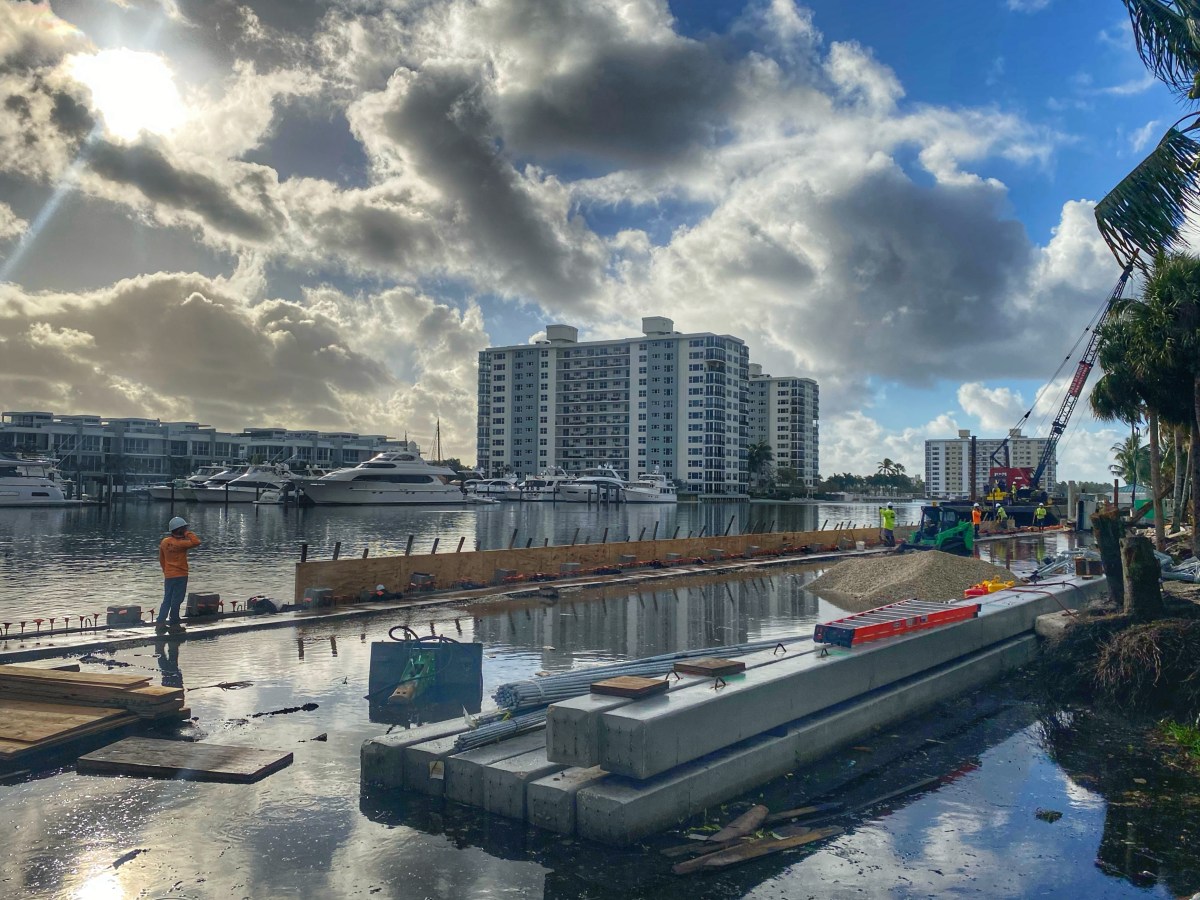
Individual property owners are raising docks and seawalls and elevating their property to prevent flooding that’s occurring now or expected in the years to come. Governments are busy planning for sea level rise flooding and implementing projects, such as building seawalls, raising seawalls, installing pumps, and elevating critical infrastructure, including roads and pipes.

With all this activity, it’s clearly dangerous for real estate agents in most coastal areas to deny sea level rise is a threat to their buyers, sellers and community. Now is the time for them to educate themselves about sea level rise in general and to identify areas that currently flood or are at risk of flooding in their communities. They also need to know how sea level rise flooding is affecting specific properties, neighborhoods, flood insurance premiums, tax rates and homeowners association and condo association fees. The mortgage market, too, will determine the fate of entire communities.

Real estate agents who turn a blind eye to sea level rise flooding ultimately put their own financial futures at risk. Buyers who unwittingly purchase properties that flood could easily sue agents for negligently not knowing their own farm areas.

This Sea Level Rise Real Estate video explores the risks sea level rise flooding presents to real estate agents. It’s the fifth and last in the introductory series. All the videos — an introductory video and episodes that focus specifically on buyers, sellers, owners and real estate agents — can be binge-watched here. For even more in-depth information, take a look at our book: “7 Sea Level Rise Real Estate Questions for Buyers, Sellers, Owners & Real Estate Agents.”

Owners of Real Estate Impacted by Sea Level Rise Flooding Have to Make Tough Decisions

Video: Owners of real estate impacted by sea level rise flooding have to decide “Should I stay or should I go?”

In the fourth Sea Level Rise Real Estate introductory video, we take a look at the challenges owners face when sea level rise flooding shows up in their communities or at their doors. The challenge for owners is to conduct a cost-benefit analysis that considers the extent of the flooding and what they and their local government can do to address it.

Owners also have to consider their ability to absorb higher costs for home maintenance, flood insurance, homeowners association and condo association fees, and taxes — revenue the government will need for resiliency or retreat. Every property owner has to decide for themselves — based primarily on their age, financial resources, and ability to manage property that floods or is at risk of flooding — how to proceed.

“Sea Level Rise Real Estate for Owners” gives owners a general picture of the issues they need to consider. “7 Sea Level Rise Real Estate Questions for Buyers, Sellers, Owners, and Real Estate Agents” goes more in-depth.

Do Real Estate Sellers Have to Disclose Sea Level Rise Flooding to Buyers?

Question: When real estate owners sell property that’s experiencing sea level rise flooding or there’s flooding in the street out front, are they required to inform buyers of the problem in the sellers’ disclosure? Answer: It depends on state they reside in.

Real estate sellers’ disclosures are not governed by federal laws. Instead, each state decides what sellers have to disclose, and the laws vary greatly from state to state. Texas, for example, is quite strict in requiring sellers to disclose flooding in great detail. Virginia, on the other hand, is basically a let the buyer beware state when it comes to sellers’ disclosures.

The Natural Resources Defense Council surveyed the state disclosure laws and created a map that grades state’s on the stringency of their sellers’ disclosure requirements. Sellers need to know what’s required in their state to avoid the potential of costly lawsuits. To ensure they’re in compliance, sellers may need to confer with an attorney.

This video discusses how sea level rise flooding complicates the sellers’ disclosure process. “7 Sea Level Rise Real Estate Questions — for Buyers, Sellers, Owners & Real Estate Agents” explores the issue in greater detail.

Video: Real Estate Buyers Beware in Coastal Areas Experiencing Sea Level Rise Flooding

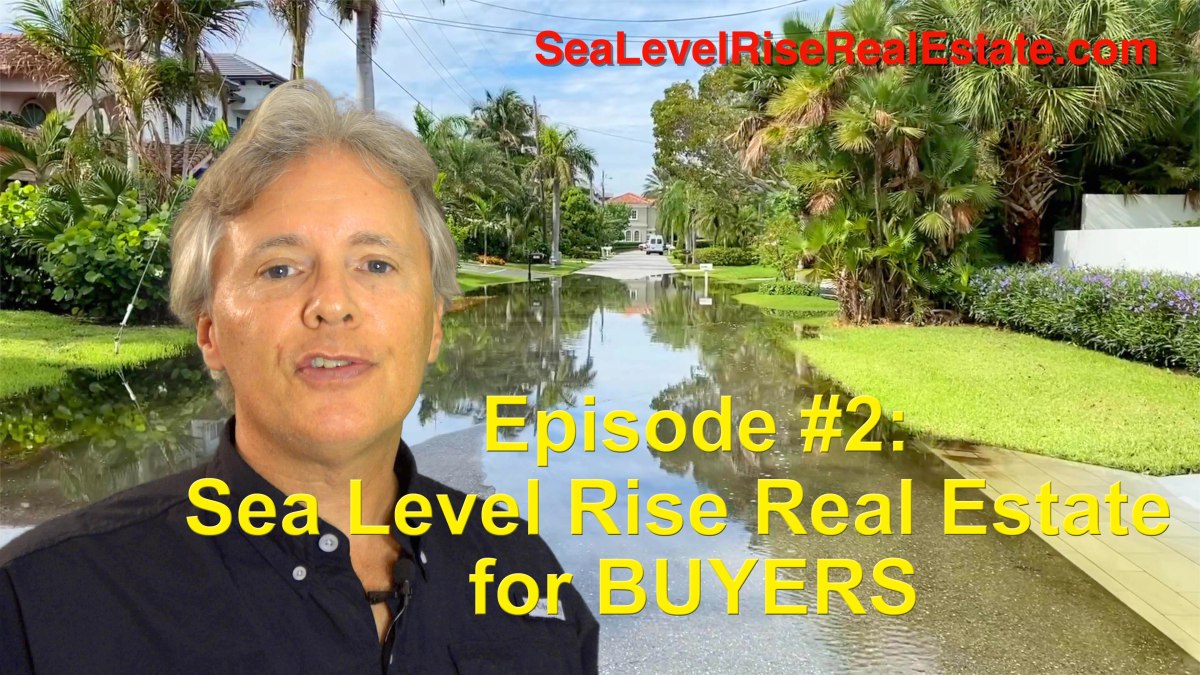
Buyers need to know the risks when they’re purchasing real estate in coastal areas that are experiencing sea level rise flooding. This YouTube video from Sea Level Rise Real Estate will give you an overview of the potential threats.

Many buyers in coastal areas are purchasing second homes or vacation properties. Too often they’re submitting offers without first finding out if the property or street out front is experiencing sea level rise flooding or if the property is in a neighborhood or community at risk of sea level rise flooding.

This failure to perform due diligence when buying real estate can prove costly. Properties that flood can have high maintenance costs and could actually lose value. In addition, owners of properties that flood or that are in the vicinity of flooding could face high taxes — as their communities struggle to deal with the flooding — flood insurance premiums and homeowners association or condo association fees.

In this video, I give buyers tips on how to find out if a property experiences sea level rise flooding, is at risk of flooding, or is in a neighborhood or community that floods. Then I discuss the risks the flooding can pose should they go through with the purchase.

Surprisingly, finding out if a property floods, itself, can be a real challenge. For instance, often the flooding only occurs during the fall king tide season or when a storm is whipping up the water so buyers won’t see it. Furthermore, in some states sellers don’t have to disclose the flooding problem to buyers.

“Sea Level Rise Real Estate for BUYERS” is the second in a five-part series I produced for SeaLevelRiseRealEstate.com based on my book “7 Sea Level Rise Real Estate Questions for Buyers, Sellers, Owners & Real Estate Agents.” The book goes into far greater detail.

Florida Bill Would Establish State-level Coordination of Sea Level Rise Response

Florida legislators are considering a bill that would establish a state-wide Office of Resiliency and a task force to research the best ways to protect the Sunshine State’s 1350 miles of coastline from sea level rise flooding.

The legislation, which has bipartisan support, is needed to help communities coordinate their response to sea level rise. With years of state-level climate change neglect, governments in South Florida and the Keys have formed their own regional compact to study the problem and seek ways to meet the challenge that complement each others’ efforts. State leadership and funding would certainly help them.

According to a Finance & Commerce report, the proposal could still face some political headwinds in Tallahassee. Environmentalists would like to see the new resiliency office deal with both sea level rise and the causes of climate change.

Sea Level Rise Flooding Could Force 13 Million People to Move Inland by 2100

Resiliency and retreat are the mantras for coastal communities coping with sea level rise flooding. Resiliency is improving infrastructure to allow people to remain in coastal areas. Among the options are raising sea walls, roads and other critical infrastructure and installing pumps to move floodwaters off valuable real estate. Retreat is moving people away from areas that flood when it’s too expensive or impossible to defend the land.

Researchers at the University of Southern California’s School of Engineering used artificial intelligence to predict where coastal residents are likely to migrate when sea level rise forces them inland. Their report might surprise you.

The study, led by USC Computer Science Assistant Professor Bustra Dilkina found that sea level rise flooding could force 13 million people in the US alone to move inland by 2100. The inland cities that take them will face increased competition for jobs, higher housing prices and greater demands on essential public services, including roads, schools, law enforcement and water and sewer services.

“Sea level rise will affect every county in the US, including inland areas,” Professor Dilkina fold USC Viterbi. “We hope this research will empower urban planners and local decision-makers to prepare to accept populations displaced by sea level rise. Our findings indicate that everybody should care about sea level rise, whether they live on the coast or not. This is a global impact issue.”

The study identified which cities and regions are likely to fact the largest influx of sea level rise refugees. The list includes Atlanta, Houston, Dallas, Denver and Las Vegas. Smaller midwest cities could also face a spike in population from people moving away from the coasts.

Miami’s Sea Level Rise Real Estate Challenges Coming Soon to a Coastal Community Near You

Miami’s extremely low elevation puts the city at the front lines of the battle against sea level rise flooding. The city is constantly grappling with ways to control floodwaters that are serving as a general guide for other cities and town all along the Atlantic, Pacific and Gulf of Mexico coastlines.

This week, the city of Miami unveiled its “Miami Forever Climate Ready” plan to combat climate change and sea level rise flooding. Jane Gilbert, the city’s resiliency chief, said the plan outlines 86 actions that need to be taken to control flooding and reducing the city’s carbon footprint.

Among the recommendations to address climate change heat are making buildings more energy-efficient, buying electric vehicles, and planting more trees. To meet the challenge of rising seas, the city plans to upgrade failing stormwater system, raising sea walls, installing stormwater pump stations, and creating wetlands to shift floodwaters from city streets. In areas that experience extreme flooding, the city is considering buying out private property, which, in many cases, is cheaper than rebuilding structures that are repeatedly damaged by floodwaters.

Massive amounts of money will be needed for the city to address sea level rise flooding and climate change, which will worsen in the decades to come. City officials say the challenge is finding funding for the projects when real estate could lose value, which would reduce the amount of tax revenue the city has to work with. If this happens, issuing bonds to pay for the projects could also become more difficult.

Despite the challenges, the report says Miami shouldn’t wait to implement the recommendations. The report says, “Now is the time, while Miami’s economy is still growing, to turn this climate change into an opportunity.” In 2017, Miami voters approved a $400 million bond to improve the city’s sea level rise flooding defenses.

Buyers, sellers, owners, and real estate agents need to know what their local governments are doing to combat sea level rise for several reasons: 1) The projects could impact their tax rates and flood insurance premiums; 2) The projects could determine whether or not their property floods; 3) The project’s effectiveness could impact their property value; and 4) The projects could impact their quality of life if nearby seawalls are raised or pump stations are installed.

Who Murdered Climate Change and Sea Level Rise Denialism? Find Out in This Whodunnit Video!

For decades, many climate change and sea level rise denialists have aggressively fought against the 97 percent of climate scientists who agree that climate change and sea level rise are for real and they’re growing worse every year.

The denialist also turned a blind eye to the natural disasters — the intense wildfires, floods, droughts, tropical weather systems — that are plaguing the planet. There was, however, a recent development that should finally drive a wooden stake through the hearts of those who refuse to believe the climate scientists or the slow-motion but escalating disaster we’re all witnessing with our own eyes. Watch this murder mystery video to find out whodunnit.

I’ve also posted several videos that explain what Sea Level Rise Real Estate is and how it can help buyers, sellers, owners, and real estate agents to protect their financial futures from rising seas. Enjoy!

Now You Can Binge Watch the FREE Sea Level Rise Real Estate Introductory Video Series!

Sea level rise flooding is a growing problem for coastal communities along the Atlantic, Pacific and Gulf of Mexico coastlines. Unfortunately, there isn’t a lot of information out there — and certainly not in one place — to help buyers, sellers, owners, and real estate agents to make informed decisions about how to respond to the challenge.

I created SeaLevelRiseRealEstate.com and wrote “7 Sea Level Rise Real Estate Questions” to give people an understanding of climate change and sea level rise, along with the questions they need to ask and the valuable resources that can provide useful answers, so they’ll make the right decisions based on the threats posed by sea level rise flooding and their ability to address them. To further reinforce the points made on the website and in the book, I produced five introductory videos that I’m posting on this site all at once.

The videos consist of an introductory video followed by videos that each address the central issues that should be of concern to buyers, sellers, owners, and real estate agents. The videos aren’t as comprehensive as the information found in “7 Sea Level Rise Real Estate Questions” but they give a great overview of the general issues of concern.

You can view the videos by clicking this link.