Why Coastal Real Estate Buyers, Sellers, Owners & Realtors Should Be Concerned About an Iceberg that Just Broke Off Antarctica

It’s well established that climate change — global warming — is causing glaciers to melt at an ever-quickening pace in Antarctica and Greenland. As a result, sea levels too are rising at a faster rate every year.

The challenge for scientists gathering the data government officials, planners and buyers, sellers, owners and real estate agents in coastal cities need to make informed decisions in response to the rising waters is that there is more than glacial melting that can cause sea level to rise. The warming atmosphere and oceans are also eating away at ice shelves floating on the ocean that are the only barriers holding back inland glaciers that, if uncorked by the loss of the floating ice shelves, could raise sea levels not just by inches but by feet.

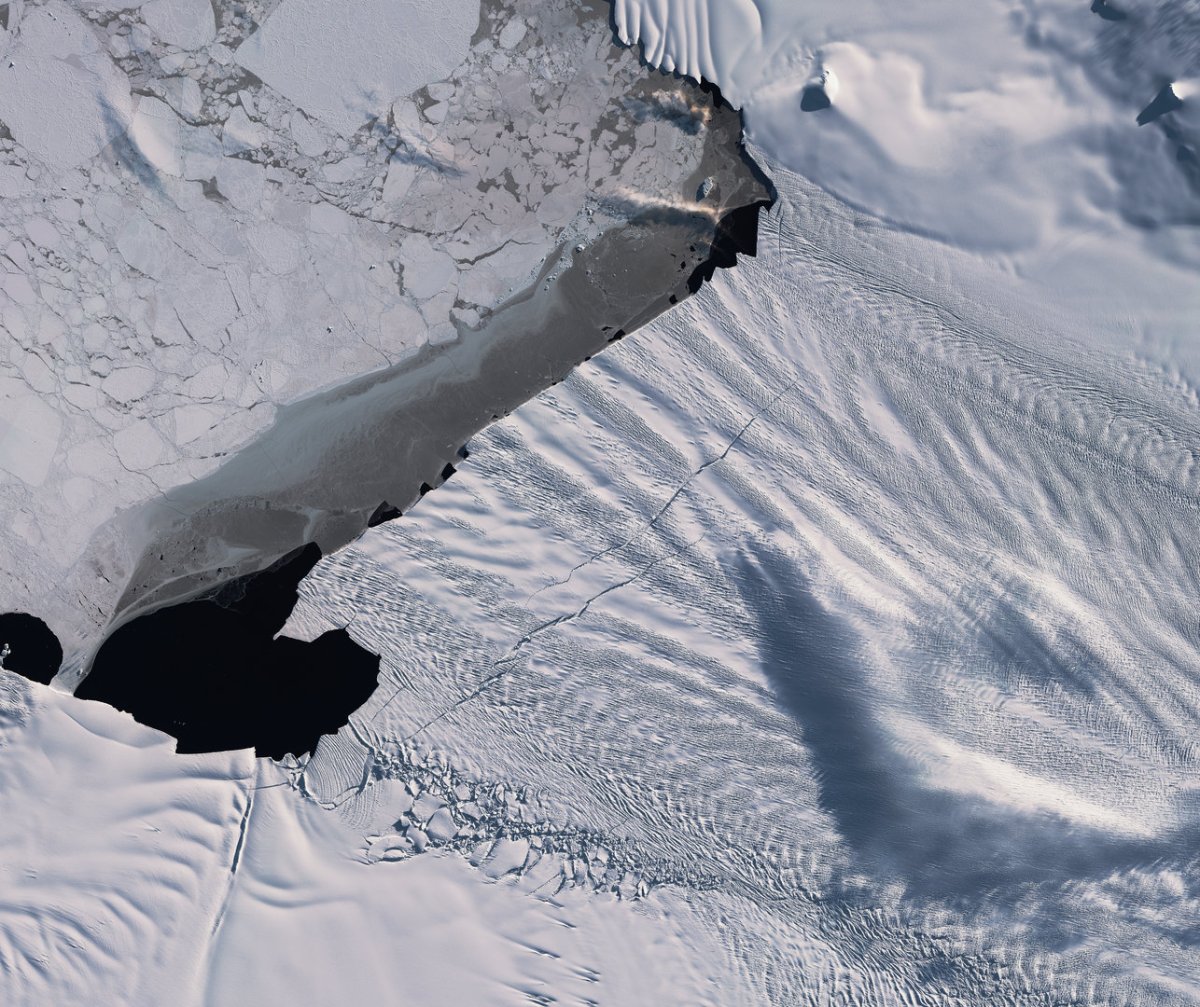
This point was illustrated today when satellite data showed sometime between February 8 and 9 an iceberg twice the size of Washington, DC, broke off the Pine Island Glacier in West Antarctica. The enormous iceberg itself won’t directly affect sea level rise. Floating ice already displaces a volume of water equal to the amount of water that runs off into the ocean as it melts.

The concern is that this calving event, the latest in increasingly frequent calving events, is another step in glacial retreat that could clear the way for an enormous amount of inland ice to flow into the sea, which would speed up sea level rise. In fact, if inland ice associated with the Pine Island Glacier and nearby Thwaites Glacier were free to flow into the sea, global sea levels could rise by as many as four feet.

Scientists don’t expect The Pine Island Glacier and Thwaites Glacier to slide into the sea tomorrow, but they’re still gathering the data they need to estimate when it could happen. With communities all along the Atlantic, Pacific and Gulf of Mexico coastlines already spending billions of dollars to combat sea level rise flooding, buyers, sellers, owners and real estate agents need to keep up on the latest developments in Antarctica and Greenland as if they were local stories. Ultimately, they are.

(The photo from the European Space Agency shows cracks forming on the ice shelf of the Pine Island Glacier in September 2019.)
Twitter Helps Researchers Identify Localized Sea Level Rise Flooding

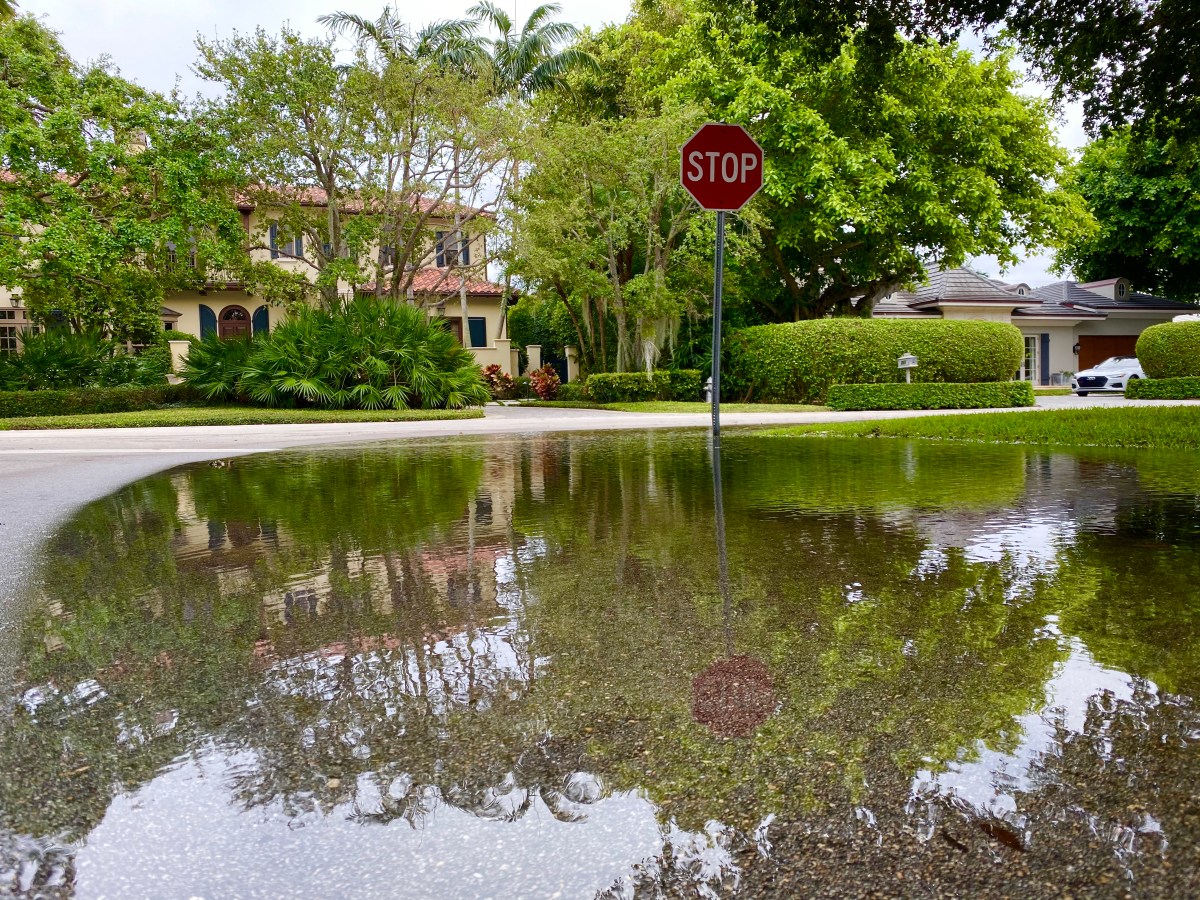
When it comes to identifying localized sea level rise flooding, tidal gauges aren’t necessarily giving the full picture.

Climate researchers published a study this week in the journal Nature Communications that concluded Twitter may provide a more accurate read on what’s actually going on on the ground. Why? For one thing, there are only 132 tidal gauge stations covering over 3,700 miles of the U.S. Gulf of Mexico and Atlantic coastlines. That leaves enormous gaps between the measuring locations.

As a result, the same high tide that causes little or no flooding in a location with a gauge could cause damaging flooding in another location with a different elevation or concentration of people and structures. The study says, “The same degree of inundation could have substantially different social impacts, depending on the distribution of people, infrastructure and economic activity along the coast.”

To get a clearer picture of how the flooding is impacting coastal locations, the researchers studied nearly half a million tweets sent by 5 million Twitter users in about 235 counties. What they found was that nuisance flooding was occurring in many locations that was not detected by tide gauges.

Most of the undetected nuisance flooding occurred in 22 counties, including those that encompass Miami, New York and Boston, with over 13 million people.

Having a clear picture of what’s happening everywhere is critical to drawing up plans to address the sea level rise flooding as the ocean level rises. “Understanding where coastal floods happen, identifying which meteorological and tide conditions produce floods, and grasping the consequences for flood-affected communities and infrastructure is critical for coastal flood preparation and response,” the study said.

Study co-authors, Frances C. Moore, of the Department of Environmental Science and Policy at the University of California, Davis, and Nick Obradovich, of the Max Plank Institute of Human Development in Berlin, Germany, caution that one major limit of their study is that once people get used to the nuisance flooding they become less likely to report it on social media.

The fact that even tidal gauges can’t always be relied on to give the complete picture of sea level rise flooding in a given area is all the more reason that buyers, sellers, owners and real estate agents need to rely on more than one source when considering the flood risk for a given piece of property.

New Report Names Miami the “Most Vulnerable” City in the World for Sea Level Rise Flooding

A new report by Resources for the Future (RFF), a nonpartisan think tank, concludes that Miami will soon become “the most vulnerable major coastal city in the world” for sea level rise flooding, storm surges and other impacts of climate change. The experts based their conclusion on the fact that Miami has billions of dollars worth of real estate and other assets that will be put increasingly at-risk as the seas continue to rise between now 2040.

The RFF published a graphic-rich report titled “Understanding Sea Level Rise in Florida, 2040” last week that illustrates the challenges faced by Miami and the entire state of Florida. The report was created using data collected by the Climate Impact Lab, a group of scientists, economists and other experts who are trying to quantify the impact climate change will have on the world economy in real numbers.

In a press release, the RFF listed the following potential impacts on Florida if the world doesn’t reduce the greenhouse gas emissions that are driving global warming and sea level rise flooding:

  • Severe “100-year floods” will potentially occur once every few years rather than once a century, endangering about 300,000 homes, 2,500 miles of roadways, 30 schools, and four hospitals statewide.
  • Rising seas also threaten the 490,000 Floridians who live on land less than 3 feet above the high-water mark, and coastal properties worth an estimated $145 billion in property value. The counties with the largest number of people facing these risks are Miami-Dade, Broward, Pinellas, Monroe, and Hillsborough.
  • In some areas—the Keys in particular—it is unlikely that communities will be able to meet the costs of raising all public roadways to accommodate higher sea levels by 2045, suggesting that some roads and neighborhoods will need to be abandoned.
  • Miami has over $400 billion in assets put at risk by coastal flooding and storms—the largest amount of any major coastal city in the world.
  • Extreme temperatures and other impacts will seriously affect public health. In a moderate emissions scenario, the rate of mortality is projected to increase by 3.8 deaths per 100,000 Florida residents per year—that’s roughly 1,000 additional deaths annually by 2035.
  • Federal carbon pricing policies, which would reduce these risks, are projected to cost less than $1,000 annually for Florida households earning under $99,000 per year, with costs for higher earners reaching as high as $5,000 annually.

The study’s co-authors said: “Addressing climate change has up-front costs. But failing to address climate change? Those costs are likely to be much greater and long lasting.”

The RFF research was funded by the VoLo Foundation, a private family foundation established to educate the public to create a sustainable and secure planet for generations to come. 

This report further reinforces the fact that buyers, sellers, owners and real estate agents in coastal areas need to be aware of sea level rise and its impact on a property of interest, neighborhood and community to make informed decisions that will protect their financial futures.

Owners of Real Estate Impacted by Sea Level Rise Flooding Have to Make Tough Decisions

Video: Owners of real estate impacted by sea level rise flooding have to decide “Should I stay or should I go?”

In the fourth Sea Level Rise Real Estate introductory video, we take a look at the challenges owners face when sea level rise flooding shows up in their communities or at their doors. The challenge for owners is to conduct a cost-benefit analysis that considers the extent of the flooding and what they and their local government can do to address it.

Owners also have to consider their ability to absorb higher costs for home maintenance, flood insurance, homeowners association and condo association fees, and taxes — revenue the government will need for resiliency or retreat. Every property owner has to decide for themselves — based primarily on their age, financial resources, and ability to manage property that floods or is at risk of flooding — how to proceed.

“Sea Level Rise Real Estate for Owners” gives owners a general picture of the issues they need to consider. “7 Sea Level Rise Real Estate Questions for Buyers, Sellers, Owners, and Real Estate Agents” goes more in-depth.

Now You Can Binge Watch the FREE Sea Level Rise Real Estate Introductory Video Series!

Sea level rise flooding is a growing problem for coastal communities along the Atlantic, Pacific and Gulf of Mexico coastlines. Unfortunately, there isn’t a lot of information out there — and certainly not in one place — to help buyers, sellers, owners, and real estate agents to make informed decisions about how to respond to the challenge.

I created SeaLevelRiseRealEstate.com and wrote “7 Sea Level Rise Real Estate Questions” to give people an understanding of climate change and sea level rise, along with the questions they need to ask and the valuable resources that can provide useful answers, so they’ll make the right decisions based on the threats posed by sea level rise flooding and their ability to address them. To further reinforce the points made on the website and in the book, I produced five introductory videos that I’m posting on this site all at once.

The videos consist of an introductory video followed by videos that each address the central issues that should be of concern to buyers, sellers, owners, and real estate agents. The videos aren’t as comprehensive as the information found in “7 Sea Level Rise Real Estate Questions” but they give a great overview of the general issues of concern.

You can view the videos by clicking this link.