Twitter Helps Researchers Identify Localized Sea Level Rise Flooding

When it comes to identifying localized sea level rise flooding, tidal gauges aren’t necessarily giving the full picture.

Climate researchers published a study this week in the journal Nature Communications that concluded Twitter may provide a more accurate read on what’s actually going on on the ground. Why? For one thing, there are only 132 tidal gauge stations covering over 3,700 miles of the U.S. Gulf of Mexico and Atlantic coastlines. That leaves enormous gaps between the measuring locations.

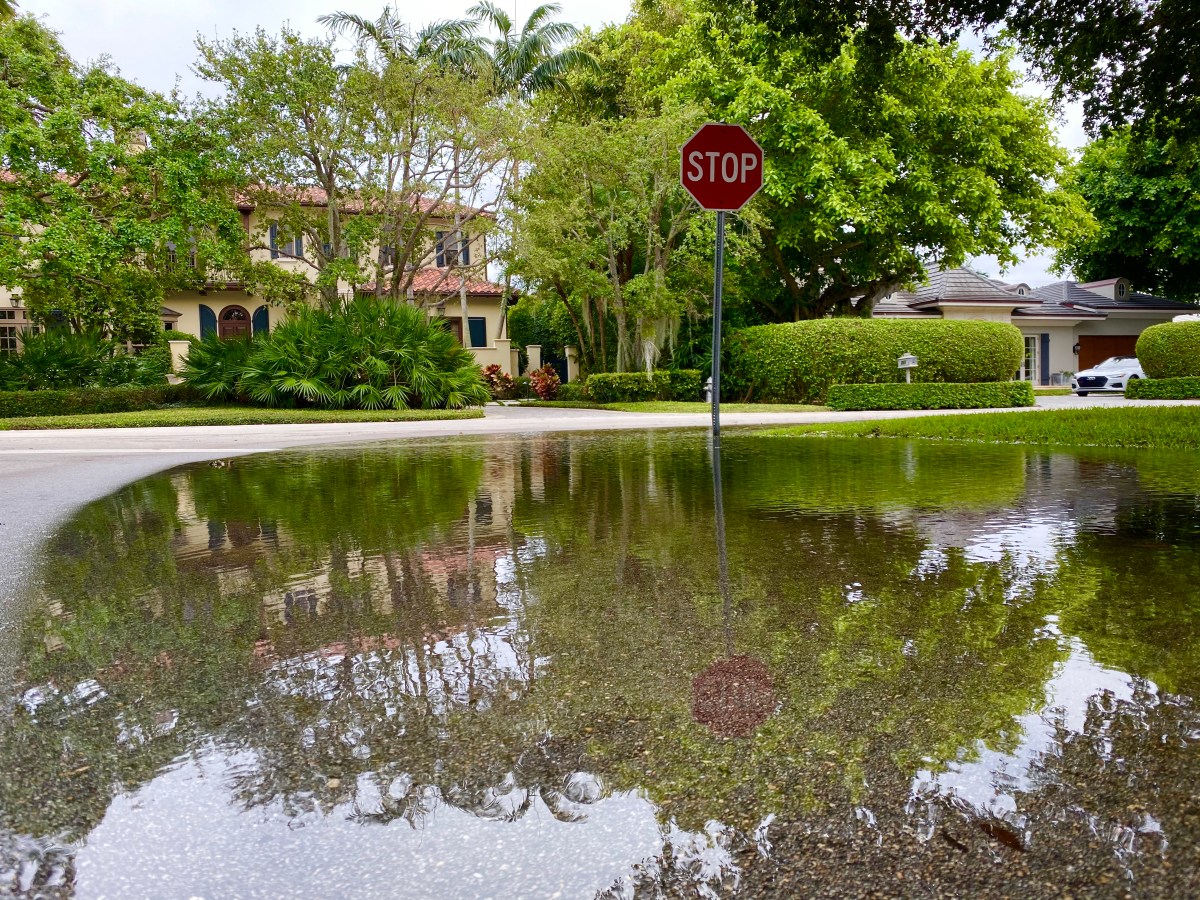
As a result, the same high tide that causes little or no flooding in a location with a gauge could cause damaging flooding in another location with a different elevation or concentration of people and structures. The study says, “The same degree of inundation could have substantially different social impacts, depending on the distribution of people, infrastructure and economic activity along the coast.”

To get a clearer picture of how the flooding is impacting coastal locations, the researchers studied nearly half a million tweets sent by 5 million Twitter users in about 235 counties. What they found was that nuisance flooding was occurring in many locations that was not detected by tide gauges.

Most of the undetected nuisance flooding occurred in 22 counties, including those that encompass Miami, New York and Boston, with over 13 million people.

Having a clear picture of what’s happening everywhere is critical to drawing up plans to address the sea level rise flooding as the ocean level rises. “Understanding where coastal floods happen, identifying which meteorological and tide conditions produce floods, and grasping the consequences for flood-affected communities and infrastructure is critical for coastal flood preparation and response,” the study said.

Study co-authors, Frances C. Moore, of the Department of Environmental Science and Policy at the University of California, Davis, and Nick Obradovich, of the Max Plank Institute of Human Development in Berlin, Germany, caution that one major limit of their study is that once people get used to the nuisance flooding they become less likely to report it on social media.

The fact that even tidal gauges can’t always be relied on to give the complete picture of sea level rise flooding in a given area is all the more reason that buyers, sellers, owners and real estate agents need to rely on more than one source when considering the flood risk for a given piece of property.

New Report Names Miami the “Most Vulnerable” City in the World for Sea Level Rise Flooding

A new report by Resources for the Future (RFF), a nonpartisan think tank, concludes that Miami will soon become “the most vulnerable major coastal city in the world” for sea level rise flooding, storm surges and other impacts of climate change. The experts based their conclusion on the fact that Miami has billions of dollars worth of real estate and other assets that will be put increasingly at-risk as the seas continue to rise between now 2040.

The RFF published a graphic-rich report titled “Understanding Sea Level Rise in Florida, 2040” last week that illustrates the challenges faced by Miami and the entire state of Florida. The report was created using data collected by the Climate Impact Lab, a group of scientists, economists and other experts who are trying to quantify the impact climate change will have on the world economy in real numbers.

In a press release, the RFF listed the following potential impacts on Florida if the world doesn’t reduce the greenhouse gas emissions that are driving global warming and sea level rise flooding:

  • Severe “100-year floods” will potentially occur once every few years rather than once a century, endangering about 300,000 homes, 2,500 miles of roadways, 30 schools, and four hospitals statewide.
  • Rising seas also threaten the 490,000 Floridians who live on land less than 3 feet above the high-water mark, and coastal properties worth an estimated $145 billion in property value. The counties with the largest number of people facing these risks are Miami-Dade, Broward, Pinellas, Monroe, and Hillsborough.
  • In some areas—the Keys in particular—it is unlikely that communities will be able to meet the costs of raising all public roadways to accommodate higher sea levels by 2045, suggesting that some roads and neighborhoods will need to be abandoned.
  • Miami has over $400 billion in assets put at risk by coastal flooding and storms—the largest amount of any major coastal city in the world.
  • Extreme temperatures and other impacts will seriously affect public health. In a moderate emissions scenario, the rate of mortality is projected to increase by 3.8 deaths per 100,000 Florida residents per year—that’s roughly 1,000 additional deaths annually by 2035.
  • Federal carbon pricing policies, which would reduce these risks, are projected to cost less than $1,000 annually for Florida households earning under $99,000 per year, with costs for higher earners reaching as high as $5,000 annually.

The study’s co-authors said: “Addressing climate change has up-front costs. But failing to address climate change? Those costs are likely to be much greater and long lasting.”

The RFF research was funded by the VoLo Foundation, a private family foundation established to educate the public to create a sustainable and secure planet for generations to come. 

This report further reinforces the fact that buyers, sellers, owners and real estate agents in coastal areas need to be aware of sea level rise and its impact on a property of interest, neighborhood and community to make informed decisions that will protect their financial futures.

Real Estate Buyers Beware: Sea Level Rise is Accelerating

To protect their investment, real estate buyers in coastal areas need to find out if a property of interest, neighborhood and community are currently experiencing sea level rise flooding. They also need to find out if and when sea level rise flooding will impact the property in the future.

The last point is difficult because sea level rise projections are constantly changing. Unfortunately, for most locations the change is usually for the worse. For example, a report released January 30 by William & Mary’s Virginia Institute of Marine Science (VIMS) concluded that the rate of sea level rise is accelerating at most locations along the U.S. coastline.

The scientists studied tide gauge data from 32 locations collected over the last 51 years to reach their conclusion. “Acceleration can be a game changer in terms of impacts and planning, so we really need to pay heed to these patterns,” said VIMS emeritus professor John Boon.

VIMS Marine Scientist Molly Mitchell said, “We have increasing evidence from the tide gauge records that these higher sea-level curves need to be seriously considered in resilience planning efforts.”

When evaluating a piece of property, buyers need to consider how likely it is that sea level rise flooding will impact the property and when it could occur. This is a complicated issue that requires an understanding not only of the flooding risk but what the individual property owner and community can potentially do to prevent the flooding. Another consideration for buyers is how the flooding will impact their property value, maintenance costs, flood insurance premiums and taxes. These issues are discussed in detail in “7 Sea Level Rise Real Estate Questions for Buyers, Sellers, Owners, & Real Estate Agents.”

Can the Florida Keys Afford a Building Boom when They’re Searching for Ways to Retreat from Sea Level Rise Flooding?

Just when a law that’s been on the books since the early 1970s intended to prevent over-development in the Florida Keys is about to prevent new building projects, a state legislator is proposing legislation that could result in a building boom.

According to a Miami Herald article, Representative Rob Rommel, R-Naples, filed an amendment that would increase the hurricane evacuation time for the Keys to 30 hours from the current 24. Under the existing law, the evacuation time limit actually works as a cap on the number of buildings that can be constructed in the Keys. The expectation was that the Keys would be totally built-out by 2023.

According to the article, the new legislation is meant to stave off potentially billions of dollars worth of legal costs if property owners frustrated that they won’t be able to develop their real estate holdings sue the state and county governments for fair compensation.

If the longer evacuation time is approved, officials in the Keys worry that it could result in a building boom that would in turn make it harder for people to evacuate the Keys ahead of a hurricane and make it much more difficult to deal with sea level rise flooding.

County officials in the Keys made headlines last fall when they said sea level rise flooding may force them to abandon roads that are under water for much of the fall king tide season. The problem is so bad that officials there plan to use $20 million in federal funds to buy out and destroy homes wrecked by Hurricane Irma that are vulnerable to sea level rise flooding.

If the Florida state government clears the way for a building boom in the Keys, buyers will have to perform due diligence to ensure the property they intend to purchase isn’t at risk of sea level rise flooding.

Texas, Louisiana and South Carolina Prepare for Climate Change and Sea Level Rise without Using the Terms

The more you study climate change and sea level rise, the more you realize that they’re political issues as well as practical, environmental threats. This point was hit home yet again in a New York Times report that found several conservative states at great risk from rising seas applied for federal funding to increase their defenses against flooding without actually using the terms “climate change” or “sea level rise.”

Texas produced a 306 page application for a share of $16 billion Congress set aside in 2018 to help states deal with climate change impacts without a single mention of climate change or sea level rise. South Carolina didn’t use the terms in its application, while Louisiana didn’t mention “climate change” until the last page of its proposal.

While it’s commendable that the states are actually taking steps to prepare for more intense heat and flooding due to global warming (another divisive term, I know), their reluctance to be frank about the issue and use the terms “climate change” and “sea level rise flooding”, are a tad cowardly. The public in their states deserve the truth, even if they’ve been conditioned to deny it. Real leaders would give them the education about climate change that they clearly need to make informed decisions that just might help them to participate in the process of finding solutions and protect their own financial futures.

Ultimately, the absence of the terms “climate change” and “sea level rise” from the funding proposals is a moot point. The atmosphere will continue heating up and the seas will continue to rise and flood valuable real estate regardless of climate change denialists’ inability to utter them.

North Carolina Assessing Its Vulnerabilities to Climate Change and Sea Level Rise

Climate change experts in North Carolina are making final edits to a report that will give state government agencies an idea of how global warming and sea level rise flooding are going to impact the state this century.

Academics from the state university system teamed up with the National Oceanic and Atmospheric Administration’s climate scientists to produce the report. Among their findings is that even with lower greenhouse gas emissions, seas will continue to rise throughout this century. The ocean could be up to 3.9 feet higher by 2100, which could cause high tides to flood coastal areas every day.

The scientists also worry that North Carolina, which is extremely vulnerable to hurricanes, will face even stronger storms due to climate change. This development will also increase the risk of storm-surge flooding.

The N.C. Institute for Climate Studies is producing the report under Governor Roy Cooper’s Executive Order 80 climate change initiative. State agencies will use the final report, which is to be delivered in March, as a guide for efforts to reduce the impact of climate change and sea level rise flooding.

New Jersey First to Consider Climate Change and Sea Level Rise in Building Permitting Process

New Jersey, considered one of the top at-risk states for sea level rise flooding, is the first state to consider legislation that would force builder to include information about how their projects would impact climate change and be impacted by sea level rise when they’re seeking building permits.

This week, Gov. Phil Murphy announced the permitting requirement was included in New Jersey’s Energy Master Plan. The state is shooting for 100 percent clean energy by the middle of this century. One of the ways to achieve this is by requiring builders to declare how much greenhouse gas emissions their projects will emit. In addition, the state wants them to state clearly how climate change will impact their projects. In coastal areas, that will mean studying how sea level rise flooding could affect a project.

“For New Jersey to step to the forefront and say, ‘We’re going to look at future climate impacts, and that it’s going to be a driver of our decision-making’ — that’s exactly what all 50 states need to be doing,” Rob Moore, an official with the Natural Resources Defense Council, told the New York Times.

Governor Murphy tweeted that the goal of the Energy Master Plan is to: “Drive a world-leading innovation economy; Ensure environmental justice for all residents; Create good-paying jobs; Protect our ecosystems; Improve public health, and; Lead the way in the global clean energy transition.”

Scientists predict that New Jersey will see up to two feet of sea level rise by 2050. This will create enormous problems for the state, which has 130 miles of vulnerable coastline.

Some environmental groups complain that the plan isn’t firm enough in blocking new fossil fuel-related projects. Business groups are concerned about the potential cost their members will face due to the new requirements.

Coastal Real Estate Agents Can’t Afford to Deny Sea Level Rise: Video

Real estate agents who deny sea level rise put their buyers’, sellers’, and their own financial futures at risk.

Sea level rise flooding is real. Property owners and governments all along the Atlantic, Pacific and Gulf of Mexico coastlines are spending millions of dollars to hold back the rising waters.

Individual property owners are raising docks and seawalls and elevating their property to prevent flooding that’s occurring now or expected in the years to come. Governments are busy planning for sea level rise flooding and implementing projects, such as building seawalls, raising seawalls, installing pumps, and elevating critical infrastructure, including roads and pipes.

With all this activity, it’s clearly dangerous for real estate agents in most coastal areas to deny sea level rise is a threat to their buyers, sellers and community. Now is the time for them to educate themselves about sea level rise in general and to identify areas that currently flood or are at risk of flooding in their communities. They also need to know how sea level rise flooding is affecting specific properties, neighborhoods, flood insurance premiums, tax rates and homeowners association and condo association fees. The mortgage market, too, will determine the fate of entire communities.

Real estate agents who turn a blind eye to sea level rise flooding ultimately put their own financial futures at risk. Buyers who unwittingly purchase properties that flood could easily sue agents for negligently not knowing their own farm areas.

This Sea Level Rise Real Estate video explores the risks sea level rise flooding presents to real estate agents. It’s the fifth and last in the introductory series. All the videos — an introductory video and episodes that focus specifically on buyers, sellers, owners and real estate agents — can be binge-watched here. For even more in-depth information, take a look at our book: “7 Sea Level Rise Real Estate Questions for Buyers, Sellers, Owners & Real Estate Agents.”

Owners of Real Estate Impacted by Sea Level Rise Flooding Have to Make Tough Decisions

Video: Owners of real estate impacted by sea level rise flooding have to decide “Should I stay or should I go?”

In the fourth Sea Level Rise Real Estate introductory video, we take a look at the challenges owners face when sea level rise flooding shows up in their communities or at their doors. The challenge for owners is to conduct a cost-benefit analysis that considers the extent of the flooding and what they and their local government can do to address it.

Owners also have to consider their ability to absorb higher costs for home maintenance, flood insurance, homeowners association and condo association fees, and taxes — revenue the government will need for resiliency or retreat. Every property owner has to decide for themselves — based primarily on their age, financial resources, and ability to manage property that floods or is at risk of flooding — how to proceed.

“Sea Level Rise Real Estate for Owners” gives owners a general picture of the issues they need to consider. “7 Sea Level Rise Real Estate Questions for Buyers, Sellers, Owners, and Real Estate Agents” goes more in-depth.

Do Real Estate Sellers Have to Disclose Sea Level Rise Flooding to Buyers?

Question: When real estate owners sell property that’s experiencing sea level rise flooding or there’s flooding in the street out front, are they required to inform buyers of the problem in the sellers’ disclosure? Answer: It depends on state they reside in.

Real estate sellers’ disclosures are not governed by federal laws. Instead, each state decides what sellers have to disclose, and the laws vary greatly from state to state. Texas, for example, is quite strict in requiring sellers to disclose flooding in great detail. Virginia, on the other hand, is basically a let the buyer beware state when it comes to sellers’ disclosures.

The Natural Resources Defense Council surveyed the state disclosure laws and created a map that grades state’s on the stringency of their sellers’ disclosure requirements. Sellers need to know what’s required in their state to avoid the potential of costly lawsuits. To ensure they’re in compliance, sellers may need to confer with an attorney.

This video discusses how sea level rise flooding complicates the sellers’ disclosure process. “7 Sea Level Rise Real Estate Questions — for Buyers, Sellers, Owners & Real Estate Agents” explores the issue in greater detail.