Study: Will The Wealthy Displace Working Class Residents From Their Traditional Inland Neighborhoods When Sea Level Rise Floods Coastal Real Estate?

Sea level rise flooding, like all natural disasters, tends to harm the people who can least afford it the most. In many cases, low income residents tend to own coastal real estate that isn’t well-protected from rising seas and they may be forced by high costs to go without flood insurance. A new study released this week concluded that low income residents inland from the coast could also face extreme hardship as wealthier coastal real estate owners are forced to abandon their properties and move inland.

The study, titled “Addressing Climate Driven Displacement: Planning for Sea Level Rise In Florida’s Coastal Communities and Affordable Housing in Inland Communities in the Face of Climate Gentrification”, was produced by The Leroy Collins Institute at Florida State University. Researchers operated on the assumption that the day will arrive — likely toward the end of this century — when investing in expensive infrastructure — such as elevating properties and installing pumps — will no longer be enough to save sea level rise-inundated coastal properties. When this happens, they predict that higher income coastal residents will move inland to the higher elevation areas now inhabited by working class Floridians.

As they do this, lower income residents will “face increasing pressures to relocate, either voluntarily (eg. selling their homes and businesses) or involuntarily (eg. being evicted for redevelopment projects or unable to afford increasing rents). Experts refer to the process of the wealthy forcing out working class residents as “climate gentrification”.

The study’s researchers said they examined the issue to see if Florida communities are preparing for this type of population displacement. What they found is that with coastal displacement more likely to occur later in this century, local governments aren’t doing anything now to address the inequity that will likely occur when wealthy real estate owners begin to move inland from the coast. They’re calling on “Florida’s policy makers, planners, public officials, advocates, and developers (to) lay the groundwork for a more equitable transition to a new reality imposed by climate change and sea level rise.”

In their conclusion they write: “Florida’s coastal communities can buy time before coastal displacement is overwhelming and shore up policies and investment in lower income neighborhoods to minimize future displacement through gentrification there. It is an imperfect solution to an insurmountable problem, but it reduces the pace and scale of the disruption and reduces the harm faced by those who are likely to suffer most.”

As a resident of South Florida, I’m already seeing gentrification taking place, not due to sea level rise, but due to wealthy northerners’ insatiable hunger for South Florida real estate. The city I live in is upgrading the infrastructure in traditionally working class neighborhoods located inland not to protect the affordable housing there but to make it easier for developers to purchase properties and build higher end housing there. Lower income property owners forced to compete with the wealthy in this situation are also made more vulnerable to displacement by property taxes that rise as their real estate appreciates, escalating insurance costs, and general inflation for things like home maintenance, food and utilities.

This harsh reality makes it easy to imagine that climate gentrification will become a reality when coastal areas can no longer be defended from sea level rise flooding. The researchers state in their report that they’re not sure there’s the political will present to protect the working class from being displaced. From what I’ve seen, it doesn’t exist and certainly not on the scale that’s needed. It will be interesting to see if the will to protect the working class — who are needed for a healthy economy — develops as lower income residents are increasingly displaced by people moving here from out of state. If it does, it may increase the odds of a more equitable retreat from the coast due to sea level rise in the coming decades.

Buyers, Sellers & Real Estate Agents Don’t Always Agree On Managed Retreat from Sea Level Rise Flooding

When it comes to sea level rise mitigation efforts, buyers’, sellers’ and real estate agents’ interests are often in conflict.

Buyers need access to accurate information regarding the threat sea level rise flooding poses to a property of interest and the community in which it’s located. Sellers don’t necessarily benefit when buyers have access to this information because it can cause their property values to drop. And real estate agents want a dynamic market that delivers commissions, which isn’t guaranteed in an at-risk community. Clearly, when sea level rise flooding is present or poses an immediate threat to a property, neighborhood or entire coastal community, all three interests can’t be served.

Alix Spiegel, a producer for Chicago Public Media’s This American Life, recenlty explored these conflicting interests in the city of Pacifica, California. Her report, titled Apocalypse Now-ish, describes how sea level rise has amplified wave action against the city’s sandy cliffs, causing the loss of at least 31 homes and three apartment buildings to date. With the cliffs continuing to collapse, many more homes are at risk in what Spiegel described as “A surreal horror movie in extremely slow motion.”

In 2018, the California Coastal Commission asked coastal communities to study the threat sea level rise flooding posed to them and describe what they planned to do about it. The options included elevating houses, building seawalls, and managed retreat. The last option, managed retreat — in which the government purchases homes under threat and usually demolishes them because it’s cheaper than repeatedly rebuilding them and providing road maintenance and utilities — set off a firestorm in Pacifica.

According to Spiegel’s report, the public was extra agitated by misinformation from a Realtor’s organization that told them the state would require homeowners to pay to destroy their homes and have the rubble removed. The producer makes it clear that it’s against state law to require this. A Realtor spokeswoman stands by the misinformation, however, claiming there’s no way the state will have enough money to purchase all the homes at risk in Pacifica and other communities experiencing sea level rise flooding.

Ultimately, the conflict comes to a head when Pacifica replaces a mayor Spiegel says isn’t a “firebrand” for managed retreat with one who opposes it. Under the new mayor’s leadership, the city removes mention of hazard areas and states its opposition to managed retreat in the report filed with the California Coastal Commission.

Property buyouts under managed retreat plans have taken place for years in many coastal states and are actually accelerating as sea level continues to rise. They’re most common in areas that have experienced a natural disaster that destroys property and puts the next line of structures at risk.

This American Life’s report clearly illustrates the conflict between buyers, sellers and real estate agents. There is no easy way to resolve it.

When making what’s typically the most expensive purchase of their lives, buyers clearly need to know if a property of interest is in a hazard area at-risk for sea level rise damage. When that information is not available, they may unwittingly overpay for a property that’s under threat of destruction or that may suffer depreciation in value because it’s in or near a threatened area. To avoid this negative outcome, buyers need to make sure they research how sea level rise is impacting a property of interest, neighborhood or community. Seller’s disclosure laws vary greatly from state to state so relying solely on them is a big mistake.

Sellers, on the other hand, have a valid point when they complain that the mere mention of that their property is in a hazard area or could be subject to managed retreat will hurt their property value. The challenge for them is that unless their property is experiencing sea level rise flooding or in close proximity to it, they don’t always know exactly when it will impact their property value. Here, too, smart sellers need to keep up-to-date on the latest sea level rise developments in their communities and consider selling before it impacts their property values. They also need to know how their government plans to cope with sea level rise flooding as taxes and insurance rates could spike. There’s also the danger that insurers and mortgage providers will one day stop offering their services to their neighborhood which will make selling their property nearly impossible.

Realtors (not all real estate agents are Realtors) are walking a real tight-rope on this issue. Their code of ethics requires them “to treat all parties honestly”. How they’ll be able to do this if, as in Pacifica, they don’t want buyers to know that structural engineers determined a home is located in a neighborhood that’s designated as a special hazard area that could lead to properties being damaged or losing value due to sea level rise doesn’t quite live up to the ideal. They clearly shouldn’t be in the business of pressuring coastal cities and towns to sweep sea level rise facts under the rug, which gives buyers and sellers a false sense of confidence that a property of interest is safe from the threats posed by sea level rise.

The take-away in all of this: With hundreds of thousands of homes and buildings worth billions of dollars at risk of sea level rise flooding between now and the end of this century, buyers and sellers have to conduct due diligence to protect their financial futures when they’re involved in real estate located in coastal communities.

New CO2 Emissions Record is Bad News for Sea Level Rise and Real Estate

A few weeks ago, the National Oceanic and Atmospheric Administration (NOAA) released a startling report that predicted the US coastline would see on average a foot and up to 18 inches of sea level rise by 2050. The agency said the next 50 years of potential sea level rise after that will be heavily influenced by the amount of fossil fuels — coal, oil, and natural gas — that’s burned, releasing carbon dioxide (CO2) into the atmosphere and causing it to continue warming up. This week, the long-term sea level rise outlook took a turn for the worse when a report was released that said the world reached a record for CO2 emissions in 2021.

The International Energy Agency (IEA), an autonomous intergovernmental organization that helps countries shape energy policies, analyzed public and private energy and economic data to reach the conclusion that “global energy-related carbon dioxide emissions rose by 6% in 2021 to 36.3 billion tonnes, their highest ever level”. The IEA blamed the increase in CO2 emissions on the global economic recovery from the Covid-19 crisis and an increased reliance on coal when the price of natural gas spiked.

The IEA said in a press release that the “world must now ensure that the global rebound in emissions in 2021 was a one-off and that an accelerated energy transition contributes to global energy security”.

The recent NOAA report explained why reducing, not increasing, emissions is critically important to coastal communities. The report said: “About 2 feet (0.6 meters) of sea level rise along the U.S. coastline is increasingly likely between 2020 and 2100 because of emissions to date. Failing to curb future emissions could cause an additional 1.5-5 feet (0.5-1.5 meters) of rise for a total of 3.5-7 feet (1.1 – 2.1 meters) by the end of this century.”

It’s important to note here that the government researchers admitted that they’re still not exactly certain what impact sudden changes in glacial ice melt in Greenland and Antarctica could have on sea level rise in the decades to come. An ice shelf collapse that results in a sudden release of land based-glaciers into the ocean in Antarctica or a rapid acceleration in the melting of land-based snow and ice in Greenland could lead to a faster than predicted increase in sea level rise.

The bottom line here is that if humans don’t radically cut back on the release of CO2 and other greenhouse gases into the atmosphere, all of the sea level rise predictions could turn out to be dangerously conservative. The first one foot of human-driven sea level rise is costing coastal communities — and residential and commercial real estate owners — billions of dollars to repair flood damage and prevent additional damage. The next foot of sea level rise in the next 30 years will certainly compound the problem. Add more on top of that and a lot of coastal real estate will become uninhabitable.

After Russian Attacks and Seizures of Ukrainian Nuclear Power Plants, is Nuclear Energy Still A Viable Global Warming Solution?

In recent years, some environmentalists and environmental groups (read this New Yorker article for a list) have enthusiastically embraced nuclear power plants as clean energy sources that will help us in the fight against climate change, global warming, sea level rise, and other climate-driven natural disasters. Watching a Russian tank fire at the Zaporizhzhia Nuclear Power Plant in Ukraine last week — an event that nuclear experts warned could have resulted in a meltdown at the facility and the release of dangerous amounts of radiation into the environment — I couldn’t help but wonder if nuclear energy is still a viable clean-energy option.

Russian shells fired at the six-reactor Zaporizhizhia Nuclear Power Plant, the largest in Europe, Thursday night set fire to a training building next to the plant. Fortunately, operators at the plant were able to shut down most of the facility’s reactors and stabilize the site without incident, but the threat clearly isn’t over. News reports say since Russian forces took over the power plant, the staff there are working under extreme stress with limited contact with the outside world. In addition, Russian forces have also taken over a second nuclear power plant and are moving toward a third.

These developments demonstrate that no matter how safe some environmentalists and environmental groups may consider nuclear power plants, the truth is they are clearly not benign and indestructible. In the last 35 years, two of the worst nuclear accidents in history already demonstrated this fact.

After human error led to the 1986 meltdown at the Chernobyl Nuclear Power Plant in Ukraine in 1986, so much radioactivity was released into the atmosphere that 39,000 square miles of land — mainly in Ukraine, Belarus and Russia — was contaminated with fallout. In 2011, a tsunami inundated the Fukushima Daiichi Nuclear Power Plant and caused three nuclear meltdowns that forced the evacuation of 154,000 residents in a 12 mile radius around the plant. Containing the site could take up to forty years.

Nuclear reactors aren’t the only threat to the environment, either. Nuclear waste, too, poses an environmental threat. Typically highly radioactive byproducts of nuclear power generation are stored on-site where they could be disturbed by natural disasters, war, terrorists and operator errors.

Before the Russian attacks against the Ukrainian nuclear power plants, nuclear power boosters insisted that when you weigh the damage nuclear reactors inflict on the environment against the damage that burning oil, coal and natural gas are now causing, nuclear power is the best option to allow us to cut back on the use of climate-warming fossil fuels without seriously damaging the world economy. It’s still too early to see if they still take this position after witnessing how easy it was for the Russian military to attack and seize the Ukrainian nuclear power plants at great risk to the environment.

Public opinion, too, will play a role in the future of nuclear power. Before the Russian military took control of the Ukrainian nuclear power plants, Americans were split almost evenly in their support or opposition to nuclear power. The outcome of Russian military control of Ukraine’s nuclear power plants will certainly influence the level of support for nuclear power and its future in the fight against global warming.

While the future of nuclear power is sorted out, it’s clear that we need to invest massive amounts of capital and brain-power in the development of truly safe and clean renewable energy sources, such as solar panels and wind turbines, to combat climate change. Conservation will have to play a role, too.

New Miami-Dade County Law Makes it Easier for Buyers to Evaluate Condo Building Maintenance and Reserves

The tragic collapse of a the condo building in Surfside, Florida, that claimed 98 lives continues to force changes in the way real estate is bought and sold all across the country. This month, Freddie Mac and Fannie May, the quasi-government organizations that back many of the nations mortgages, began requiring condo associations to answer detailed questionnaires about a building’s maintenance, repairs, and reserves to determine overall safety and financial soundness as part of the process lenders use to evaluate mortgage applications.

On Tuesday, the Miami Dade County Commission took transparency a step further and unanimously passed a new law requiring condo and homeowner’s associations to file detailed financial and maintenance records for inclusion in an online library. Currently, Florida real estate law requires sellers to provide buyers with these documents only upon request AFTER a sales contract is executed. The buyer is then given three days from receipt of the information to cancel the contract if they don’t like what they see.

Some real estate agents told the Miami Herald they’re relieved that the new database is being created. They complained that condo associations and homeowners associations often made it difficult for sellers and buyers to access the relevant documents and too often they were delivered incomplete.

One potential shortcoming of the law is that the associations are only required to file the documents on an annual basis, which leaves the possibility that the information will be outdated by the time a buyer receives it. This could lead to a buyer not being aware of such critical information as a costly special assessment that is under review or approved since the last annual filing. Note to Buyers: Still request the latest condo docs and financials when conducting a review.

Overall, the move toward greater transparency regarding real estate is a huge plus for buyers and owners, especially when sea level rise is already causing maintenance and funding challenges for condo developments located on or near the coast. Regardless of a coastal state’s laws, buyers everywhere need to take a look at condo association and homeowner’s association documents and financials before they commit to close a deal.

UN Report Warns Climate Change Threatens Not Only Sea Level Rise Real Estate but Human Survival Itself

“The scientific evidence is unequivocal, climate change is a threat to human wellbeing and the health of the planet. Any further delay in concerted global action will miss a brief and rapidly closing window to secure a liveable future.” — Hans-Otto Portner, Co-Chair of the United Nation’s Intergovernmental Panel on Climate Change

The Intergovernmental Panel on Climate Change (IPCC), a United Nations’ group that assesses the science related to climate change, issued a dire warning for humanity regarding climate change today. “To avoid mounting loss of life, biodiversity and infrastructure, accelerated action is required to adapt to climate change, at the same time as making rapid, deep cuts in greenhouse gas emissions,” the IPCC said in a media release. “So far progress on adaptation is uneven and there are increasing gaps between action taken and what is needed to deal with the increasing risks.”

The IPCC report is attractive massive media coverage not only for its strong wording but because of the urgency of its prediction that humans don’t have much longer to reduce the amount of fossil fuels — such as coal, oil and natural gas — it burns before it reaches a tipping point.

Businesses are taking notice. A Reuters article published today says governments and regulators are just starting to issue rules that require companies to alert investors to the impact climate change is having on their operations today and the threats they’ll face in the future.

Coastal real estate buyers, owners and investors, too, need to start gathering facts about the risk sea level rise poses to a property of interest and the neighborhood and community its located in. To make educated decisions, they need to know information such as if a property is currently experiencing sea level rise flooding, if it will in the near future, if roads and other critical infrastructure that serve the property are being impacted by flooding, and what the local government intends to do about it. They also need to know if the homeowner’s association or condo board, if there is one, plans to do to address sea level rise.

These types of questions will help them to gauge the impact sea level rise will have on maintenance and insurance costs, tax rates, association dues and special assessments, and, ultimately, property value. It will also give them an idea if there’s a threat that insurers and/or mortgage providers will stop providing policies and loans in a given area.

This might sound far-fetched to some people. But, just this month, Fannie Mae and Freddie Mac announced a policy that they would not back mortgages in condo developments that weren’t properly maintained and that didn’t have the reserves to pay for routine and emergency maintenance. As sea level rises and damages more coastal real estate, it’s a good bet lenders will get tougher in approving loans in areas experiencing property-damaging sea level rise. This will impact the ability buyers to buy properties and of owners and investors to sell them.

While sounding negative, the IPCC report will actually have a positive effect if it spurs governments, businesses and individuals to get involved in the fight against climate change and global warming before the window of opportunity closes for good.

What Does a Foot or More of Predicted Sea Level Rise Mean in Real Real Estate Terms?

The foot or more of sea level rise government scientists recently predicted coastal cities and towns will see by 2050 doesn’t sound like much, especially if you live in a community that isn’t being impacted by the first foot of sea level rise that’s accumulated in the last hundred years. To people who own real estate located in areas that are now experiencing sea level rise flooding and those in the red zone targeted by the next foot, it’s a huge deal. I live in South Florida, and I’m witnessing firsthand what sea level rise flooding can do to a coastal community.

The Union of Concerned scientists predicted that an additional foot of sea level rise will put 140,000 homes at risk of flooding every other week. This means coastal cities and towns are going to have to step up their efforts to fend off floodwaters by, among other things, building higher seawalls, installing pump systems, elevating roads and other critical infrastructure, expanding flood-water absorbing wetlands, and replenishing eroded beaches.

Private real estate owners, too, are going to have to be more diligent in taking steps to protect their properties. More and more of them are going to have to install, reinforce or heighten seawalls and elevate docks, structures and entire homes. In condo communities, owners face the specter of higher association fees and special assessments to cover the cost of protecting common areas and buildings from flooding.

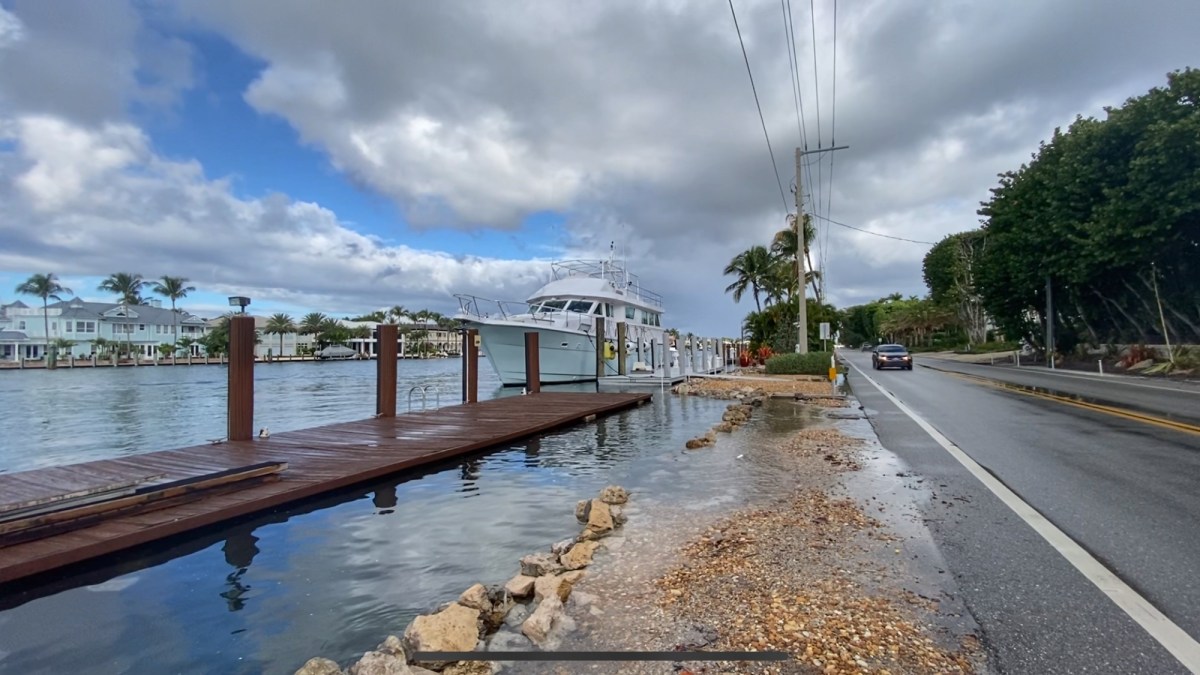
In cases where sea level rise floodwaters cannot be held back, private property owners are going to face a host of problems. As owners of real estate located in neighborhoods that flood now can attest, typically the first sign of sea level rise is seawater collecting on roadways or rising up out of storm drains that would normally drain into the ocean, a harbor or other waterway. Sounds like a minor problem, until you have to park blocks away from your home and wade through the water to reach your front door. Driving through seawater is out of the question. The salt is extremely corrosive to vehicles.

The next step in the typical sea level rise flooding progression is floodwater collecting on a property, where it can rend septic systems inoperable, pollute freshwater wells, and damage landscaping and exterior structures. In cases where the seawater enters a home, the costs can be devastating. FEMA’s National Flood Insurance Program website has a flood damage calculator that estimates an inch of water alone can cause nearly $27,000 damage to a 2,500 home. A foot of floodwater can cost over $72,000 to repair.

In extreme cases, local governments are determining that it’s no longer cost-effective to maintain and rebuild roads and critical infrastructure to serve properties that are repeatedly inundated. Officials are insisting on buyouts, where they pay an owner fair market value to abandon their homes. It’s important to note that buyouts are expensive and only possible where federal and state funding is available. It’s uncertain how long the government will be able to afford buyouts. If the funding dries up, real estate owners could be left with properties that regularly flood, aren’t insurable, and are impossible to sell.

The immediate coastline isn’t the only place at risk from sea level rise. In areas like South Florida that are built on porous limestone or Honolulu that are built on porous volcanic rock, higher seas can push seawater inland underground. The dense seawater, in turn, can force the fresh water table upward toward the surface where it saturates soils. This can create three problems: 1) Unable to absorb rainwater, the saturated soils can cause surface flooding; 2) Septic systems that rely on dry soil to filter impurities can become inoperable when saturated soils can’t handle any more water; and 3) Fresh water well systems can become polluted by saltwater making them unusable.

Beyond the physical problems floodwater presents to coastal communities, private property owners also have to keep an eye on trends in the property tax, insurance and mortgage sectors. Coastal communities are fighting for federal and state funding to pay for sea level rise control projects. When the money runs short, local taxpayers will have to cover the bill for flood prevention projects.

The National Flood Insurance Program is already in the process of making sure that owners of properties most at-risk of flooding pay higher premiums. And, after the tragic condo building collapse last summer in Surfside, Florida, mortgage backers Fannie May and Freddie Mac are now forcing condo associations to answer detailed questions about building maintenance and the level of reserve funds available to cover routine maintenance and repairs. In instances where buildings are deemed to be poorly maintained, short on cash, or unsafe, lenders will be barred from issuing mortgages. This new policy is already wreaking havoc in the South Florida condo market, where closings are being delayed due to the stringent requirements. The threat is compounded by the fact that even cash buyers can be forced to show that they will be able to get a mortgage if they don’t have enough resources to cover the cost of a condo.

With all of these factors in play, it’s clear that the prospect of another foot of sea level rise is something that real estate owners and buyers can no longer afford to shrug off and ignore. Every additional inch of water that accumulates between now and 2050 is going to compound the challenges faced by coastal communities. Due diligence — staying up to date on the latest developments and responding appropriately — is the only way to protect real estate investments.

Changing Our Eating Habits Is One Way to Fight Sea Level Rise Flooding — Yes, Really

One way coastal real estate owners can fight sea level rise flooding is by eating a more plant-based meat diet that produces less greenhouse gases than animal-based meat meals. StepByStepChef.com has a series of free plant based meat recipes and videos that will show them how to get started.

Sea level rise flooding is as surely a symptom of global warming as raging wildfires, mega-droughts and more powerful hurricanes. The disease that’s driving the growth in such disasters is humans burning fossil fuels — such as coal, oil and natural gas — that release the greenhouse gases that are heating up the planet.

Fighting sea level rise requires a concerted effort by real estate owners and governments to take steps necessary to hold back the floodwaters, but it also demands that we all change our habits to reduce the amount of greenhouse gases — primarily carbon dioxide and methane — that we release into the atmosphere. Among our options are buying the most fuel efficient vehicles we can afford; consolidating trips so we don’t drive as much; weatherizing our homes and offices and equipping them with efficient heating and cooling systems; and eating a more plant-based diet.

The last point is one that I’ve been focusing my energies on lately. For years, I’ve own and operate a website called StepByStepChef.com where I post free recipes and videos that show people how to cook hundreds of dishes in a detailed step-by-step manner. I’m pleased to report that my videos have been viewed over 14 million times.

To help myself and others to reduce our carbon footprints, I spent the last several months sampling plant-based beef, chicken, pork and even fish — many of them are quite delicious — and building dishes around them. Why? Because it takes far less fossil fuels to create plant-based meats than it does animal based meats. In addition, plant-based meats are produced without the release of methane — a powerful greenhouse gas — that animals give off as part of normal biological processes.

Last week, I started to post videos showing people how to make delicious meals — such as plant based meatballs and spaghetti, plant based beef tacos, plant-based chicken stir fry, and plant-based sausage omelets. All of the recipes were tested for taste and texture before I produced the videos.

If you’re interested in helping to fight global warming and sea level rise flooding by reducing your carbon footprint, I invite you to take a look at the plant-based cooking videos on StepByStepChef.com. There are already 17 free recipes and videos on the site with much more to come. In addition to the plant-based cooking instruction, you’ll find over 225 other free recipes and videos that are fully vegetarian or use animal-based ingredients.

If we work together to fight climate change and sea level rise at the source by reducing our carbon footprints, we just might be able to escape the dire predictions scientists have drawn if we continue to release greenhouse gases into the atmosphere at the current rate.

Coastal Condo Boards have a Powerful New Ally in Building Maintenance Battles with Owners: Mortgage Providers

In many coastal condo buildings and developments, one of the hardest challenges for condo boards is convincing owners to cover the cost of routine and even emergency building maintenance. The days of such battles are likely over as condo boards gain a new ally: mortgage providers.

According to an article published today in The Wall Street Journal (“Surfside Tower Collapse Makes Buying Condos More Complicated”), in light of the tragic collapse of the oceanfront building in South Florida last summer — possibly due to owner reluctance to fund maintenance projects — mortgage backers Fannie Mae and Freddie Mac will no longer buy loans involving condos located in buildings that need significant maintenance or that have safety issues. Fannie Mae and Freddie Mac spokespeople told the newspaper the new requirement will ensure buildings are safe and maintained responsibly. (It’s clear that it will also increase the odds that a typical 30-year mortgage will be payed off instead of abandoned in the event of a building condemnation or collapse.)

Fannie Mae and Freddie Mac have already given lenders detailed questionnaires that condo boards have to complete regarding a building’s condition. Their answers are being used in the loan approval process. The Journal report says that the new requirement is already slowing down the loan approval process as building managers and board members don’t always have the facts they need to answer the questions accurately or completely.

Fannie Mae and Freddie Mac’s new policy regarding building maintenance will have several consequences for condo owners and buyers. Condo owners are going to have to get used to the new reality that in order to sell their condos to buyers using loans and, ultimately, to protect their property value, they will have to become more amenable to paying higher condo fees and special assessments to cover the cost of routine inspections and routine and emergency maintenance projects. Buyers, on the other hand, are going to have to become more aggressive in gathering information on condo building maintenance at a property of interest BEFORE they submit an offer and mortgage application to avoid submitting offers on condos that will likely fall through due to building maintenance deficiencies and/or safety issues.

Sea level rise is another factor that’s sure to complicate the building maintenance issue. Condo buildings located near the coast typically require more maintenance than buildings located inland. Salty ocean air and seawater can be very corrosive when they come into contact with structures. Exposure to them often results in the need replace stucco, concrete and rebar, especially in buildings with balconies. As sea level continues to rise, buildings will become increasingly vulnerable to these destructive forces of nature.

The question for owners and buyers to ponder at this point is will owners have the resources to fund costly repairs necessary to ensure buyers can still purchase condos using loans. If not, some coastal condos could actually lose value due to a locked-up market.

NOTE: The Miami Herald also published a detailed article (“Prompted by Surfside Tower Collapse, New Condo Lending Rules Target Buildings in Need of Critical Repairs”) about this issue that’s protected behind its paywall.

140,000 US Homes At-Risk as Scientists Predict Another Foot of Sea Level Rise Over the Next 30 Years

Scientists at the US National Oceanic and Atmospheric Administration (NOAA) released a report today that predicted up to a foot of sea level rise by 2050. That’s equal to all the sea level rise that has occurred over the last century.

Researchers at NOAA and a half dozen other federal agencies relied on a combination of data from tide gauges, satellite observations, and climate modeling to reach their conclusion. “The new data on sea rise is the latest reconfirmation that our climate crisis — as the President has said — is blinking code red,” Gina McCarthy, National Climate Advisor, said in a news release posted on the NOAA website. “We must redouble our efforts to cut the greenhouse gases that cause climate change while, at the same time, help our coastal communities become more resilient in the face of rising seas.”

The NOAA report says at least two feet of sea level rise is likely by the end of this century. Other studies say we could see as much as eight feet if not enough is done to curtail the burning of greenhouse-gas-producing coal, oil and natural gas.

“By 2050, moderate flooding — which is typically disruptive and damaging by today’s weather, sea level and infrastructure standards — is expected to occur more than 10 times as often as it does today,” said Nicole LeBoeuf, NOAA National Ocean Service Director, in the news release. “These numbers mean a change from a single event every 2-5 years to multiple events each year, in some places.”

Kristina Dahl, a climate scientists with the Union of Concerned Scientists, told the Washington Post that 140,000 homes would be put at risk of flooding every other week on average if the NOAA prediction comes true.

Considering that many coastal communities are already spending millions of dollars to combat regular bouts of sea level rise flooding — even in the absence of coastal storms — the NOAA report should act as a call to arms for cities and towns not yet engaged in fighting rising waters. Among the risks for coastal real estate owners is higher taxes — as governments seek ways to fund projects to prevent sea level rise flooding — higher flood insurance premiums, and higher maintenance costs if their properties are inundated by sea water. Condo owners could also face costly special assessments to flood-proof their properties.

Another threat to real estate owners is the possibility that insurers will stop writing policies in flood-stricken areas. Mortgage providers, too might stop providing loans for properties that can’t be insured and that might not be functional for the full term of a 30-year mortgage.